Well, the weekend vanished altogether as I worked up a revised proposal for this (tentative and potential) co-authored critical book on S.F.
It's been three years since I passed the viva for my doctoral thesis, and since then the only criticism I've done has been the occasional desultory book review. What's more I've written some 180,000 words of prose (longer than the thesis even when it was horribly in need of cutting), in a radically different, imaginative mode. It's proved extraordinarily difficult to wrench my brain back into the configuration required for producing that kind of writing, although I've found it pretty stimulating as well. I think, if this book goes ahead, that I'll need some kind of creative project running parallel with it in order to retain my sanity.
On the other hand, maybe sanity is overrated, and a decent sabbatical from fiction is just what my brain needs to come up with loads of exciting new ideas. Time will tell.
Yesterday I was on a Library I.T. course thing for work, which being a Library I.T. course thing was largely dominated by librarians asking our preternaturally patient (and possibly even sedated) trainer questions like: "Hang on, what did you do just then?", "No, I mean the bit before that?", "Won't our students find this far too complicated?", "Can't you just make the computer clever enough to spot when I've made a mistake?", "Why can't things just stay like they were in the seventies?" and "No, I still don't understand the thing you did half an hour ago".
Today I'm back at St Brad's, but tomorrow is Maundy Thursday and therefore the last day of term, so hurrah. I'll have a total of 18 days of not having to come in to work at all, during the course of which I get to watch three episodes of new Doctor Who. So hurrah again.
Details are currently sparse to non-existent, but it is now looking as if I should be talking at the Greenbelt festival again this August, whether at "Between the Lines" as before or in one of the larger venues. Hopefully it will be the latter, as, my preferred topic this year is (predictably enough) "The Spirituality of Doctor Who".
So, I'll be keeping my fingers crossed -- and taking notes come Saturday evening.
23 March 2005

17 March 2005
Wahey
I've finally got together a first draft of the web blurb I've been needing for the short story in Wildthyme on Top. It still needs some tweaking before it's quite ready to go up on the website, but this is basically it:
It's been substantial hassle to write, and the really annoying thing is that virtually no-one who reads it is even going to notice, let alone realise why.
A sneak preview of "Minions of the Moon" goes to the first person (who hasn't read the story already) to spot the clever bit...
[Edit 21/3/5: The blurb's now up at my Wildthyme on Top page. Click on the © symbol at the bottom to see the clever bit.]
Miss Iris Wildthyme's jaunts through time and space with her friend Tom have left them both well-versed in history's vagaries. But when they face the sight of Queen Elizabeth I welcoming ‘envoys from the lunar sphere’ into her court, the pair are at a loss.
It may be history itself is near collapse, but Iris couldn't give a toss. The old Queen needs a mentor (and chauffeur) for England’s delegation to the Moon –- and Iris learns the satellite is her and Tom’s idea of Heaven. Pretty soon she’s out carousing and, well, partying her socks off.
She may even get to sing...
It's been substantial hassle to write, and the really annoying thing is that virtually no-one who reads it is even going to notice, let alone realise why.
A sneak preview of "Minions of the Moon" goes to the first person (who hasn't read the story already) to spot the clever bit...
[Edit 21/3/5: The blurb's now up at my Wildthyme on Top page. Click on the © symbol at the bottom to see the clever bit.]
16 March 2005
Lives and Times
Well, I promised a long time ago now that I'd blog the entire writing process of my next writing commission after Of the City of the Saved... -- and, apart from the tentative and confidential early stages, I've pretty much managed that with Peculiar Lives. I've been doing it since May, in fact. Back then, Peculiar Times was still called Peculiar Lives and Peculiar Lives was called A Man Apart. During that time I've written a short story, seen another short story published and moved house.
Since I know some of you at least are still reading, I'm assuming that this hasn't been too dull, or at least that some of you are capable of skipping the boring bits.
Anyway. The writing process in question is now over, barring unexpected pre-publication crises as at the weekend I completed the handful of fairly minor rewrites which had been requested by the editor. Not all of them were things I agreed with, but that's OK -- it's why we have editors as well as writers. The text of the novella is now in a form which the publishers, as well as I, consider usable, which is, I must say, a pleasant relief.
I'm expecting the publishers to announce the book on their website any day now. Mind you, I've been expecting that for a number of weeks, so we'll have to see what happens. Rest assured, you'll read about it here the moment it becomes public domain.
Since I know some of you at least are still reading, I'm assuming that this hasn't been too dull, or at least that some of you are capable of skipping the boring bits.
Anyway. The writing process in question is now over, barring unexpected pre-publication crises as at the weekend I completed the handful of fairly minor rewrites which had been requested by the editor. Not all of them were things I agreed with, but that's OK -- it's why we have editors as well as writers. The text of the novella is now in a form which the publishers, as well as I, consider usable, which is, I must say, a pleasant relief.
I'm expecting the publishers to announce the book on their website any day now. Mind you, I've been expecting that for a number of weeks, so we'll have to see what happens. Rest assured, you'll read about it here the moment it becomes public domain.
Culture Update
What with the cat crisis, the virus and some heavy work-related demands being made on B. with knock-on domestic demands on me, it's been ages since I posted anything of substance (last week's rant about Nathan Barley being the one exception).
I've also failed to follow up my first Speculative Cityscape with any of the other nine in the projected series. This I'll be trying to rectify soon, possibly with something about Istanbul.
Meanwhile, here are some notes on all the stuff I've been watching and reading since, ooh, ages ago now.
BOOKS
Natural History by Justina Robson. A fabulous work of hard S.F., made all the more palatable for me by the fact that most of the science is the one I'm interested in, biology. Robson's posthumans are among the most sympathetic and convincing I've read about, managing to be both alien in outlook and clearly human in their psychological heritage: the first chapter shows a bioengineered deep-space probe discovering the first signs of non-terrestrial life whilst listening to "American Pie". Robson's "unevolved" characters unfortunately become a little insipid in comparison, but it's a reasonable trade-off.
There's some astonishing imagination at work here, and when the big central concept is revealed, near the end, it makes sense and is convincing rather than being empty technobabble. I gather Robson's earlier books are classical cyberpunk, which (since I've read rather a lot of it) makes me less keen to try them. But Natural History is very much worth reading, and I'm looking forward to whatever she comes out with next.
Raw Spirit: the Search for the Perfect Dram by Iain Banks. This is Banks's only non-fiction book to date, and to be perfectly frank I can see why. His style of writing is always entertaining, and the ostensible subject -- whisky -- is one I'm interested in but know little about, which is always a winning combination. Unfortunately, the focus on whisky is extremely loose, and the other things Banks seems keen on banging on about are very much less interesting to the reader than they are to him. If he was talking about writing, science fiction or even politics I'd probably have found it fascinating even so -- though others perhaps wouldn't. These subjects do come up on rare occasions, but in between times Banks treats us to interminable descriptions of his various cars and what they're like to drive, andecdotes involving his mates (often not even about drinking whisky with his mates), and -- the ultimate turn-off for me -- a digression about football.
This is a great big shame, because the stuff about whisky is absolutely fascinating, and really makes me wish I had the money to do some serious investigation of the distillers and varieties he recommends. Which, unfortunately, I don't.
TV
Nathan Barley. I forgot to watch or record it on Friday, so I have no idea whether Morris & Brooker's opus became any funnier or more relevant during the week. I'll have to try and remember to tune in for the final episode, in the hope that it ends with a blackly humorous massacre of all the characters. Although Blackadder made that a cliché years ago, of course.
Firefly. God, I could write screens and screens about this. I finished watching it in February, having been given it for my birthday in November. It's bloody excellent. Pretty much anything I say about it here will be inadequate -- every aspect, from scripts to sets to acting to the underlying S.F. worldbuilding, is absolutely consummate. Of the fourteen episodes that were made, only one -- "Safe" -- struck me as having naff elements. That's a better strike rate than any other genre show, and certainly better than Joss Whedon's two better-known fantasy series. Some mainstream dramas like Six Feet Under bear the comparison, however; and indeed, the drama in Firefly is so character-based that it's easy to forget it's science fiction. Even the theme song is gorgeous. For a first season, this is quite simply phenomenal.
So naturally Fox cancelled it.
Desperate Housewives. No no, honestly, listen, this is a lot better than you think. The subject matter (four bored housewives in the suburbs) may seem unpromising, and I could personally do without the Sex and the City-style voiceover narration, but both of these elements are assiduously subverted right from the start. The narrator is dead, having killed herself in the very first scene, and observes from some unspecified afterlife as her four friends seek to uncover the reasons for her suicide. This arc story -- which so far has involved blackmail, human remains, child abuse, a contract killer, a brutal onscreen murder and an escape from a mental hospital -- runs more or less in the background while the lives of the four protagonists play out their more mundane dramas of rivalry, divorce, romance and parenthood. The scripts are crisp and witty, and even the sunny suburban setting takes on a sinister X-Files tinge after a while.
With the exception of Teri Hatcher, whose "kooky" act could do with being turned down a couple of notches, the main cast are all excellent as well, my particular favourite being icy redhead Marcia Cross as the Stepfordish domestic tyrant Bree.
...OK. So I just jettisoned the whole of my remaining credibility in one go, didn't I?
FILM
I'm having trouble remembering the last time I went to the cinema, actually. It may well have been before Christmas. You'll have to make do with the following on DVD:
Cypher. Intriguing and clever S.F. thriller revolving around questions of identity. I particularly enjoyed the way it started off as a dour, noirish technothriller and built up slowly into James Bond secret-base territory, with colour slowly seeping into the washed-out palette as it did so. Mind you, with the right binoculars the big climactic twist would have been obvious from Belgium.
Sky Captain and the World of Tomorrow. This was great fun, much as you'd expect, but veering so close to substancelessness as to be effectively indistinguishable from it. I was intrigued to know whether the pulp-adventure style events were supposed to be taking place in our own history or an alternate one: for a story apparently set in 1939 (the characters watch The Wizard of Oz at the cinema) and featuring German scientists, the complete lack of any mention of Nazism is at least a little surprising. I'd have liked to see some connection made between the retro-futurist machinery and architecture (not to mention Tibetan mysticism) which Sky Captain pastiches and iconises, and that which was actually constructed or planned as part of Hitler's Reich. There was, to say the least, a lot of implicit fascism in the pulp fiction of that era, and the filmmakers skirt around this rather.
They did include an awful lot of cool explosions, though, so never mind.
I've also failed to follow up my first Speculative Cityscape with any of the other nine in the projected series. This I'll be trying to rectify soon, possibly with something about Istanbul.
Meanwhile, here are some notes on all the stuff I've been watching and reading since, ooh, ages ago now.
BOOKS
Natural History by Justina Robson. A fabulous work of hard S.F., made all the more palatable for me by the fact that most of the science is the one I'm interested in, biology. Robson's posthumans are among the most sympathetic and convincing I've read about, managing to be both alien in outlook and clearly human in their psychological heritage: the first chapter shows a bioengineered deep-space probe discovering the first signs of non-terrestrial life whilst listening to "American Pie". Robson's "unevolved" characters unfortunately become a little insipid in comparison, but it's a reasonable trade-off.
There's some astonishing imagination at work here, and when the big central concept is revealed, near the end, it makes sense and is convincing rather than being empty technobabble. I gather Robson's earlier books are classical cyberpunk, which (since I've read rather a lot of it) makes me less keen to try them. But Natural History is very much worth reading, and I'm looking forward to whatever she comes out with next.
Raw Spirit: the Search for the Perfect Dram by Iain Banks. This is Banks's only non-fiction book to date, and to be perfectly frank I can see why. His style of writing is always entertaining, and the ostensible subject -- whisky -- is one I'm interested in but know little about, which is always a winning combination. Unfortunately, the focus on whisky is extremely loose, and the other things Banks seems keen on banging on about are very much less interesting to the reader than they are to him. If he was talking about writing, science fiction or even politics I'd probably have found it fascinating even so -- though others perhaps wouldn't. These subjects do come up on rare occasions, but in between times Banks treats us to interminable descriptions of his various cars and what they're like to drive, andecdotes involving his mates (often not even about drinking whisky with his mates), and -- the ultimate turn-off for me -- a digression about football.
This is a great big shame, because the stuff about whisky is absolutely fascinating, and really makes me wish I had the money to do some serious investigation of the distillers and varieties he recommends. Which, unfortunately, I don't.
TV
Nathan Barley. I forgot to watch or record it on Friday, so I have no idea whether Morris & Brooker's opus became any funnier or more relevant during the week. I'll have to try and remember to tune in for the final episode, in the hope that it ends with a blackly humorous massacre of all the characters. Although Blackadder made that a cliché years ago, of course.
Firefly. God, I could write screens and screens about this. I finished watching it in February, having been given it for my birthday in November. It's bloody excellent. Pretty much anything I say about it here will be inadequate -- every aspect, from scripts to sets to acting to the underlying S.F. worldbuilding, is absolutely consummate. Of the fourteen episodes that were made, only one -- "Safe" -- struck me as having naff elements. That's a better strike rate than any other genre show, and certainly better than Joss Whedon's two better-known fantasy series. Some mainstream dramas like Six Feet Under bear the comparison, however; and indeed, the drama in Firefly is so character-based that it's easy to forget it's science fiction. Even the theme song is gorgeous. For a first season, this is quite simply phenomenal.
So naturally Fox cancelled it.
Desperate Housewives. No no, honestly, listen, this is a lot better than you think. The subject matter (four bored housewives in the suburbs) may seem unpromising, and I could personally do without the Sex and the City-style voiceover narration, but both of these elements are assiduously subverted right from the start. The narrator is dead, having killed herself in the very first scene, and observes from some unspecified afterlife as her four friends seek to uncover the reasons for her suicide. This arc story -- which so far has involved blackmail, human remains, child abuse, a contract killer, a brutal onscreen murder and an escape from a mental hospital -- runs more or less in the background while the lives of the four protagonists play out their more mundane dramas of rivalry, divorce, romance and parenthood. The scripts are crisp and witty, and even the sunny suburban setting takes on a sinister X-Files tinge after a while.
With the exception of Teri Hatcher, whose "kooky" act could do with being turned down a couple of notches, the main cast are all excellent as well, my particular favourite being icy redhead Marcia Cross as the Stepfordish domestic tyrant Bree.
...OK. So I just jettisoned the whole of my remaining credibility in one go, didn't I?
FILM
I'm having trouble remembering the last time I went to the cinema, actually. It may well have been before Christmas. You'll have to make do with the following on DVD:
Cypher. Intriguing and clever S.F. thriller revolving around questions of identity. I particularly enjoyed the way it started off as a dour, noirish technothriller and built up slowly into James Bond secret-base territory, with colour slowly seeping into the washed-out palette as it did so. Mind you, with the right binoculars the big climactic twist would have been obvious from Belgium.
Sky Captain and the World of Tomorrow. This was great fun, much as you'd expect, but veering so close to substancelessness as to be effectively indistinguishable from it. I was intrigued to know whether the pulp-adventure style events were supposed to be taking place in our own history or an alternate one: for a story apparently set in 1939 (the characters watch The Wizard of Oz at the cinema) and featuring German scientists, the complete lack of any mention of Nazism is at least a little surprising. I'd have liked to see some connection made between the retro-futurist machinery and architecture (not to mention Tibetan mysticism) which Sky Captain pastiches and iconises, and that which was actually constructed or planned as part of Hitler's Reich. There was, to say the least, a lot of implicit fascism in the pulp fiction of that era, and the filmmakers skirt around this rather.
They did include an awful lot of cool explosions, though, so never mind.
12 March 2005
09 March 2005
Cold Discomfort
My week so far's been dominated by a rather vicious virus (of the wetware kind), which has prevented me doing any writing, or indeed coming into work as I should have done yesterday. While the symptoms mimic those of a cold with uncanny accuracy in order to make me look a wimp, this virus is actually much, much worse -- having managed to take out my ability to sleep, to walk around without feeling like I've got a rhino on my back, or to think logically (or indeed, at times, sequentially).
It's actually not as bad today as it was on Monday and Tuesday, which is why I'm in work, but I'm seriously wondering whether I actually ought to be. My employers seem troubled by no such scruples, though. Never mind.
At least I've had some time to embark, following your advice, on House of Leaves. I'm 100 pages in and so far it's satisfyingly creepy -- about a third of the time. Other parts of it are either overly pretentious or unduly annoying or both... although I admit I may be crankier than usual. On the other hand, I also started Newton's Wake today, and am enjoying the chapter and a half I've read so far. It hasn't got political yet, mind you.
I've realised that yesterday's marathon Nathan Barley review was the first time I've written anything much about books, TV or film for quite a while now. I must rectify that.
One thing I will not be reviewing, however, until after 7pm on Saturday 26 March at the very earliest, is the first episode of new Doctor Who -- which, as widely reported, has been scurrilously uploaded onto the internet by an unscrupulous employee of a Canadian broadcaster. It's naturally being watched by every single Doctor Who fan equipped with sufficient computer literacy and insufficient patience -- which, as you might imagine, is an awful lot of them.
Reviews are springing up all over the web, making it increasingly difficult for those of us who wish to preserve intact our thrill of anticipation (or our legal inviolability) to avoid the buggers -- a fact which I find deeply annoying. Although as I've said, I may be rather cranky at the moment.
It's actually not as bad today as it was on Monday and Tuesday, which is why I'm in work, but I'm seriously wondering whether I actually ought to be. My employers seem troubled by no such scruples, though. Never mind.
At least I've had some time to embark, following your advice, on House of Leaves. I'm 100 pages in and so far it's satisfyingly creepy -- about a third of the time. Other parts of it are either overly pretentious or unduly annoying or both... although I admit I may be crankier than usual. On the other hand, I also started Newton's Wake today, and am enjoying the chapter and a half I've read so far. It hasn't got political yet, mind you.
I've realised that yesterday's marathon Nathan Barley review was the first time I've written anything much about books, TV or film for quite a while now. I must rectify that.
One thing I will not be reviewing, however, until after 7pm on Saturday 26 March at the very earliest, is the first episode of new Doctor Who -- which, as widely reported, has been scurrilously uploaded onto the internet by an unscrupulous employee of a Canadian broadcaster. It's naturally being watched by every single Doctor Who fan equipped with sufficient computer literacy and insufficient patience -- which, as you might imagine, is an awful lot of them.
Reviews are springing up all over the web, making it increasingly difficult for those of us who wish to preserve intact our thrill of anticipation (or our legal inviolability) to avoid the buggers -- a fact which I find deeply annoying. Although as I've said, I may be rather cranky at the moment.
Joe Public
Thanks to Stuart (and indeed to Ken MacLeod, who makes the long-overdue "Joe Blogs" joke)for pointing out that Joe Gordon, famously sacked from Waterstones for writing about his working life on his blog, has been given a job -- not only working for Forbidden Planet in Edinburgh, but actually running their official weblog. There's still poetic justice in the world.
08 March 2005
Urban Cultural Dispatj
Ah, yes. Nathan Barley. A.K.S. trashbat.co.ck. Here's the credos.
I've always had a slight problem with Chris Morris. It isn't that I fail to find him funny, or even to recognise his vituperative, corrosive genius. Our modern world needs its own Swift, taking venomous delight in excoriating its faults, and rarely more so than now. No, my problem with Morris is simply that his works fulfil their purpose by making me, very often, profoundly uncomfortable. It generally takes a number of viewings before I can really appreciate the excellence of his work, whether it be the savagely contemptuous celebrity satire of Brass Eye or the heart-of-darkness sketch comedy of Jam.
(Despite numerous attempts, I don't think I'll ever manage to desensitise myself to the "Plumber Baby" sketch. I've taken to fast-forwarding through it on the DVD.)
So, when I heard that Morris and Guardian columnist Charlie Brooker were collaborating on a sitcom of London media life, I expected to find it difficult to get into. What I didn't expect was for it to be rather naff.
There are jokes -- at least, there is vicious (and occasionally powerful) irony, and there are characters it's possible to point at and laugh. Most of the actual funny stuff happens in the background, on posters or signage -- making Nathan Barley a DVD-era comedy as well as an internet-era one, but also one it's difficult to appreciate as a broadcast programme. Even these ephemera fail to achieve the joke-to-time density of Brass Eye, let alone The Day Today.
Nathan Barley suffers from a fundamental problem of identification. None of the central characters are ones with whom we can sympathise -- yet drama (even comedy) without sympathy is meaningless. If we find Basil Fawlty appalling, it's because we know we share many of his faults. We find ourselves cringing with every embarrassment he suffers. However morally dubious Edmund Blackadder's behaviour may be, he's charming enough that we're all rooting for him anyway. We loathe David Brent -- but then so do his employees. Without at least one character who affects us emotionally, situation comedy loses all its interest.
So, Nathan Barley is forced to manipulate us into throwing our lot in with one character or another, when none has done anything to deserve such respect. The eponymous Barley is an anti-hero in the Brentian grotesque mould (disconcertingly so, for of us who admire Morris for his originality) -- yet his embarassments and, on occasion, triumphs (as when he gets one over the snobbish couple in the restaurant) are events we are invited to care about. The Office never expected us to do the same with Brent.
The other supposed viewpoint character is Dan Ashcroft, a man with the wit to perceive that he is surrounded by idiots but lacking the moral impetus to do anything about it other than limply denounce them. Even his attempts to escape their milieu are doomed to failure by his own apathy. The episode which casts Dan as the "Preacher Man" seems to be suggesting that we are to consider him a Holy Fool, the jester to Barley's royal court of imbeciles -- with the twist that all of the other characters look up to him, and respect him for "telling it like it is" whilst never considering that any of it might apply to them. The idea has a certain power, but is ruined by the way the same episode unleashes upon Dan the series' one true moment (to date) of genuine Morrisian moral indignation, as we see him gambling on an online tramp-teeth-pulling contest. He is a man for whom, ultimately, we can have no more respect than we have for the unselfconscious Barley.
Even the third string, Dan's idealistic sister Claire, fails to engage our sympathy. Like the only other recurring female character, she's drawn as a conscious contrast to the male idiots she associates with, but -- unlike the receptionist at Dan's workplace -- she suffers from a chronic inability to see through even the limpidly transparent Barley, whose one motivation where she's concerned is to get inside her knickers.
There are other problems. The structure of the storytelling is poor, suffering at times -- despite such scenes as Nathan's attempt to combine the arts of rap and cunnilingus -- from plotting which would not have looked out of place on BBC2 in the 1970s. When Barley admires Ashcroft's hairstyle -- which Dan has accidentally created by sleeping with his head in a large quantity of paint -- and demands the same cut from his stylist, it's a comedic inevitability that the "geek pie" will become intensely fashionable by the end of the episode. However, this is stored up as a final punchline and -- in an almost offensively 70s touch -- attributed to the agency of a gullible Japanese fashion reporter.
Even the basic joke, of the complete cluelessness of everyone in Barley's environment, becomes strangely compromised in this episode. Nathan is proud of the "geek pie" when he thinks it is fashionable, but when he discovers his mistake he tries to hide it by wearing a handbag on his head -- which he knows full well isn't fashionable. If he's prepared to brazen it out with the handbag, why not with the geek pie? Why does his date, who accepted the bag without question, laugh her head off when the hairstyle is revealed? This relies, not only on attributing a degree of discrimination to people who, the script repeatedly insists, have no such thing, but on turning it on and off at the scriptwriters' whim.
Some reviewers have blamed the series' failure on Morris' collaborator (unlikely, since Brooker, formerly responsible for TV Go Home where the Barley character originated, is also very funny), or simply on the fact that he's collaborating at all (again unlikely -- see Jam, The Day Today, or indeed Why Bother?).
In fact, the problem is that Nathan Barley attempts to be a dystopian vision of a world run by cretins -- but it's a dystopia whose entire scope is that of a couple of square miles of London. The insular isolation of the media trendies who live and work here is one of the things we are supposed to laugh at, but the scripts themselves are guilty of a similar short-sightedness. The fact is that, while these may be the people whom Morris and Brooker have to deal with on a daily basis, they don't run the world -- they barely even impact on the lives of most people.
To someone living in, say, Hoxton, this is probably swingeing satire. To the 52 million or so Britons who live outside London but still receive Channel 4, it's meaningless. It's satire without target, statement without referent. With the single exception of that teeth-pulling scene, Nathan Barley hasn't made me feel uncomfortable once. (I'd like to say it makes me squirm in embarrassment, but actually it's not nearly that bad.)
Yes, these people are idiots -- that's perfectly clear. So what? They bear no relationship to anybody I know or care about.
I look forward to Morris' next project -- I can't imagine him ever ceasing to be a comedian whose work was worth seeking out -- but I do hope it makes me feel worse than this.
I've always had a slight problem with Chris Morris. It isn't that I fail to find him funny, or even to recognise his vituperative, corrosive genius. Our modern world needs its own Swift, taking venomous delight in excoriating its faults, and rarely more so than now. No, my problem with Morris is simply that his works fulfil their purpose by making me, very often, profoundly uncomfortable. It generally takes a number of viewings before I can really appreciate the excellence of his work, whether it be the savagely contemptuous celebrity satire of Brass Eye or the heart-of-darkness sketch comedy of Jam.
(Despite numerous attempts, I don't think I'll ever manage to desensitise myself to the "Plumber Baby" sketch. I've taken to fast-forwarding through it on the DVD.)
So, when I heard that Morris and Guardian columnist Charlie Brooker were collaborating on a sitcom of London media life, I expected to find it difficult to get into. What I didn't expect was for it to be rather naff.
There are jokes -- at least, there is vicious (and occasionally powerful) irony, and there are characters it's possible to point at and laugh. Most of the actual funny stuff happens in the background, on posters or signage -- making Nathan Barley a DVD-era comedy as well as an internet-era one, but also one it's difficult to appreciate as a broadcast programme. Even these ephemera fail to achieve the joke-to-time density of Brass Eye, let alone The Day Today.
Nathan Barley suffers from a fundamental problem of identification. None of the central characters are ones with whom we can sympathise -- yet drama (even comedy) without sympathy is meaningless. If we find Basil Fawlty appalling, it's because we know we share many of his faults. We find ourselves cringing with every embarrassment he suffers. However morally dubious Edmund Blackadder's behaviour may be, he's charming enough that we're all rooting for him anyway. We loathe David Brent -- but then so do his employees. Without at least one character who affects us emotionally, situation comedy loses all its interest.
So, Nathan Barley is forced to manipulate us into throwing our lot in with one character or another, when none has done anything to deserve such respect. The eponymous Barley is an anti-hero in the Brentian grotesque mould (disconcertingly so, for of us who admire Morris for his originality) -- yet his embarassments and, on occasion, triumphs (as when he gets one over the snobbish couple in the restaurant) are events we are invited to care about. The Office never expected us to do the same with Brent.
The other supposed viewpoint character is Dan Ashcroft, a man with the wit to perceive that he is surrounded by idiots but lacking the moral impetus to do anything about it other than limply denounce them. Even his attempts to escape their milieu are doomed to failure by his own apathy. The episode which casts Dan as the "Preacher Man" seems to be suggesting that we are to consider him a Holy Fool, the jester to Barley's royal court of imbeciles -- with the twist that all of the other characters look up to him, and respect him for "telling it like it is" whilst never considering that any of it might apply to them. The idea has a certain power, but is ruined by the way the same episode unleashes upon Dan the series' one true moment (to date) of genuine Morrisian moral indignation, as we see him gambling on an online tramp-teeth-pulling contest. He is a man for whom, ultimately, we can have no more respect than we have for the unselfconscious Barley.
Even the third string, Dan's idealistic sister Claire, fails to engage our sympathy. Like the only other recurring female character, she's drawn as a conscious contrast to the male idiots she associates with, but -- unlike the receptionist at Dan's workplace -- she suffers from a chronic inability to see through even the limpidly transparent Barley, whose one motivation where she's concerned is to get inside her knickers.
There are other problems. The structure of the storytelling is poor, suffering at times -- despite such scenes as Nathan's attempt to combine the arts of rap and cunnilingus -- from plotting which would not have looked out of place on BBC2 in the 1970s. When Barley admires Ashcroft's hairstyle -- which Dan has accidentally created by sleeping with his head in a large quantity of paint -- and demands the same cut from his stylist, it's a comedic inevitability that the "geek pie" will become intensely fashionable by the end of the episode. However, this is stored up as a final punchline and -- in an almost offensively 70s touch -- attributed to the agency of a gullible Japanese fashion reporter.
Even the basic joke, of the complete cluelessness of everyone in Barley's environment, becomes strangely compromised in this episode. Nathan is proud of the "geek pie" when he thinks it is fashionable, but when he discovers his mistake he tries to hide it by wearing a handbag on his head -- which he knows full well isn't fashionable. If he's prepared to brazen it out with the handbag, why not with the geek pie? Why does his date, who accepted the bag without question, laugh her head off when the hairstyle is revealed? This relies, not only on attributing a degree of discrimination to people who, the script repeatedly insists, have no such thing, but on turning it on and off at the scriptwriters' whim.
Some reviewers have blamed the series' failure on Morris' collaborator (unlikely, since Brooker, formerly responsible for TV Go Home where the Barley character originated, is also very funny), or simply on the fact that he's collaborating at all (again unlikely -- see Jam, The Day Today, or indeed Why Bother?).
In fact, the problem is that Nathan Barley attempts to be a dystopian vision of a world run by cretins -- but it's a dystopia whose entire scope is that of a couple of square miles of London. The insular isolation of the media trendies who live and work here is one of the things we are supposed to laugh at, but the scripts themselves are guilty of a similar short-sightedness. The fact is that, while these may be the people whom Morris and Brooker have to deal with on a daily basis, they don't run the world -- they barely even impact on the lives of most people.
To someone living in, say, Hoxton, this is probably swingeing satire. To the 52 million or so Britons who live outside London but still receive Channel 4, it's meaningless. It's satire without target, statement without referent. With the single exception of that teeth-pulling scene, Nathan Barley hasn't made me feel uncomfortable once. (I'd like to say it makes me squirm in embarrassment, but actually it's not nearly that bad.)
Yes, these people are idiots -- that's perfectly clear. So what? They bear no relationship to anybody I know or care about.
I look forward to Morris' next project -- I can't imagine him ever ceasing to be a comedian whose work was worth seeking out -- but I do hope it makes me feel worse than this.
03 March 2005
Gone Home? Good.
Isn't predictive text wonderful?
This morning I texted B. in an attempt to warn her that the roads were a bit icy. My phone informed her that she might find them "a bit gay".
This morning I texted B. in an attempt to warn her that the roads were a bit icy. My phone informed her that she might find them "a bit gay".
02 March 2005
Sleep Cycle
This morning I was caught in one of those nested dream-sequences which you sometimes enter when you're in the really deep sleep stage of your sleep cycle, but you nevertheless know that you have to get up very, very soon now: where you keep on waking up, seeing the time, going "Agh!", getting out of bed, experiencing stressful and / or surreal events for several minutes, and then waking up again going "Agh!" and starting the whole process off once more.
This chain lasted for a good dozen iterations, in the course of which I must have had a good couple of hours' worth of panic squeezed into the space of fifteen minutes. As a consequence, I've been suffering all day from the hazily uneasy expectation that at some point I'll realise that I've inadvertently driven my moped into the library, or be abruptly surrounded by bonobos.
At some point during the morning's antics I remember meeting Dawn from Buffy, who had a third nipple and twelve-year-old twins: they (the twins, not the nipples) were being read a bedtime story by Captain Jack Sparrow.
I also came up with a particularly good design for duckling-shaped cuddly toys which would be ideally suited to being held in bed. I may see if I can get someone to make them and sell them -- or at least to make me one. It might help me sleep properly.
This chain lasted for a good dozen iterations, in the course of which I must have had a good couple of hours' worth of panic squeezed into the space of fifteen minutes. As a consequence, I've been suffering all day from the hazily uneasy expectation that at some point I'll realise that I've inadvertently driven my moped into the library, or be abruptly surrounded by bonobos.
At some point during the morning's antics I remember meeting Dawn from Buffy, who had a third nipple and twelve-year-old twins: they (the twins, not the nipples) were being read a bedtime story by Captain Jack Sparrow.
I also came up with a particularly good design for duckling-shaped cuddly toys which would be ideally suited to being held in bed. I may see if I can get someone to make them and sell them -- or at least to make me one. It might help me sleep properly.
Experiment
I'm trying out the facility for creating free polls at Pollhost.com, so consider this to be something of an experiment.
On the other hand, I am feeling genuinely indecisive at present, so would welcome your opinions on the following:[Edit to add: Hmm. Not sure aboutthat huge blank space there. Or indeed the pop-up window when one views the results.]
On the other hand, I am feeling genuinely indecisive at present, so would welcome your opinions on the following:[Edit to add: Hmm. Not sure about
01 March 2005
33 1/3
I seem to be a third of a century old today.
Assuming that 100 years is a plausible life expectancy for someone of my generation -- a thesis which involves a large number of substantial assumptions about the progress of medical technology, the persistence of civilisation and its infrastructure, and my starting to lose weight and do some exercise at some point very soon now -- this means, among other things, that from now on it's going to be rather difficult to claim not to be middle-aged.
On the other hand, I've achieved a reasonable amount in the past few years, and it's not as if I have to go through all that tedious business of childhood, puberty and schooling again. So actually, I'm reasonably sanguine about this.
More so than my beloved seems to be about her imminent 30th birthday, anyway.
Assuming that 100 years is a plausible life expectancy for someone of my generation -- a thesis which involves a large number of substantial assumptions about the progress of medical technology, the persistence of civilisation and its infrastructure, and my starting to lose weight and do some exercise at some point very soon now -- this means, among other things, that from now on it's going to be rather difficult to claim not to be middle-aged.
On the other hand, I've achieved a reasonable amount in the past few years, and it's not as if I have to go through all that tedious business of childhood, puberty and schooling again. So actually, I'm reasonably sanguine about this.
More so than my beloved seems to be about her imminent 30th birthday, anyway.
24 February 2005
Demolishing Our Holmes
Congratulations to Kelly Hale, who's been signed up to write the fifth Faction Paradox novel, Erasing Sherlock.
Kelly's an excellent writer, visceral and funny by turns. She's one of the ten minds jointly responsible for The Book of the War, and co-wrote Grimm Reality with Simon Bucher-Jones (another author who I very much want to see a Faction novel from). She also produced one of the best stories in Walking in Eternity.
Erasing Sherlock is apparently a Holmes pastiche, which sounds like an excellent addition to the range (and ties in oddly well with Of the City of the Saved...). By all accounts it's shaping up to be a fine book, as it should be with such an author to its name. I'm really looking forward to it.
Kelly's an excellent writer, visceral and funny by turns. She's one of the ten minds jointly responsible for The Book of the War, and co-wrote Grimm Reality with Simon Bucher-Jones (another author who I very much want to see a Faction novel from). She also produced one of the best stories in Walking in Eternity.
Erasing Sherlock is apparently a Holmes pastiche, which sounds like an excellent addition to the range (and ties in oddly well with Of the City of the Saved...). By all accounts it's shaping up to be a fine book, as it should be with such an author to its name. I'm really looking forward to it.
23 February 2005
Greenbelt Talks Online
Finally, I have my talks from Greenbelt 2004 online at www.infinitarian.com: behold "Science Fiction as the Bible" and "The Bible as Science Fiction". Behold also the now fully hyperlinked Reading List which accompanies them.
The talks have been transcribed more or less directly from minidisc recordings, so don't expect polished prose (or even vaguely coherent diction, some of the time). Getting them written up has has taken me quite a while, largely because they amount to 15,000 words between them -- although I've also added roughly 250 hyperlinks across the three pages, for ease of access to footnotes, the reading list and other relevant sections.
When reading the talks, please do bear in mind that they were written for a Christian audience (albeit an unusually broad-minded and tolerant one – Greenbelt is the only large-scale Christian venue in the U.K. where I'd expect to get away with some of the things I say here). I hope that what I have to say is nevertheless of interest to secular readers, or those of other faiths. If that's you, though, you'll have to forgive the implicit assumption in the wording that most of the audience will be of a Christian persuasion.
Putting the talks online is all part of the plan to get myself a rather more high-profile speaker slot at Greenbelt this year, which in turn is just one more stage in my programme for world domination. So it's all in a good cause.
I've also pared down the text of the short story proposal for "Sex Secrets of the Robot Replicants", as mooted earlier today. I'm thinking of possibly setting up an account with a free online search engine, so that visitors to the site can search what now amounts to over 90 pages of stuff. Does anyone have any experience of using FreeFind?
The talks have been transcribed more or less directly from minidisc recordings, so don't expect polished prose (or even vaguely coherent diction, some of the time). Getting them written up has has taken me quite a while, largely because they amount to 15,000 words between them -- although I've also added roughly 250 hyperlinks across the three pages, for ease of access to footnotes, the reading list and other relevant sections.
When reading the talks, please do bear in mind that they were written for a Christian audience (albeit an unusually broad-minded and tolerant one – Greenbelt is the only large-scale Christian venue in the U.K. where I'd expect to get away with some of the things I say here). I hope that what I have to say is nevertheless of interest to secular readers, or those of other faiths. If that's you, though, you'll have to forgive the implicit assumption in the wording that most of the audience will be of a Christian persuasion.
Putting the talks online is all part of the plan to get myself a rather more high-profile speaker slot at Greenbelt this year, which in turn is just one more stage in my programme for world domination. So it's all in a good cause.
I've also pared down the text of the short story proposal for "Sex Secrets of the Robot Replicants", as mooted earlier today. I'm thinking of possibly setting up an account with a free online search engine, so that visitors to the site can search what now amounts to over 90 pages of stuff. Does anyone have any experience of using FreeFind?
Intellectual Propriety
So, copyright. Mm.
I am, of course, broadly in favour. This is to be expected, given that I make money from having my writing published: I naturally don't want other people pretending to have written what I've written myself, or passing off my concepts and characters as their own.
On the other hand, I'm not fanatical about it. I do, after all, write for shared-universe series; and the couple (so far) of times that other writers have written stuff which draws on my concepts for their own creative work have made me feel all warm and glowy inside. I imagine I'd get a similar feeling from being quoted (provided it wasn't, you know, whole paragraphs or chapters).
All of which means I have conflicting feelings about the cheque for £67.50 which I recently sent off to the agents of H.G. Wells' literary estate, in return for their permission to reproduce 100-odd words from The Time Machine. I am, I think, pretty much rock-solid behind the idea that a writer should keep control of the things that he or she has written during his or her lifetime. That seems only fair and reasonable, and the fact that in practice I might be prepared to be quite laid-back about this doesn't mean that other writers should have to be.
However, as things stand, works remain in copyright in the U.K. for 70 years after the death of their author, by which time it might be argued that it isn't going to do the writer in question an awful lot of good.
(I remember when this duration was upped from 50 to 70 years, in 1996. Controversially, and to the severe detriment of a number of academic publishers, the new law was made retrospective, so that the publishers of, for instance, critical editions of the works of James Joyce (d. 1941) found themselves suddenly forced to withdraw them or face substantial fees.)
Now, H.G. Wells died in 1946, meaning that his works won't come out of copyright until 2016. However, he was 80 years old at the time of his death, and The Time Machine was published in 1896 when he was 30 -- meaning that (barring another change in the law) it will have remained in copyright for 120 years before it enters the public domain.
An even more extreme example is George Bernard Shaw's early novel Cashel Byron's Profession -- published in 1886 when Shaw was 30, and remaining in copyright until 2020 thanks to Shaw's extreme longevity (1856-1950). That's 134 years, very nearly twice the nominal 70-year limit. Compare this with, to take a fairly random example, Portraits in Miniature and Other Essays (1931) by Lytton Strachey (1880-1932), which was published fully 45 years later, but is already up for grabs, having remained in copyright for only 71 years. [Addendum: Actually, I've just realised, only 57, as it would have initially fallen out of copyright in 1982 and only had it restored with the change to the law in 1996.]
All of which seems anomalous to me, to be honest. Franz Kafka (1883-1924, and therefore out of copyright) wanted his unpublished manuscripts (which, at the time, was all of them) burnt after his death: it was only because his most trusted friend refused to carry out his dying wish that we have The Trial or "Metamorphosis" at all. The cultural impoverishment that would have resulted from this suggests to me that an author does not have the moral right to control his or her works after death.
It seems to me that a far saner law would have a work remaining in copyright for 70 (or, more sensibly, something like 30) years after its first publication, or until its author's death if he or she lived longer than that. Authors would try to buck the system by producing revised and definitive editions on their deathbeds -- which is fair enough, but then the original edition would enter the public domain at the appropriate point.
Terry Pratchett (1948- ) said recently (although I can't find the quote online) that, although he loves his family very much, he doesn't see it as being particularly his job to ensure that his grandchildren are rich long after he's dead. Assuming that he has grandchildren already (and he's of an age to), if his novels were to continue to sell well under current copyright law, his descendants could be provided for down to the sixth or seventh generation. Which is frankly daft.
I am, of course, broadly in favour. This is to be expected, given that I make money from having my writing published: I naturally don't want other people pretending to have written what I've written myself, or passing off my concepts and characters as their own.
On the other hand, I'm not fanatical about it. I do, after all, write for shared-universe series; and the couple (so far) of times that other writers have written stuff which draws on my concepts for their own creative work have made me feel all warm and glowy inside. I imagine I'd get a similar feeling from being quoted (provided it wasn't, you know, whole paragraphs or chapters).
All of which means I have conflicting feelings about the cheque for £67.50 which I recently sent off to the agents of H.G. Wells' literary estate, in return for their permission to reproduce 100-odd words from The Time Machine. I am, I think, pretty much rock-solid behind the idea that a writer should keep control of the things that he or she has written during his or her lifetime. That seems only fair and reasonable, and the fact that in practice I might be prepared to be quite laid-back about this doesn't mean that other writers should have to be.
However, as things stand, works remain in copyright in the U.K. for 70 years after the death of their author, by which time it might be argued that it isn't going to do the writer in question an awful lot of good.
(I remember when this duration was upped from 50 to 70 years, in 1996. Controversially, and to the severe detriment of a number of academic publishers, the new law was made retrospective, so that the publishers of, for instance, critical editions of the works of James Joyce (d. 1941) found themselves suddenly forced to withdraw them or face substantial fees.)
Now, H.G. Wells died in 1946, meaning that his works won't come out of copyright until 2016. However, he was 80 years old at the time of his death, and The Time Machine was published in 1896 when he was 30 -- meaning that (barring another change in the law) it will have remained in copyright for 120 years before it enters the public domain.
An even more extreme example is George Bernard Shaw's early novel Cashel Byron's Profession -- published in 1886 when Shaw was 30, and remaining in copyright until 2020 thanks to Shaw's extreme longevity (1856-1950). That's 134 years, very nearly twice the nominal 70-year limit. Compare this with, to take a fairly random example, Portraits in Miniature and Other Essays (1931) by Lytton Strachey (1880-1932), which was published fully 45 years later, but is already up for grabs, having remained in copyright for only 71 years. [Addendum: Actually, I've just realised, only 57, as it would have initially fallen out of copyright in 1982 and only had it restored with the change to the law in 1996.]
All of which seems anomalous to me, to be honest. Franz Kafka (1883-1924, and therefore out of copyright) wanted his unpublished manuscripts (which, at the time, was all of them) burnt after his death: it was only because his most trusted friend refused to carry out his dying wish that we have The Trial or "Metamorphosis" at all. The cultural impoverishment that would have resulted from this suggests to me that an author does not have the moral right to control his or her works after death.
It seems to me that a far saner law would have a work remaining in copyright for 70 (or, more sensibly, something like 30) years after its first publication, or until its author's death if he or she lived longer than that. Authors would try to buck the system by producing revised and definitive editions on their deathbeds -- which is fair enough, but then the original edition would enter the public domain at the appropriate point.
Terry Pratchett (1948- ) said recently (although I can't find the quote online) that, although he loves his family very much, he doesn't see it as being particularly his job to ensure that his grandchildren are rich long after he's dead. Assuming that he has grandchildren already (and he's of an age to), if his novels were to continue to sell well under current copyright law, his descendants could be provided for down to the sixth or seventh generation. Which is frankly daft.
Back at Work...
...and very dull it is too.
Among the books we're withdrawing today so that the students won't be tempted to broaden their knowledge by reading them is Billion Year Spree -- Brian Aldiss's seminal history of science fiction, and the only work of S.F. criticism we stock, apart from interminable "Reading For Dummies" notes on The Handmaid's Tale.
Admittedly, this is the 1973 version rather than the 1986 update Trillion Year Spree (co-written with David Wingrove), but its out-of-dateness is not the reason we're withdrawing it. No, it's because the students haven't been using it, apparently, and because the style is too difficult for them. Perish the thought that one particular student might decide to buck the trend, as I did when I read the same book at roughly the same age; and perish in flames the thought that the rôle of an educational institution might include stretching its students, or expanding their reading range to prepare them for university.
God, I'm disillusioned with this job. If I'm not careful I'll start writing bad things about it on my blog, and get myself sacked. I should make it entirely clear at this point that I'm writing about an imaginary sixth form college called St Brad's which exists only inside my head, and not about any real institution located in Bristol which might have a similar name.
I'll be rescuing the book, even though I already own the update and therefore have nowhere to put it. It would be too upsetting to see it thrown away with all the others.
In other news, it's snowing like a bastard, although I'm not entirely convinced that the stuff is going to stick to the ground. Either way, I've foiled its nefarious plans: I came in by train and bus this morning, not on the scooter. I had to get up 40 minutes early, but it's worth it to avoid a repeat of this incident.
Among the books we're withdrawing today so that the students won't be tempted to broaden their knowledge by reading them is Billion Year Spree -- Brian Aldiss's seminal history of science fiction, and the only work of S.F. criticism we stock, apart from interminable "Reading For Dummies" notes on The Handmaid's Tale.
Admittedly, this is the 1973 version rather than the 1986 update Trillion Year Spree (co-written with David Wingrove), but its out-of-dateness is not the reason we're withdrawing it. No, it's because the students haven't been using it, apparently, and because the style is too difficult for them. Perish the thought that one particular student might decide to buck the trend, as I did when I read the same book at roughly the same age; and perish in flames the thought that the rôle of an educational institution might include stretching its students, or expanding their reading range to prepare them for university.
God, I'm disillusioned with this job. If I'm not careful I'll start writing bad things about it on my blog, and get myself sacked. I should make it entirely clear at this point that I'm writing about an imaginary sixth form college called St Brad's which exists only inside my head, and not about any real institution located in Bristol which might have a similar name.
I'll be rescuing the book, even though I already own the update and therefore have nowhere to put it. It would be too upsetting to see it thrown away with all the others.
In other news, it's snowing like a bastard, although I'm not entirely convinced that the stuff is going to stick to the ground. Either way, I've foiled its nefarious plans: I came in by train and bus this morning, not on the scooter. I had to get up 40 minutes early, but it's worth it to avoid a repeat of this incident.
Web Fiddling
Some of you may already have spotted that www.infinitarian.com was updated at the weekend with the original short story proposal for "Sex Secrets of the Robot Replicants" in A Life Worth Living. I'm actually having second thoughts about this now, as it's so close to the final product that a) I'm not sure it adds much, and b) it could actually substitute for reading the story, and therefore for buying the book. I may well be taking it down shortly, in fact (maybe cropping it down to the form of the prose extracts which didn't make it), so make the most of it while it's there.
Thank Heavens, I also now have the transcripts of my Greenbelt talks in a more or less usable form, together with a hyperlinked version of the current reading list. Pending final tweaking, I can probably have them up and running in the next day or so, which is nice. I'm also trying to come up with a paragraph blurb for my short story in Wildthyme on Top, but the nature of the story itself doesn't make that particularly easy.
I also have some smart new pages which are awaiting the official announcement of Peculiar Lives to go live.
Thank Heavens, I also now have the transcripts of my Greenbelt talks in a more or less usable form, together with a hyperlinked version of the current reading list. Pending final tweaking, I can probably have them up and running in the next day or so, which is nice. I'm also trying to come up with a paragraph blurb for my short story in Wildthyme on Top, but the nature of the story itself doesn't make that particularly easy.
I also have some smart new pages which are awaiting the official announcement of Peculiar Lives to go live.
18 February 2005
The Full Story...
OK, admittedly I feel a bit of a prat for causing the reports of Mulder's death to become exaggerated. But I honestly didn't think there was any real chance that he was still in the neighbourhood and alive. As it is, I'm very impressed (as well, of course, as desperately happy and relieved) that he managed to last out for so long -- there must at least have been some trickling of water into the place where he was trapped.
So, here's what happened. This morning, B. got up and went downstairs to feed Scully (who's never shown any signs of wandering off, thank God), and found that once again we had two cats. Mulder is, as I've said, looking really thin, seems rather weak, and he's certainly being clingier (and hungrier) than usual -- but he's still sleek, perky and obviously very happy to be home. He's emerged from the whole thing remarkably unscathed, in fact.
Half an hour after we'd made this discovery, we had a phone call from someone in the street which backs on to ours, who'd had one of our flyers through her door days ago. Being reasonably sure that her shed was impregnable to cats, and not having opened it recently, she hadn't checked it for Mulder's presence.
Yesterday evening, however (and this is the remarkable bit), a white cat started behaving oddly in this woman's back garden -- miaowing outside her back door and, when it had her attention, walking over to her shed. It did this several times, until eventually the woman decided to investigate. She found her shed door blocked by a fallen pile of magazines (which very likely explain why someone who had been able to get into the shed might then have found himself unable to leave), and couldn't open it more than a few inches. On the offchance, though, she left a plate of tuna and a bowl of water inside.
This morning, at around the time we were delighted to see Mulder, she checked again, and found the tuna gone and the water depleted. (Whether she's been able to get into her shed properly yet, history does not relate.)
The lady didn't know the white cat, and nor do we (very possibly Mulder does -- I don't know). But, whoever this feline hero was, he or she deserves many, many cat-treats.
Mulder is now recovering, sitting in his favourite places and being stroked and fed (a little at a time, though, to give his system time to get used to it). B. and I (and probably Scully as well) feel very, very lucky to have him back.
So, here's what happened. This morning, B. got up and went downstairs to feed Scully (who's never shown any signs of wandering off, thank God), and found that once again we had two cats. Mulder is, as I've said, looking really thin, seems rather weak, and he's certainly being clingier (and hungrier) than usual -- but he's still sleek, perky and obviously very happy to be home. He's emerged from the whole thing remarkably unscathed, in fact.
Half an hour after we'd made this discovery, we had a phone call from someone in the street which backs on to ours, who'd had one of our flyers through her door days ago. Being reasonably sure that her shed was impregnable to cats, and not having opened it recently, she hadn't checked it for Mulder's presence.
Yesterday evening, however (and this is the remarkable bit), a white cat started behaving oddly in this woman's back garden -- miaowing outside her back door and, when it had her attention, walking over to her shed. It did this several times, until eventually the woman decided to investigate. She found her shed door blocked by a fallen pile of magazines (which very likely explain why someone who had been able to get into the shed might then have found himself unable to leave), and couldn't open it more than a few inches. On the offchance, though, she left a plate of tuna and a bowl of water inside.
This morning, at around the time we were delighted to see Mulder, she checked again, and found the tuna gone and the water depleted. (Whether she's been able to get into her shed properly yet, history does not relate.)
The lady didn't know the white cat, and nor do we (very possibly Mulder does -- I don't know). But, whoever this feline hero was, he or she deserves many, many cat-treats.
Mulder is now recovering, sitting in his favourite places and being stroked and fed (a little at a time, though, to give his system time to get used to it). B. and I (and probably Scully as well) feel very, very lucky to have him back.
Massive Relief
Mulder is back. The poor little sod's been shut in someone's shed for eleven days. He's very thin, but otherwise fine.
More later. Right now, someone needs stroking.
More later. Right now, someone needs stroking.
17 February 2005
Pottering Around Update
Today I sent off three short story ideas for the follow-up anthology to A Life Worth Living. I can't go into any more detail at present, either about the stories or about the collection itself, but I am hoping one of them gets picked up, as I think any of the three would be quite fun to write (and, hopefully, read).
I've also had a friend contact me with the suggestion that I might want to co-author a critical book on S.F., which (after some initial reservations) I find I'm getting rather enthusiastic about. It's been some time since I did any proper academic criticism -- I haven't even kept up the fan reviewing of late -- and I did wonder if I'd be able to summon up any enthusiasm after the lengthy drawn-out slog that was my thesis. The proposal is a really fascinating one, though, and since reading it I keep finding myself thinking of things to add to it. (What's more, the friend in question already has a publisher seriously interested, which from my point of view cuts out a great deal of the work at a stroke.) Er, I probably shouldn't say any more about that, either.
Finally, I'm trying to put together some more stuff for my webpage -- primarily some Extras relating to Wildthyme on Top for after it's published, including at least one piece which should prove of interest to fans of Of the City of the Saved.... I'm also trying to think of some extra material for A Life Worth Living, as well as getting round to finishing off the bloody transcripts of my Greenbelt talks. It's getting to the time of year when I need to pitch something for Greenbelt 2005, as well, if I'm hoping to benefit from a free ticket again.
It is, in short, all go here... I may have mentioned below that half term has been mostly quiet. This is clearly only because I've been ignoring everything which ought to have been calling urgently on my time.
I've also had a friend contact me with the suggestion that I might want to co-author a critical book on S.F., which (after some initial reservations) I find I'm getting rather enthusiastic about. It's been some time since I did any proper academic criticism -- I haven't even kept up the fan reviewing of late -- and I did wonder if I'd be able to summon up any enthusiasm after the lengthy drawn-out slog that was my thesis. The proposal is a really fascinating one, though, and since reading it I keep finding myself thinking of things to add to it. (What's more, the friend in question already has a publisher seriously interested, which from my point of view cuts out a great deal of the work at a stroke.) Er, I probably shouldn't say any more about that, either.
Finally, I'm trying to put together some more stuff for my webpage -- primarily some Extras relating to Wildthyme on Top for after it's published, including at least one piece which should prove of interest to fans of Of the City of the Saved.... I'm also trying to think of some extra material for A Life Worth Living, as well as getting round to finishing off the bloody transcripts of my Greenbelt talks. It's getting to the time of year when I need to pitch something for Greenbelt 2005, as well, if I'm hoping to benefit from a free ticket again.
It is, in short, all go here... I may have mentioned below that half term has been mostly quiet. This is clearly only because I've been ignoring everything which ought to have been calling urgently on my time.
Factioneering
I want to write about some non-upsetting stuff, so as to try and steer this blog back to its normal, relatively cheery, self. I've got a rant about intellectual property and copyright which I've been meaning to get around to for a couple of weeks now.
First, though... half term has (apart from the obvious) been reasonably relaxing, and I've managed to get a fair amount of reading done. I'm nearly 2/3 of the way through Lance Parkin's Warlords of Utopia, the follow-up book to Of the City of the Saved... in Mad Norwegian's Faction Paradox range. It's not the first time I've read it -- I saw it in various draft formats -- but it's the first time I've read the final version, bound as a book, with a spine and everything. It's kind of short, relatively speaking -- 180 pages as opposed to City's 248, or This Town Will Never Let Us Go's mammoth 282 (and don't forget that these are big books, in terms of sheer page size and text density). It is, however, utterly fantastic.
For those of you who haven't encountered Lance's glorious S.F. premise, it's sheer high-concept spectacle: the countless parallel worlds where the Roman empire never fell discover the countless parallel worlds where the Nazis won World War Two, and they all have a great big fight! It's written as a work of idiosyncratic military history (by Marcus Americanius Scriptor, the character who turns up in the City of the Saved in Lance's Prologue to Warlords), and is somewhat in the style of I, Claudius, which seems to be emerging as something of an influence on the Faction line. Despite this being the second or third time I've read the novel, I'm finding severe difficulty in putting it down. Highly recommended.
I've recently finished Justina Robson's Natural History, which was (although through no fault of Ms Robson's I got distracted for a few weeks in the middle) also fab. I bought it on the basis of this review in The Guardian, which is quite correct in praising it highly. I may get round to reviewing it here sometime soon. (Alternatively, as ever, I may not.)
Oh, and back on the topic of the Faction... the cover for the fourth book in the series, Mags Halliday's Warring States, is now up at the Mad Norwegian website -- click on the small cover image to see a big one. Splendid, isn't it?
First, though... half term has (apart from the obvious) been reasonably relaxing, and I've managed to get a fair amount of reading done. I'm nearly 2/3 of the way through Lance Parkin's Warlords of Utopia, the follow-up book to Of the City of the Saved... in Mad Norwegian's Faction Paradox range. It's not the first time I've read it -- I saw it in various draft formats -- but it's the first time I've read the final version, bound as a book, with a spine and everything. It's kind of short, relatively speaking -- 180 pages as opposed to City's 248, or This Town Will Never Let Us Go's mammoth 282 (and don't forget that these are big books, in terms of sheer page size and text density). It is, however, utterly fantastic.
For those of you who haven't encountered Lance's glorious S.F. premise, it's sheer high-concept spectacle: the countless parallel worlds where the Roman empire never fell discover the countless parallel worlds where the Nazis won World War Two, and they all have a great big fight! It's written as a work of idiosyncratic military history (by Marcus Americanius Scriptor, the character who turns up in the City of the Saved in Lance's Prologue to Warlords), and is somewhat in the style of I, Claudius, which seems to be emerging as something of an influence on the Faction line. Despite this being the second or third time I've read the novel, I'm finding severe difficulty in putting it down. Highly recommended.
I've recently finished Justina Robson's Natural History, which was (although through no fault of Ms Robson's I got distracted for a few weeks in the middle) also fab. I bought it on the basis of this review in The Guardian, which is quite correct in praising it highly. I may get round to reviewing it here sometime soon. (Alternatively, as ever, I may not.)
Oh, and back on the topic of the Faction... the cover for the fourth book in the series, Mags Halliday's Warring States, is now up at the Mad Norwegian website -- click on the small cover image to see a big one. Splendid, isn't it?
15 February 2005
Mulder
It's been over a week now since anybody saw our cat, Mulder. We've been doing everything in our power to find him -- ringing around all the voluntary organisations we can identify, flyering and postering, even going back to search at our last addresss (although honestly, even if he did head back in that direction, to have made it back across the river and through the city centre would be pretty astonishing). It's seeming unlikely, though, that he'll ever be coming back.
As I've said already, Mulder had never even stayed out overnight before last week -- tonight will be the ninth night he's been absent. We know he hasn't been taken in to a vet or shelter, or found by the council, as he has a subcutaneous ID-chip and we'd have been informed. It doesn't seem likely that he's been shut inside all that time, especially since we've distributed flyers asking our neighbours to check their sheds and similar. I can't honestly believe he decided to leave us of his own free will, either -- it would just be so out of character for him.
There is a chance that he somehow found his way into a car boot or something and was taken elsewhere, but that seems slim as well.
Of course we'll carry on doing all we can to find him, but I'm afraid it's looking increasingly as if something dreadful has happened to him -- either an urban predator (there are patches of waste ground nearby where I wouldn't be at all surprised to find foxes, and some of our neighbours have bloody big dogs as well), or an accident (we live near to several large roads and a train line)... and that his body is either somewhere inaccessible, where it won't be found for months or years, or else has already been found by someone who doesn't understand how much people love their cats, and has disposed of it without informing anyone.
It's upsetting to be writing this, but I can't honestly believe any more that another outcome is at all likely.
Mulder was a lovely cat -- so affectionate and loyal. He jingled and chirrupped when he ran to greet us, and would chew the finger of anybody who let him. He panicked easily, especially at the sight of things larger than himself, and would run madly ahead of anyone moving from one room to another, usually running back the other way a few seconds later. He would stand on top of us while we were watching television and assiduously knead at us with his claws, in the hope that doing this might provide him with a source of milk. At other times he would sit quietly on a chair or a shelf, or curl up asleep, cuddling his back legs with his front paws. I have rarely felt more content than those few times when I took a nap on the sofa, and Mulder slept too, warm and heavy on my stomach.
He will be very sadly missed.
As I've said already, Mulder had never even stayed out overnight before last week -- tonight will be the ninth night he's been absent. We know he hasn't been taken in to a vet or shelter, or found by the council, as he has a subcutaneous ID-chip and we'd have been informed. It doesn't seem likely that he's been shut inside all that time, especially since we've distributed flyers asking our neighbours to check their sheds and similar. I can't honestly believe he decided to leave us of his own free will, either -- it would just be so out of character for him.
There is a chance that he somehow found his way into a car boot or something and was taken elsewhere, but that seems slim as well.
Of course we'll carry on doing all we can to find him, but I'm afraid it's looking increasingly as if something dreadful has happened to him -- either an urban predator (there are patches of waste ground nearby where I wouldn't be at all surprised to find foxes, and some of our neighbours have bloody big dogs as well), or an accident (we live near to several large roads and a train line)... and that his body is either somewhere inaccessible, where it won't be found for months or years, or else has already been found by someone who doesn't understand how much people love their cats, and has disposed of it without informing anyone.
It's upsetting to be writing this, but I can't honestly believe any more that another outcome is at all likely.
Mulder was a lovely cat -- so affectionate and loyal. He jingled and chirrupped when he ran to greet us, and would chew the finger of anybody who let him. He panicked easily, especially at the sight of things larger than himself, and would run madly ahead of anyone moving from one room to another, usually running back the other way a few seconds later. He would stand on top of us while we were watching television and assiduously knead at us with his claws, in the hope that doing this might provide him with a source of milk. At other times he would sit quietly on a chair or a shelf, or curl up asleep, cuddling his back legs with his front paws. I have rarely felt more content than those few times when I took a nap on the sofa, and Mulder slept too, warm and heavy on my stomach.
He will be very sadly missed.
09 February 2005
Missing Cat
As some of you will have read on B.'s LiveJournal, we have a missing cat crisis. Mulder was last seen early on Monday evening, which doesn't sound like a long time ago but he's a very home-loving cat who's never stayed out all night during the six years we've known him. We're both very worried -- frankly, I'm finding it difficult to concentrate on work at present, let alone write any of the stuff I've been meaning to add to this blog.
The chances are that he's OK, but shut into a neighbour's shed, or else hurt in a particularly bad fight and recovering before he comes home. There's no reason yet to assume that anything terrible has happened (although of course it might have). And we've done everything we can, by way of flyering our neighbours, adding him to the RSPCA missing cats database and so on. Still, it's bloody upsetting.
So if I seem quiet at the moment, that's why.
The chances are that he's OK, but shut into a neighbour's shed, or else hurt in a particularly bad fight and recovering before he comes home. There's no reason yet to assume that anything terrible has happened (although of course it might have). And we've done everything we can, by way of flyering our neighbours, adding him to the RSPCA missing cats database and so on. Still, it's bloody upsetting.
So if I seem quiet at the moment, that's why.
05 February 2005
Wildthyme Update
Big Finish have confirmed the announcement of the anthology Wildthyme on Top, to be published later in 2005. The collection features time-traveller, raconteuse and occasional nightclub singer Miss Iris Wildthyme, as created by Paul Magrs. Paul himself has edited the volume, and the contributors are Jonathan Blum, Stephen Cole, Jake Elliot, Craig Hinton, Kate Orman, Lance Parkin, Jacqueline Rayner, Justin Richards, Stewart Sheargold and me.
My short story's entitled "Minions of the Moon", and I'm particularly proud of it.
As yet there's no sign of a cover image or blurb for the book, so the information available is still rather minimal. Nevertheless, I've set up a rather spartan webpage here.
My short story's entitled "Minions of the Moon", and I'm particularly proud of it.
As yet there's no sign of a cover image or blurb for the book, so the information available is still rather minimal. Nevertheless, I've set up a rather spartan webpage here.
I'd Like to Thank My Cats...
Some pleasing news this morning: Of the City of the Saved... has come first in a number of categories in the 2004 Jade Pagoda Awards, organised by the redoubtable Will Salmon and voted for by members of the Jade Pagoda Doctor Who books mailing list.
As a perusal of this post will reveal, OtCotS won both "Best Doctor Who Related Book" and "Best Book"[1], while the concept of the City itself was awarded "Best Returning Character or Concept" after its previous appearance in The Book of the War. I was awarded "Best New Author" and "Best Author" (the former slightly unfair as I'm a first-time novelist rather than actually a new author, but there you go), and even www.infinitarian.com received (again rather inaccurately) "Best Doctor Who Author's Website".
Admittedly not all of the Jade Pagoda's 460 members will have voted in the awards. I'm also a long-term member of the list, so there may well have been some bias in operation. But even so, I'm pleased and flattered, and very slightly embarassed.
(In the Acknowledgements to the novel, I do actually thank my cats for their contribution. This may have been overkill.)
[1] Some elaboration is probably required here: "Best Doctor Who Related Book" covers all Doctor Who-related books not covered by the other categories, including spin-offs like the Faction Paradox novels. "Best Book" in this context covers all the categories, and therefore means... well, best Doctor Who-related book. Er, clear now?
As a perusal of this post will reveal, OtCotS won both "Best Doctor Who Related Book" and "Best Book"[1], while the concept of the City itself was awarded "Best Returning Character or Concept" after its previous appearance in The Book of the War. I was awarded "Best New Author" and "Best Author" (the former slightly unfair as I'm a first-time novelist rather than actually a new author, but there you go), and even www.infinitarian.com received (again rather inaccurately) "Best Doctor Who Author's Website".
Admittedly not all of the Jade Pagoda's 460 members will have voted in the awards. I'm also a long-term member of the list, so there may well have been some bias in operation. But even so, I'm pleased and flattered, and very slightly embarassed.
(In the Acknowledgements to the novel, I do actually thank my cats for their contribution. This may have been overkill.)
[1] Some elaboration is probably required here: "Best Doctor Who Related Book" covers all Doctor Who-related books not covered by the other categories, including spin-offs like the Faction Paradox novels. "Best Book" in this context covers all the categories, and therefore means... well, best Doctor Who-related book. Er, clear now?
04 February 2005
Finally Friday
Well, the week's relaxing hasn't gone as well as I expected. What with skiving (or, if you insist, legitimately absent) workmates, a puncture to the back tire of the scooter and a Wedesday evening spent subjected to furniture shopping at the Pestilent Vatican of Beelzebub, things have actually been appallingly busy. Still, I do now get a weekend off, rather than a weekend of work, and the week after next is half term, so with luck I might get a chance to relax a bit then.
Today at work I have been mostly withdrawing books from stock and updating the library catalogue with links to websites, which tells you all you need to know about the state of library provision in education at present.
There has now been a rather minimalist official announcement of the anthology in which my short story "Minions of the Moon" is appearing. It's called Wildthyme on Top, will be published by Big Finish (who put out A Life Worth Living), and is edited by the respected novelist Paul Magrs: see Stuart Douglas's Iris Wildthyme website for (currently rather sketchy) details. I'll be updating my own site once the publishers have updated theirs.
Today at work I have been mostly withdrawing books from stock and updating the library catalogue with links to websites, which tells you all you need to know about the state of library provision in education at present.
There has now been a rather minimalist official announcement of the anthology in which my short story "Minions of the Moon" is appearing. It's called Wildthyme on Top, will be published by Big Finish (who put out A Life Worth Living), and is edited by the respected novelist Paul Magrs: see Stuart Douglas's Iris Wildthyme website for (currently rather sketchy) details. I'll be updating my own site once the publishers have updated theirs.
30 January 2005
Ahem...
...I do apologise for last night's manic post.
Today I decided that enough was enough. I did a last-minute fix for the minor plot implications of a historical error I'd made, checked carefully that none of the changes I made yesterday when in a not-terribly-stable state of mind were actually catastrophic, made sure that my contents page matched my chapter titles, and ran a final spellcheck. Then, even though my deadline isn't technically until tomorrow, I sent the final draft off to my editor. Hurrah.
Now I'm taking books from my "research" shelf, which I have located on the wall just above my computer monitor, and putting them back in their correct places on my other shelves. Which is remarkably satisfying, even if some of them have acquired colleagues while on the research shelf and therefore don't necessarily fit properly any more.
For the first time in about a year, I don't have an ongoing writing project, at least that anyone is paying me for. Maybe I'll get to lounge around for a few weeks watching videos and drinking tequila. (When I'm not at work, obviously. We do tend to frown on that kind of behaviour in the Library.)
Of course, I have just received a document inviting pitches for yet another short-story anthology. And I have some proposals for full-length books I want to put to a couple of publishers, plus I'm waiting to hear back about one I submitted in July or thereabouts. And I have some ideas for both mainstream S.F. and actual-mainstream novels which I want to do some work on while I'm not otherwise occupied...
...but sod it, I need a break first. Tequila it is, then.
Today I decided that enough was enough. I did a last-minute fix for the minor plot implications of a historical error I'd made, checked carefully that none of the changes I made yesterday when in a not-terribly-stable state of mind were actually catastrophic, made sure that my contents page matched my chapter titles, and ran a final spellcheck. Then, even though my deadline isn't technically until tomorrow, I sent the final draft off to my editor. Hurrah.
Now I'm taking books from my "research" shelf, which I have located on the wall just above my computer monitor, and putting them back in their correct places on my other shelves. Which is remarkably satisfying, even if some of them have acquired colleagues while on the research shelf and therefore don't necessarily fit properly any more.
For the first time in about a year, I don't have an ongoing writing project, at least that anyone is paying me for. Maybe I'll get to lounge around for a few weeks watching videos and drinking tequila. (When I'm not at work, obviously. We do tend to frown on that kind of behaviour in the Library.)
Of course, I have just received a document inviting pitches for yet another short-story anthology. And I have some proposals for full-length books I want to put to a couple of publishers, plus I'm waiting to hear back about one I submitted in July or thereabouts. And I have some ideas for both mainstream S.F. and actual-mainstream novels which I want to do some work on while I'm not otherwise occupied...
...but sod it, I need a break first. Tequila it is, then.
29 January 2005
We All Have Our Albatrosses to Bear
I'm in the final, exhausted stages of Peculiar Lives now, printing out, reading through, noting changes, making changes, printing out again, etcetera ad infinitum or until I go STARK RAVING MAD, whichever happens first. Except that my printer has run out of ink, so I may be stuck with noting the remaining changes electronically.
This final stage is always frustrating, because I'm too close to the text to be able to assess it with any kind of objectivity: by now I can scarcely read a single sentence from it without groaning. I know, with all the certainty with which I know that I am not Pope Pius XII, that as soon as the damn novella is in print -- no, as soon as I get the proofs back from the publishers, as soon, in short, as it's too damn late to make any substantive changes -- that huge egregious errors in the writing will leap from the page and dance up and down in front of my eyes, twirling their ragged skirts and singing "Knees up Mother Brown".
Excuse me. I think I may have, as previously posited, gone STARK RAVING MAD.
In other news, there is no other news. There is is no possibility of other news. There is only The Novella. The whole of the rest of existence has receded, and is barely a smear on the horizon of my ocean of self-obsession.
And now I must plunge back in.
All together now: "Readers of my earlier book, The Peculiar, will recognise in the current volume the sequel and conclusion to its remarkable story. Like The Peculiar, Peculiar Lives is not fiction, but a true chronicle..."
This final stage is always frustrating, because I'm too close to the text to be able to assess it with any kind of objectivity: by now I can scarcely read a single sentence from it without groaning. I know, with all the certainty with which I know that I am not Pope Pius XII, that as soon as the damn novella is in print -- no, as soon as I get the proofs back from the publishers, as soon, in short, as it's too damn late to make any substantive changes -- that huge egregious errors in the writing will leap from the page and dance up and down in front of my eyes, twirling their ragged skirts and singing "Knees up Mother Brown".
Excuse me. I think I may have, as previously posited, gone STARK RAVING MAD.
In other news, there is no other news. There is is no possibility of other news. There is only The Novella. The whole of the rest of existence has receded, and is barely a smear on the horizon of my ocean of self-obsession.
And now I must plunge back in.
All together now: "Readers of my earlier book, The Peculiar, will recognise in the current volume the sequel and conclusion to its remarkable story. Like The Peculiar, Peculiar Lives is not fiction, but a true chronicle..."
25 January 2005
Speculative Cityscape: Tokyo
It's been a week since I promised to explain why I want to go to Tokyo. (For context, see here.) So, here we are then...
Why I Want to Go to Tokyo
by Philip Purser-Hallard aged 33 1/4.
I've never visited Tokyo, of course, this being pretty much the point. I'm almost entirely ignorant (or at least I was before I started researching this piece) about the particulars of the place itself: what appeals is its status as an archetype. For Tokyo is basically the nearest thing on present-day Earth to the Ultimate Sci-Fi City™[1].
For a start, it's big. Admittedly it has relatively few skyscraper-scale buildings because of caution regarding earthquakes (for actual high-rise buildings it seems Shanghai or Taipei are better bets), but it sprawls quite impressively. It contains more people than any other urban conglomeration, with some twelve million individuals (forty times the population of, say, Iceland) living in the city itself. It's been the definitive twenty-first century megalopolis for a good fifty years now, its scale matched only by the destructive power of the nuclear-spawned monsters recruited to demolish it in those (equally nuclear-spawned) post-War Daikaiju movies.
It's not only big, it's alien. Naturally I'm using the word in its old-fashioned sense here (although at least one traditional strand of science fiction has always used its extraterrestrials as metaphors for non-Western cultures -- and there's nothing intrinsically wrong with that, even if it has given us some of media S.F.'s more clichéd alien societies). I'm also speaking, of course, as a white European, and therefore as someone who would have been barred from Japan altogether until 1853. From my point of view, Japan is a country on the other side of the world, which deliberately isolated itself from all outside influences for centuries, and which -- despite the last few generations' superficial Westernisation -- retains many aspects of a mindset and a culture which are completely foreign to my own. This comes across visually in every aspect of the city from the religion to the advertising, and I find it fascinating.
Most of all, though, Tokyo is almost insanely futuristic. This is partly because it actually is a hotbed of cutting-edge technology, partly because the vast majority of it has been built during a period of intense architectural experimentation; but mostly because, during a particular (and recent) era of the genre's development, science fiction so frequently looked to Japan as its exemplar when imagining Earth's future. Everything I wrote about cities as concrete expressions of culture applies, but in Tokyo's case everything is both amplified and fast-forwarded: it expresses equally our hopes and fears about the future of our global civilisation (which I always understand as "citification", from the Latin "civis"). And I want to take a closer look.
(Besides, they have the world's only Japanese Orthodox Cathedral. And pagodas, and artificial islands. And a slightly larger replica of the Eiffel Tower.)
[1] Note that this context -- that of discussing the archetypes and cliches of media science fiction -- is the only one in which you will ever see me using that particular abbreviation unless I'm writing in character.
Why I Want to Go to Tokyo
by Philip Purser-Hallard aged 33 1/4.
I've never visited Tokyo, of course, this being pretty much the point. I'm almost entirely ignorant (or at least I was before I started researching this piece) about the particulars of the place itself: what appeals is its status as an archetype. For Tokyo is basically the nearest thing on present-day Earth to the Ultimate Sci-Fi City™[1].
For a start, it's big. Admittedly it has relatively few skyscraper-scale buildings because of caution regarding earthquakes (for actual high-rise buildings it seems Shanghai or Taipei are better bets), but it sprawls quite impressively. It contains more people than any other urban conglomeration, with some twelve million individuals (forty times the population of, say, Iceland) living in the city itself. It's been the definitive twenty-first century megalopolis for a good fifty years now, its scale matched only by the destructive power of the nuclear-spawned monsters recruited to demolish it in those (equally nuclear-spawned) post-War Daikaiju movies.
It's not only big, it's alien. Naturally I'm using the word in its old-fashioned sense here (although at least one traditional strand of science fiction has always used its extraterrestrials as metaphors for non-Western cultures -- and there's nothing intrinsically wrong with that, even if it has given us some of media S.F.'s more clichéd alien societies). I'm also speaking, of course, as a white European, and therefore as someone who would have been barred from Japan altogether until 1853. From my point of view, Japan is a country on the other side of the world, which deliberately isolated itself from all outside influences for centuries, and which -- despite the last few generations' superficial Westernisation -- retains many aspects of a mindset and a culture which are completely foreign to my own. This comes across visually in every aspect of the city from the religion to the advertising, and I find it fascinating.
Most of all, though, Tokyo is almost insanely futuristic. This is partly because it actually is a hotbed of cutting-edge technology, partly because the vast majority of it has been built during a period of intense architectural experimentation; but mostly because, during a particular (and recent) era of the genre's development, science fiction so frequently looked to Japan as its exemplar when imagining Earth's future. Everything I wrote about cities as concrete expressions of culture applies, but in Tokyo's case everything is both amplified and fast-forwarded: it expresses equally our hopes and fears about the future of our global civilisation (which I always understand as "citification", from the Latin "civis"). And I want to take a closer look.
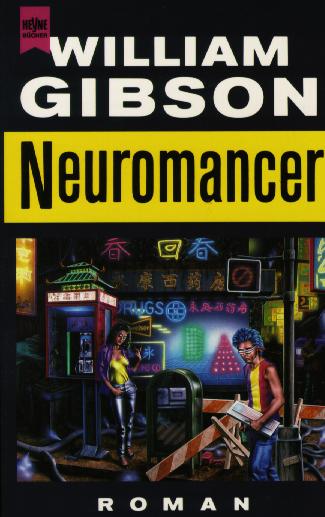
(Besides, they have the world's only Japanese Orthodox Cathedral. And pagodas, and artificial islands. And a slightly larger replica of the Eiffel Tower.)
[1] Note that this context -- that of discussing the archetypes and cliches of media science fiction -- is the only one in which you will ever see me using that particular abbreviation unless I'm writing in character.
21 January 2005
Stuff
Some exciting stuff this week, relating to my current and to my last-completed writing projects. From least through to most exciting:
3. I've received the written confirmation of the permission to use certain copyright quotations in my novella Peculiar Lives (due out in July and with a deadline of the end of this month). These are the vital context-setting quotes I was really hoping I wouldn't have to get rid of. I've also heard back from the agents of the H.G. Wells estate about the Wells excerpt I also wanted to use: it seems I can do so if I cough up £57.50 first. Hmm. I'll have to think about that one.
2. I've also had, much earlier than I was expecting, the proofs of the short story I finished back in October, "Minions of the Moon". It looks very nice laid out, and is in a lovely font as well. I've been through the proofs thoroughly, and I still think this is the best thing I've written to date. The provisional publication date is May, and given that they're getting this organised about it this far in advance, I wouldn't expect too many delays to that. No news as yet on when the publishers will be making their official announcement, but I'll be updating this blog (and my website) the moment they do.
1. But most exciting of all, I've seen the cover for Peculiar Lives, and it's fantastic. I really wish I could show it to people, but again it has to wait until the publishers (not the same ones as for the short story) make their official announcement (possibly mid-February, possibly March). It really is very effective, and manages to recreate elements from inside my head in a creepily accurate way. This is only the second cover to a book I've written all by myself, and I'm probably overreacting somewhat -- but God I'm impressed.
All in all, then, I'm feeling pretty enthused at present, and keen to finish Peculiar Lives and hand it in. No thrilling new projects on the horizon for the moment, but to be honest I'm rather looking forward to having a bit of a rest.
3. I've received the written confirmation of the permission to use certain copyright quotations in my novella Peculiar Lives (due out in July and with a deadline of the end of this month). These are the vital context-setting quotes I was really hoping I wouldn't have to get rid of. I've also heard back from the agents of the H.G. Wells estate about the Wells excerpt I also wanted to use: it seems I can do so if I cough up £57.50 first. Hmm. I'll have to think about that one.
2. I've also had, much earlier than I was expecting, the proofs of the short story I finished back in October, "Minions of the Moon". It looks very nice laid out, and is in a lovely font as well. I've been through the proofs thoroughly, and I still think this is the best thing I've written to date. The provisional publication date is May, and given that they're getting this organised about it this far in advance, I wouldn't expect too many delays to that. No news as yet on when the publishers will be making their official announcement, but I'll be updating this blog (and my website) the moment they do.
1. But most exciting of all, I've seen the cover for Peculiar Lives, and it's fantastic. I really wish I could show it to people, but again it has to wait until the publishers (not the same ones as for the short story) make their official announcement (possibly mid-February, possibly March). It really is very effective, and manages to recreate elements from inside my head in a creepily accurate way. This is only the second cover to a book I've written all by myself, and I'm probably overreacting somewhat -- but God I'm impressed.
All in all, then, I'm feeling pretty enthused at present, and keen to finish Peculiar Lives and hand it in. No thrilling new projects on the horizon for the moment, but to be honest I'm rather looking forward to having a bit of a rest.
18 January 2005
Further Urban Musings
Starting shortly (and probably with Tokyo), I'm going to try and write a bit about each of my top fifteen cities to visit / revisit. In the majority of cases what I write will be heavily based on ignorance, as two-thirds of them are cities I've never been to in my life, but I hope that I can at least justify why these are places I'm keen to visit.
I've never been able to afford a great deal of international travel. Apart from a month of interrailing (as it actually was then) in 1992 -- passing through France, Italy, Greece, the Czech Republic and (if we'd only happened to be awake at the time) Germany and Austria too -- I've only managed trips to countries beginning with an "I" and ending with "land". I've never been out of Europe, unless you count the portion of Iceland that's on the North American continental plate. The non-British cities I've visited (as opposed to staring at in bleary confusion through a train window) have been precisely ten in number: Paris, Milan, Venice, Florence, Rome, Athens, Prague, Dublin, Cork and Reykjavik. Oh, and I think I went to the lavatory in Limerick once.
The point is, I've loved them. (Although I wasn't particularly taken with Limerick.) I find the permutations of behaviour and expression which manifest themselves in human cultures endlessly fascinating, and I'm hungry -- indeed, after not having been out of the country for over five years I'm positively champing at the bit -- for more direct experience of societies and civilisations against which to compare my own. (Other than that of the U.S.A., that is. I've nothing against it, but it does get pumped into my house on an hourly basis, so I'm more or less used to it by now.)
It's one of the things I respond to so strongly in science fiction, I suspect: the exploration of other ways of thinking, of seeing the world, and of responding to it -- whether these are alien in the biological, or merely the parochial, sense.
More specifically, though, I adore cities. Aesthetically, I respond to them with something like the reverent awe which the Romantic poets (who loathed urban spaces to a man) reserved for the countryside. Politically, I warm to their heterogeneity, their cosmopolitanism and their progressiveness. Spiritually, the City of God has always been a far more compelling image to me than that of a dreary horticultural Paradise.
Most of all, I love cities as concrete (or brick or stone or wood or glass or plastic) expressions of their society's characteristic concerns and aspirations -- and all the more so because, simultaneously, they form the environment in which the physical life of that society takes place, resulting in a glorious feedback loop of humanity and its habitat.
It's like art -- no, it's like culture -- that you can walk around in.
That I feel this way may be kind of obvious to those who've read Of the City of the Saved..., but I felt it needed saying anyway.
I've never been able to afford a great deal of international travel. Apart from a month of interrailing (as it actually was then) in 1992 -- passing through France, Italy, Greece, the Czech Republic and (if we'd only happened to be awake at the time) Germany and Austria too -- I've only managed trips to countries beginning with an "I" and ending with "land". I've never been out of Europe, unless you count the portion of Iceland that's on the North American continental plate. The non-British cities I've visited (as opposed to staring at in bleary confusion through a train window) have been precisely ten in number: Paris, Milan, Venice, Florence, Rome, Athens, Prague, Dublin, Cork and Reykjavik. Oh, and I think I went to the lavatory in Limerick once.
The point is, I've loved them. (Although I wasn't particularly taken with Limerick.) I find the permutations of behaviour and expression which manifest themselves in human cultures endlessly fascinating, and I'm hungry -- indeed, after not having been out of the country for over five years I'm positively champing at the bit -- for more direct experience of societies and civilisations against which to compare my own. (Other than that of the U.S.A., that is. I've nothing against it, but it does get pumped into my house on an hourly basis, so I'm more or less used to it by now.)
It's one of the things I respond to so strongly in science fiction, I suspect: the exploration of other ways of thinking, of seeing the world, and of responding to it -- whether these are alien in the biological, or merely the parochial, sense.
More specifically, though, I adore cities. Aesthetically, I respond to them with something like the reverent awe which the Romantic poets (who loathed urban spaces to a man) reserved for the countryside. Politically, I warm to their heterogeneity, their cosmopolitanism and their progressiveness. Spiritually, the City of God has always been a far more compelling image to me than that of a dreary horticultural Paradise.
Most of all, I love cities as concrete (or brick or stone or wood or glass or plastic) expressions of their society's characteristic concerns and aspirations -- and all the more so because, simultaneously, they form the environment in which the physical life of that society takes place, resulting in a glorious feedback loop of humanity and its habitat.
It's like art -- no, it's like culture -- that you can walk around in.
That I feel this way may be kind of obvious to those who've read Of the City of the Saved..., but I felt it needed saying anyway.
Feline Update
The cats are settling in well in the new neighbourhood. For several months now both of them have been happy and relaxed about the house, and have identified favourite places to sit (the sofa, the empty shelf above the satellite TV unit, the hamper my brother and his girlfriend gave us for Christmas two years ago, etc.), but haven't been going outside much, except to sniff at the grass occasionally and come back in.
During the past week, though, Mulder has taken to spending most of his evenings outside, popping back briefly to check that we're still in and then buggering off again before we shut him in. I don't know where exactly he's managed to find some territory to claim as his, but it's evidently out of earshot, because he doesn't come when called[1] and we don't hear his bell.
Yesterday, the Evil Cat whom we've seen occasionally in the area came and sat outside the catflap, and he and Mulder spent quite some time yowling at one another. (Scully stood by with her tail fluffed up like a duster and provided moral support.) Shortly afterwards, Mulder came trotting upstairs to the study to be stroked, seeming very perky, and we've not seen the Evil Cat since. Apparently Mulder is managing to hold his own among the neighbourhood moggies despite his relative smallness and his lack of testicles, which is a good thing.
Scully, on the other hand, just lounges about the house all day. She likes it that way.
[1] Yes, I know -- coming when called isn't exactly a widely-observed behaviour among cats. Mulder isn't terribly bright, however, and almost always does.
During the past week, though, Mulder has taken to spending most of his evenings outside, popping back briefly to check that we're still in and then buggering off again before we shut him in. I don't know where exactly he's managed to find some territory to claim as his, but it's evidently out of earshot, because he doesn't come when called[1] and we don't hear his bell.
Yesterday, the Evil Cat whom we've seen occasionally in the area came and sat outside the catflap, and he and Mulder spent quite some time yowling at one another. (Scully stood by with her tail fluffed up like a duster and provided moral support.) Shortly afterwards, Mulder came trotting upstairs to the study to be stroked, seeming very perky, and we've not seen the Evil Cat since. Apparently Mulder is managing to hold his own among the neighbourhood moggies despite his relative smallness and his lack of testicles, which is a good thing.
Scully, on the other hand, just lounges about the house all day. She likes it that way.
[1] Yes, I know -- coming when called isn't exactly a widely-observed behaviour among cats. Mulder isn't terribly bright, however, and almost always does.
13 January 2005
General Update
Well, life is busy at the moment, what with the rewrites on the novella, the early weeks of term happening, occasional exploding baths and the like.
I'm not getting a lot of time to read non-research stuff at present, but The Separation and Natural History continue to be good. On the research front I've also been reading a pre-proof copy of the novella which comes before Peculiar Lives in its series, which continues a notable trend in this particular series of being rather excellent. (Soon, I hope, I'll be able to mention explicitly which series this is.)
I've also heard from the representative of the estate of one of the S.F. authors I've been hoping to quote, granting me permission to use some specific excerpts. This is a relief, as the quotes in question are crucial context-setting stuff, and help to establish from the beginning that the (rather unappealing) opinions of my narrator are not necessarily my own. I've not yet had written confirmation of the permission, but there's every reason to suppose it's in the bag.
In other news, the students have been running amok at the Library -- talking in the quiet areas, putting books back in the wrong places, making "beep-beep-beep" noises when they walk through the security barrier, and similar horrors. All of this is perfectly normal, of course, and makes me long for the days when librarians were constitutionally empowered to impose custodial setences (or did I make that up?).
I think that many of our students have grown up without direct experience of libraries, and therefore have little conception of the behaviour that's expected of them within one. (The teachers, on the other hand, are often still of the generation which saw librarians as terrifying authority figures, which can be quite fun.)
Oh, and my scooter blew over in the violent winds the other day, smashing its left-side mirror. Fortunately I wasn't straddling it at the time.
I'm not getting a lot of time to read non-research stuff at present, but The Separation and Natural History continue to be good. On the research front I've also been reading a pre-proof copy of the novella which comes before Peculiar Lives in its series, which continues a notable trend in this particular series of being rather excellent. (Soon, I hope, I'll be able to mention explicitly which series this is.)
I've also heard from the representative of the estate of one of the S.F. authors I've been hoping to quote, granting me permission to use some specific excerpts. This is a relief, as the quotes in question are crucial context-setting stuff, and help to establish from the beginning that the (rather unappealing) opinions of my narrator are not necessarily my own. I've not yet had written confirmation of the permission, but there's every reason to suppose it's in the bag.
In other news, the students have been running amok at the Library -- talking in the quiet areas, putting books back in the wrong places, making "beep-beep-beep" noises when they walk through the security barrier, and similar horrors. All of this is perfectly normal, of course, and makes me long for the days when librarians were constitutionally empowered to impose custodial setences (or did I make that up?).
I think that many of our students have grown up without direct experience of libraries, and therefore have little conception of the behaviour that's expected of them within one. (The teachers, on the other hand, are often still of the generation which saw librarians as terrifying authority figures, which can be quite fun.)
Oh, and my scooter blew over in the violent winds the other day, smashing its left-side mirror. Fortunately I wasn't straddling it at the time.
11 January 2005
It Really Is Appalling
It's gone very quiet here since New Year. Is anyone still reading, or have I managed to vanish silently up my own appendix?
Anyway. Not that I want to sound like Disgusted of Bedminster, but reading this story (linked to from Neil Gaiman's Journal) has made me really cross. OK, so this is only one person's version of events (and there are certainly things to be said about the advisability or otherwise of referring to one's employer directly in a blog, which is why I always use the thinly-veiled alias of "St Brad's" for my place of work) but even so, for God's sake.
If Mr Gordon had been giving away company secrets, or entreating his readers to boycott Waterstones, then that might have been justifiable grounds for disciplinary action. All he seems to have been doing, though, is using his blog to moan about the occasional stresses of working for an employer for whom (according not only to himself but also Neil Gaiman, Richard Morgan and Charlie Stross) he was an assiduous worker, an excellent author liaison and a popular public face.
The whole thing reeks of internal management politics, but the fact that the cultural climate is such that Waterstones felt justified in picking on an employee's out-of-hours writings as its excuse for sacking him is pretty bloody sickening, frankly.
(Still, at least I've discovered Ken Macleod's blog through reading Mr Gordon's page. Surprisingly, it seems to be mostly about left-wing politics.)
[Edit 12/1/5: The story's been picked up in the national newspapers now -- The Times, The Scotsman and The Guardian. The Guardian's article in particular does a magnificent job of making Waterstone's look really really bad.]
Anyway. Not that I want to sound like Disgusted of Bedminster, but reading this story (linked to from Neil Gaiman's Journal) has made me really cross. OK, so this is only one person's version of events (and there are certainly things to be said about the advisability or otherwise of referring to one's employer directly in a blog, which is why I always use the thinly-veiled alias of "St Brad's" for my place of work) but even so, for God's sake.
If Mr Gordon had been giving away company secrets, or entreating his readers to boycott Waterstones, then that might have been justifiable grounds for disciplinary action. All he seems to have been doing, though, is using his blog to moan about the occasional stresses of working for an employer for whom (according not only to himself but also Neil Gaiman, Richard Morgan and Charlie Stross) he was an assiduous worker, an excellent author liaison and a popular public face.
The whole thing reeks of internal management politics, but the fact that the cultural climate is such that Waterstones felt justified in picking on an employee's out-of-hours writings as its excuse for sacking him is pretty bloody sickening, frankly.
(Still, at least I've discovered Ken Macleod's blog through reading Mr Gordon's page. Surprisingly, it seems to be mostly about left-wing politics.)
[Edit 12/1/5: The story's been picked up in the national newspapers now -- The Times, The Scotsman and The Guardian. The Guardian's article in particular does a magnificent job of making Waterstone's look really really bad.]
08 January 2005
Your Guest Is As Good As Mine
The Guestbook at www.infinitarian.com hasn't been getting a lot of use really, and I've decided that it's not serving much of a useful purpose. I'm going to remove it from the website.
I was going to archive the link here for posterity's sake, but it seems that Blogspot won't allow the use of javascript tags in posts, so that won't work. Apologies to Sarah, Stuart and Mags, whose comments will no longer be accessible to the world. (They would of course have begun to disappear soon anyway, unless I got organised about upgrading my HaloScan account.)
I was going to archive the link here for posterity's sake, but it seems that Blogspot won't allow the use of javascript tags in posts, so that won't work. Apologies to Sarah, Stuart and Mags, whose comments will no longer be accessible to the world. (They would of course have begun to disappear soon anyway, unless I got organised about upgrading my HaloScan account.)
Urban Legends
Ten cities I have to visit at least once before I die:
1. San Francisco
2. Samarqand
3. St Petersburg
4. Petra
5. New York
6. Machu Picchu
7. Budapest
8. Rio de Janeiro
9. Istanbul
10. Tokyo
Five cities I have to go back to before I die:
1. Florence
2. Prague
3. Reykjavik (NB site is in Icelandic, but the photos are good...)
4. Athens
5. Edinburgh
Oh, well. At least that last one shouldn't pose too big a problem... less so than Machu Picchu, at any rate.
(LiveJournalists, or indeed anyone else: feel free to adopt this as a meme, if you happen to have the time and energy.)
1. San Francisco
2. Samarqand
3. St Petersburg
4. Petra
5. New York
6. Machu Picchu
7. Budapest
8. Rio de Janeiro
9. Istanbul
10. Tokyo
Five cities I have to go back to before I die:
1. Florence
2. Prague
3. Reykjavik (NB site is in Icelandic, but the photos are good...)
4. Athens
5. Edinburgh
Oh, well. At least that last one shouldn't pose too big a problem... less so than Machu Picchu, at any rate.
(LiveJournalists, or indeed anyone else: feel free to adopt this as a meme, if you happen to have the time and energy.)
[Insert Pythonism Here]
Periodically this blog acquires spam-type "comments", obviously placed there automatically, advising me (or perhaps my readers) to check out some dubious source of prescription drugs. I've been banning the specific I.P. addresses via HaloScan, but as one might expect that doesn't seem to be preventing them from appearing. This is annoying, because HaloScan seem to have decided that the blog deserves a maximum of 120 comments (I really really must get round to upgrading the account), and deletes the oldest permanently whenever a new one is posted.
Does anyone else have this problem, and is there any way of fixing it that they know of?
Does anyone else have this problem, and is there any way of fixing it that they know of?
03 January 2005
Recent Acquisitions
Christmas this year was splendid on many fronts. It was, however, somewhat less productive of presents in the form of books than I was hoping, although I did get a new phone and some of the CDs I asked for. (B. and I also received as joint presents a number of items of kitchen equipment she particularly wanted, which is of course very pleasing and not irritating in the least.)
I did, however, manage to acquire the following, by courtesy of my kind and generous birth and marriage families:
Natural History by Justina Robson. Interesting exploration of biological posthumanism, with characters who are passenger airships, deep-space probes and giant breeding machines for creating all the other types of people mentioned. I'm only 100 pages in, but so far it's providing the kind of exploration of the subjectivity of posthuman existence which I found so lacking in Greg Egan's Diaspora. I've not read any of Robson's previous novels, but she's damn good.
1602 by Neil Gaiman. Gaiman's reimagining of the Marvel superhero universe for the year 1602, with a pleasingly spurious time-travel justification. I'm not an avid reader of Marvel, and indeed have learned most of what I know from the recent films based around their characters, but I found this most entertaining (particularly Dr Carlos Javier and his School for the Sons of Gentlemen). 1602 seems not to have been terribly popular among Gaiman's fans, but this kind of creative exercise, of fitting an existing narrative pattern (or complex of patterns) into a novel setting is something I find enormously intellectually stimulating. The example par excellence is Alan Moore's The League of Extraordinary Gentlemen, with its Victorian superhero team-up. Speaking of which...
The Killing Joke by Alan Moore. Not really Moore's best work, despite being his take on by far the best superhero / supervillain pairing, Batman and The Joker. I still prefer Arkham Asylum, but The Killing Joke has its undeniable moments.
The Writer's Handbook 2005 edited by Barry Turner. Useful for work, obviously, so rather less exciting than the others, but still very necessary (and little-sister-in-law tempered the utility of it by also giving me The Killing Joke, so she's lovely anyway).
In addition, a very nice book token from a generous grandfather-in-law allowed me to purchase:
Raw Spirit by Iain Banks. One of my favourite fiction authors, both SF and mainstream, writes as his first non-fiction book a travelogue of Scottish whisky distilleries. This is the sort of project you can only really get away with suggesting when you're very very famous.
Jonathan Strange and Mr Norrell (white cover) by Susanna Clarke. New author, absolutely vast historical-fantasy novel which has been raved about widely. Currently half price from Blackwell's, if anyone's interested.
Newton's Wake by Ken Macleod. I've been wanting this for a while -- MacLeod is another favourite of mine, although his obsession with left-wing politics (much though I approve of it in theory) has become rather overbearing after seven novels. This is his first non-series novel (although I suppose he may yet write a sequel). Looking forward to it, but slightly cautiously.
It may take me quite a while to get around to reading some of these, given that I'm still working on The Separation, which I bought with birthday money back in November... and given that another birthday present, Banks's The Algebraist (which I must get round to reviewing here) took me a month and a half. Who knows, maybe they'll even last me until next birthday.
I did, however, manage to acquire the following, by courtesy of my kind and generous birth and marriage families:
Natural History by Justina Robson. Interesting exploration of biological posthumanism, with characters who are passenger airships, deep-space probes and giant breeding machines for creating all the other types of people mentioned. I'm only 100 pages in, but so far it's providing the kind of exploration of the subjectivity of posthuman existence which I found so lacking in Greg Egan's Diaspora. I've not read any of Robson's previous novels, but she's damn good.
1602 by Neil Gaiman. Gaiman's reimagining of the Marvel superhero universe for the year 1602, with a pleasingly spurious time-travel justification. I'm not an avid reader of Marvel, and indeed have learned most of what I know from the recent films based around their characters, but I found this most entertaining (particularly Dr Carlos Javier and his School for the Sons of Gentlemen). 1602 seems not to have been terribly popular among Gaiman's fans, but this kind of creative exercise, of fitting an existing narrative pattern (or complex of patterns) into a novel setting is something I find enormously intellectually stimulating. The example par excellence is Alan Moore's The League of Extraordinary Gentlemen, with its Victorian superhero team-up. Speaking of which...
The Killing Joke by Alan Moore. Not really Moore's best work, despite being his take on by far the best superhero / supervillain pairing, Batman and The Joker. I still prefer Arkham Asylum, but The Killing Joke has its undeniable moments.
The Writer's Handbook 2005 edited by Barry Turner. Useful for work, obviously, so rather less exciting than the others, but still very necessary (and little-sister-in-law tempered the utility of it by also giving me The Killing Joke, so she's lovely anyway).
In addition, a very nice book token from a generous grandfather-in-law allowed me to purchase:
Raw Spirit by Iain Banks. One of my favourite fiction authors, both SF and mainstream, writes as his first non-fiction book a travelogue of Scottish whisky distilleries. This is the sort of project you can only really get away with suggesting when you're very very famous.
Jonathan Strange and Mr Norrell (white cover) by Susanna Clarke. New author, absolutely vast historical-fantasy novel which has been raved about widely. Currently half price from Blackwell's, if anyone's interested.
Newton's Wake by Ken Macleod. I've been wanting this for a while -- MacLeod is another favourite of mine, although his obsession with left-wing politics (much though I approve of it in theory) has become rather overbearing after seven novels. This is his first non-series novel (although I suppose he may yet write a sequel). Looking forward to it, but slightly cautiously.
It may take me quite a while to get around to reading some of these, given that I'm still working on The Separation, which I bought with birthday money back in November... and given that another birthday present, Banks's The Algebraist (which I must get round to reviewing here) took me a month and a half. Who knows, maybe they'll even last me until next birthday.
Honestly, I Just Found It Lying in the Street...
Feel free to climb down from the brain racks -- the total bewilderment from all quarters which has greeted my enquiry has convinced me that I was probably imagining the whole thing, and that the idea I've outlined is actually original to me. Either that, or that I've nicked it from an author so obscure that nobody's going to notice the borrowing in the novella either.
Of course, I've now given away the ending of the novella to around 95% of the people who actually care. And knowing my luck the first review to appear will say, "The major flaw in the novella is Purser-Hallard's blatant and unacknowledged borrowing from Myron Parboil's The Dominatrices of Time", and I'll immediately bang my forehead and shout "Of course it was bloody Myron Parboil! How could it possibly have been anyone else?".
Which will be unfortunate, but will at least provide some closure for my current sense of unresolved frustration.
Of course, I've now given away the ending of the novella to around 95% of the people who actually care. And knowing my luck the first review to appear will say, "The major flaw in the novella is Purser-Hallard's blatant and unacknowledged borrowing from Myron Parboil's The Dominatrices of Time", and I'll immediately bang my forehead and shout "Of course it was bloody Myron Parboil! How could it possibly have been anyone else?".
Which will be unfortunate, but will at least provide some closure for my current sense of unresolved frustration.
On the Ninth Day of Christmas...
Astonishingly, the answer to the question I asked back here:
Of course, this does no less violence to the ecclesiastical year than putting the damn things up on 6 November did. But it's a great deal more welcome.
Happy New Year, everybody. Hope 2005 has been pleasant and shiny for all of you so far.
Presumably, in our new next-door neighbour's perceptions, the festive season begins just after Bonfire Night, and finishes -- when? Septuagesima? St Valentine's Day? August Bank Holiday?...turns out to be "New Year's Day, if you count from when the Christmas lights are switched off, or 3 January if you consider when they actually come down".
Of course, this does no less violence to the ecclesiastical year than putting the damn things up on 6 November did. But it's a great deal more welcome.
Happy New Year, everybody. Hope 2005 has been pleasant and shiny for all of you so far.
31 December 2004
Brain-Racking Time
There's a literary device which I'm considering using in Peculiar Lives, which I'm certain isn't original. However, I cannot for the life of me recall where I've read it. On the basis that one should always be aware of who one's stealing from, I'm straining my brain to remember where, exactly, I've encountered this particular narrative pattern:
The book, narrated in the first person (and in an archaic style, although whether authentically or in imitation I don't recall), has a false ending which appears to bring the story to a close. Someone close to the narrator (very likely the book's central character) has left him (I believe it's a him), presumably forever. They may well have died, in fact. However, there is a final chapter / passage where the narrator returns in great excitement to writing the supposedly finished story, having just received a visit from the person in question, who has reassured him that all is well. There's some doubt in the reader's mind as to whether this is all a delusion or a dream on the narrator's part. It begins something like "It is with great astonishment / exhilaration / arousal / whatever that I resume my tale, which I had thought forever finished. For [insert name here] has returned to me, this very night!"
It doesn't seem to be from any of the books I thought it might be in. So, I'm opening up the question to the floor. Does this sound familiar, at all whatsoever, to anybody reading this? Or did I dream it?
The book, narrated in the first person (and in an archaic style, although whether authentically or in imitation I don't recall), has a false ending which appears to bring the story to a close. Someone close to the narrator (very likely the book's central character) has left him (I believe it's a him), presumably forever. They may well have died, in fact. However, there is a final chapter / passage where the narrator returns in great excitement to writing the supposedly finished story, having just received a visit from the person in question, who has reassured him that all is well. There's some doubt in the reader's mind as to whether this is all a delusion or a dream on the narrator's part. It begins something like "It is with great astonishment / exhilaration / arousal / whatever that I resume my tale, which I had thought forever finished. For [insert name here] has returned to me, this very night!"
It doesn't seem to be from any of the books I thought it might be in. So, I'm opening up the question to the floor. Does this sound familiar, at all whatsoever, to anybody reading this? Or did I dream it?
24 December 2004
A Very Merry Christmas to All of You at Home
It's been (briefly) a surprisingly sunny Christmas Eve. Earlier I took the scooter up the road to buy earplugs (a vital commodity when visiting one's in-laws), and I felt hot. Now of course it's gone overcast and miserable again, but I appreciate the effort.
I have now finished the first complete draft of my novella (cue angelic trumpets, hallelujahs etc). There's still a lot of work to do before the book's finished, of course -- it needs a thorough rewrite and extensive polish, just in the nature of things; and there are some tricky copyright issues to be worked out, relating to some rather vital chapter epigraphs I want to lift from dead-white-male-but-still-in-copyright S.F. authors. But all of that can wait until 2005.
All of which means I'm allowed to spend the next week Not Working, but instead doing things like reading, eating, drinking and very likely helping with the washing-up. Today, for instance, I have mostly spent in the mind-numbingly tedious tasks of wrapping presents and packing, which has been nice.
Our plan is to spend three days with in-laws, three with parents and New Year's Eve probably in our own living-room watching The Wicker Man on ITV. I may be online at some point (using my parents' broadband, if not my in-laws' dial-up), but I doubt I'll be updating the blog before the 31st or so.
And so, it only remains for me to wish everyone reading this a splendid festive season, however you wish to celebrate it.
[Deity, spirit or impersonal force of choice] bless us, every one.
I have now finished the first complete draft of my novella (cue angelic trumpets, hallelujahs etc). There's still a lot of work to do before the book's finished, of course -- it needs a thorough rewrite and extensive polish, just in the nature of things; and there are some tricky copyright issues to be worked out, relating to some rather vital chapter epigraphs I want to lift from dead-white-male-but-still-in-copyright S.F. authors. But all of that can wait until 2005.
All of which means I'm allowed to spend the next week Not Working, but instead doing things like reading, eating, drinking and very likely helping with the washing-up. Today, for instance, I have mostly spent in the mind-numbingly tedious tasks of wrapping presents and packing, which has been nice.
Our plan is to spend three days with in-laws, three with parents and New Year's Eve probably in our own living-room watching The Wicker Man on ITV. I may be online at some point (using my parents' broadband, if not my in-laws' dial-up), but I doubt I'll be updating the blog before the 31st or so.
And so, it only remains for me to wish everyone reading this a splendid festive season, however you wish to celebrate it.
[Deity, spirit or impersonal force of choice] bless us, every one.
19 December 2004
Slightly Momentous
Well, the novella now has a title. And the title which I've chosen, in consultation with the editor, as being the most appropriate to the volume's content, is... Peculiar Lives.
Trust me, it works. It really does fit the novella remarkably well. It does however, mean that to avoid ambiguity, the title of this blog is going to have to change, slightly, to Peculiar Times. The URL will stay the same -- http://infinitarian.blogspot.com/ -- and there shouldn't be any particular practical implications, except that anyone who links here (er, does anyone?) will have to change the wording.
The title itself has been rattling around inside my brain for ages -- before I kept this blog, I'd used it as the title of an (unpublished) short story about a bookshop owner, and as the name of the bookshop within the story. Using it for a published book should stop me from recycling it again, at least.
Trust me, it works. It really does fit the novella remarkably well. It does however, mean that to avoid ambiguity, the title of this blog is going to have to change, slightly, to Peculiar Times. The URL will stay the same -- http://infinitarian.blogspot.com/ -- and there shouldn't be any particular practical implications, except that anyone who links here (er, does anyone?) will have to change the wording.
The title itself has been rattling around inside my brain for ages -- before I kept this blog, I'd used it as the title of an (unpublished) short story about a bookshop owner, and as the name of the bookshop within the story. Using it for a published book should stop me from recycling it again, at least.
18 December 2004
Goatscape
I've put up my short story 'Scapegoat' (originally published in Emerge), at www.infinitarian.com. I hope some of you like it, at least.
Emerge is an anthology of work by Christians, so the story has a religious theme -- but it's not exactly a conventional one, so I hope it can be of interest to secular readers too.
It's remarkable, looking back at this, to see how my style and approach have changed (for, I hope, the better) in the last couple of years. The concentrated and protracted process of writing Of the City of the Saved..., and since then the short stories and novella, has forced me to focus on the actual mechanics of writing as never before, and my inclination when reading older material like this is to be hyper-critical. The story reads as if I was out to shock the volume's more conservative readers -- which I was -- and this seems a slightly adolescent ambition now. The influence of Sandman on the work is also rather embarrassingly obvious.
If you do find 'Scapegoat' an interesting read, do consider buying Emerge. It's packed with good stuff -- poetry, prose and drama from unpublished and professional authors alike. And Subway is a small press, with some interesting publications under its belt, so it's worth supporting.
Emerge is an anthology of work by Christians, so the story has a religious theme -- but it's not exactly a conventional one, so I hope it can be of interest to secular readers too.
It's remarkable, looking back at this, to see how my style and approach have changed (for, I hope, the better) in the last couple of years. The concentrated and protracted process of writing Of the City of the Saved..., and since then the short stories and novella, has forced me to focus on the actual mechanics of writing as never before, and my inclination when reading older material like this is to be hyper-critical. The story reads as if I was out to shock the volume's more conservative readers -- which I was -- and this seems a slightly adolescent ambition now. The influence of Sandman on the work is also rather embarrassingly obvious.
If you do find 'Scapegoat' an interesting read, do consider buying Emerge. It's packed with good stuff -- poetry, prose and drama from unpublished and professional authors alike. And Subway is a small press, with some interesting publications under its belt, so it's worth supporting.
17 December 2004
Blehh...
...Last day of term, and I really can't be bothered with anything. Tomorrow I begin a week's writing, during which I theoretically finish the first draft of the novella; after that, if I'm really lucky, a week off visiting family, eating far too much and being given presents. So naturally I'm uninclined to deal with the petty problems of students, even if they do all seem suddenly to have developed a remarkable eagerness for study. Perhaps it's just that only the keen ones are in college today.
I've heard back from my editor, to whom I sent the first three-quarters of the novella a couple of weeks ago: he says there's nothing much wrong with it, which is a big relief. My visions of spending February frantically rewriting the whole thing from scratch have now receded rather.
We're discussing covers and blurbs as well, which is always rather exciting. We also need to finalise a title rather urgently, as the novella has to be given a "Coming Soon" slot in the next novella of the series, which is going to the printers in the next week or so. Having decided that A Man Apart was rather crap, I'm now leaning towards Men of the Times, or possibly Man of the Times. The only problem is that that sounds rather like a group of journalists. Hey ho.
I've heard back from my editor, to whom I sent the first three-quarters of the novella a couple of weeks ago: he says there's nothing much wrong with it, which is a big relief. My visions of spending February frantically rewriting the whole thing from scratch have now receded rather.
We're discussing covers and blurbs as well, which is always rather exciting. We also need to finalise a title rather urgently, as the novella has to be given a "Coming Soon" slot in the next novella of the series, which is going to the printers in the next week or so. Having decided that A Man Apart was rather crap, I'm now leaning towards Men of the Times, or possibly Man of the Times. The only problem is that that sounds rather like a group of journalists. Hey ho.
Subscribe to:
Posts (Atom)