It's been over a week now since anybody saw our cat, Mulder. We've been doing everything in our power to find him -- ringing around all the voluntary organisations we can identify, flyering and postering, even going back to search at our last addresss (although honestly, even if he did head back in that direction, to have made it back across the river and through the city centre would be pretty astonishing). It's seeming unlikely, though, that he'll ever be coming back.
As I've said already, Mulder had never even stayed out overnight before last week -- tonight will be the ninth night he's been absent. We know he hasn't been taken in to a vet or shelter, or found by the council, as he has a subcutaneous ID-chip and we'd have been informed. It doesn't seem likely that he's been shut inside all that time, especially since we've distributed flyers asking our neighbours to check their sheds and similar. I can't honestly believe he decided to leave us of his own free will, either -- it would just be so out of character for him.
There is a chance that he somehow found his way into a car boot or something and was taken elsewhere, but that seems slim as well.
Of course we'll carry on doing all we can to find him, but I'm afraid it's looking increasingly as if something dreadful has happened to him -- either an urban predator (there are patches of waste ground nearby where I wouldn't be at all surprised to find foxes, and some of our neighbours have bloody big dogs as well), or an accident (we live near to several large roads and a train line)... and that his body is either somewhere inaccessible, where it won't be found for months or years, or else has already been found by someone who doesn't understand how much people love their cats, and has disposed of it without informing anyone.
It's upsetting to be writing this, but I can't honestly believe any more that another outcome is at all likely.
Mulder was a lovely cat -- so affectionate and loyal. He jingled and chirrupped when he ran to greet us, and would chew the finger of anybody who let him. He panicked easily, especially at the sight of things larger than himself, and would run madly ahead of anyone moving from one room to another, usually running back the other way a few seconds later. He would stand on top of us while we were watching television and assiduously knead at us with his claws, in the hope that doing this might provide him with a source of milk. At other times he would sit quietly on a chair or a shelf, or curl up asleep, cuddling his back legs with his front paws. I have rarely felt more content than those few times when I took a nap on the sofa, and Mulder slept too, warm and heavy on my stomach.
He will be very sadly missed.
15 February 2005

09 February 2005
Missing Cat
As some of you will have read on B.'s LiveJournal, we have a missing cat crisis. Mulder was last seen early on Monday evening, which doesn't sound like a long time ago but he's a very home-loving cat who's never stayed out all night during the six years we've known him. We're both very worried -- frankly, I'm finding it difficult to concentrate on work at present, let alone write any of the stuff I've been meaning to add to this blog.
The chances are that he's OK, but shut into a neighbour's shed, or else hurt in a particularly bad fight and recovering before he comes home. There's no reason yet to assume that anything terrible has happened (although of course it might have). And we've done everything we can, by way of flyering our neighbours, adding him to the RSPCA missing cats database and so on. Still, it's bloody upsetting.
So if I seem quiet at the moment, that's why.
The chances are that he's OK, but shut into a neighbour's shed, or else hurt in a particularly bad fight and recovering before he comes home. There's no reason yet to assume that anything terrible has happened (although of course it might have). And we've done everything we can, by way of flyering our neighbours, adding him to the RSPCA missing cats database and so on. Still, it's bloody upsetting.
So if I seem quiet at the moment, that's why.
05 February 2005
Wildthyme Update
Big Finish have confirmed the announcement of the anthology Wildthyme on Top, to be published later in 2005. The collection features time-traveller, raconteuse and occasional nightclub singer Miss Iris Wildthyme, as created by Paul Magrs. Paul himself has edited the volume, and the contributors are Jonathan Blum, Stephen Cole, Jake Elliot, Craig Hinton, Kate Orman, Lance Parkin, Jacqueline Rayner, Justin Richards, Stewart Sheargold and me.
My short story's entitled "Minions of the Moon", and I'm particularly proud of it.
As yet there's no sign of a cover image or blurb for the book, so the information available is still rather minimal. Nevertheless, I've set up a rather spartan webpage here.
My short story's entitled "Minions of the Moon", and I'm particularly proud of it.
As yet there's no sign of a cover image or blurb for the book, so the information available is still rather minimal. Nevertheless, I've set up a rather spartan webpage here.
I'd Like to Thank My Cats...
Some pleasing news this morning: Of the City of the Saved... has come first in a number of categories in the 2004 Jade Pagoda Awards, organised by the redoubtable Will Salmon and voted for by members of the Jade Pagoda Doctor Who books mailing list.
As a perusal of this post will reveal, OtCotS won both "Best Doctor Who Related Book" and "Best Book"[1], while the concept of the City itself was awarded "Best Returning Character or Concept" after its previous appearance in The Book of the War. I was awarded "Best New Author" and "Best Author" (the former slightly unfair as I'm a first-time novelist rather than actually a new author, but there you go), and even www.infinitarian.com received (again rather inaccurately) "Best Doctor Who Author's Website".
Admittedly not all of the Jade Pagoda's 460 members will have voted in the awards. I'm also a long-term member of the list, so there may well have been some bias in operation. But even so, I'm pleased and flattered, and very slightly embarassed.
(In the Acknowledgements to the novel, I do actually thank my cats for their contribution. This may have been overkill.)
[1] Some elaboration is probably required here: "Best Doctor Who Related Book" covers all Doctor Who-related books not covered by the other categories, including spin-offs like the Faction Paradox novels. "Best Book" in this context covers all the categories, and therefore means... well, best Doctor Who-related book. Er, clear now?
As a perusal of this post will reveal, OtCotS won both "Best Doctor Who Related Book" and "Best Book"[1], while the concept of the City itself was awarded "Best Returning Character or Concept" after its previous appearance in The Book of the War. I was awarded "Best New Author" and "Best Author" (the former slightly unfair as I'm a first-time novelist rather than actually a new author, but there you go), and even www.infinitarian.com received (again rather inaccurately) "Best Doctor Who Author's Website".
Admittedly not all of the Jade Pagoda's 460 members will have voted in the awards. I'm also a long-term member of the list, so there may well have been some bias in operation. But even so, I'm pleased and flattered, and very slightly embarassed.
(In the Acknowledgements to the novel, I do actually thank my cats for their contribution. This may have been overkill.)
[1] Some elaboration is probably required here: "Best Doctor Who Related Book" covers all Doctor Who-related books not covered by the other categories, including spin-offs like the Faction Paradox novels. "Best Book" in this context covers all the categories, and therefore means... well, best Doctor Who-related book. Er, clear now?
04 February 2005
Finally Friday
Well, the week's relaxing hasn't gone as well as I expected. What with skiving (or, if you insist, legitimately absent) workmates, a puncture to the back tire of the scooter and a Wedesday evening spent subjected to furniture shopping at the Pestilent Vatican of Beelzebub, things have actually been appallingly busy. Still, I do now get a weekend off, rather than a weekend of work, and the week after next is half term, so with luck I might get a chance to relax a bit then.
Today at work I have been mostly withdrawing books from stock and updating the library catalogue with links to websites, which tells you all you need to know about the state of library provision in education at present.
There has now been a rather minimalist official announcement of the anthology in which my short story "Minions of the Moon" is appearing. It's called Wildthyme on Top, will be published by Big Finish (who put out A Life Worth Living), and is edited by the respected novelist Paul Magrs: see Stuart Douglas's Iris Wildthyme website for (currently rather sketchy) details. I'll be updating my own site once the publishers have updated theirs.
Today at work I have been mostly withdrawing books from stock and updating the library catalogue with links to websites, which tells you all you need to know about the state of library provision in education at present.
There has now been a rather minimalist official announcement of the anthology in which my short story "Minions of the Moon" is appearing. It's called Wildthyme on Top, will be published by Big Finish (who put out A Life Worth Living), and is edited by the respected novelist Paul Magrs: see Stuart Douglas's Iris Wildthyme website for (currently rather sketchy) details. I'll be updating my own site once the publishers have updated theirs.
30 January 2005
Ahem...
...I do apologise for last night's manic post.
Today I decided that enough was enough. I did a last-minute fix for the minor plot implications of a historical error I'd made, checked carefully that none of the changes I made yesterday when in a not-terribly-stable state of mind were actually catastrophic, made sure that my contents page matched my chapter titles, and ran a final spellcheck. Then, even though my deadline isn't technically until tomorrow, I sent the final draft off to my editor. Hurrah.
Now I'm taking books from my "research" shelf, which I have located on the wall just above my computer monitor, and putting them back in their correct places on my other shelves. Which is remarkably satisfying, even if some of them have acquired colleagues while on the research shelf and therefore don't necessarily fit properly any more.
For the first time in about a year, I don't have an ongoing writing project, at least that anyone is paying me for. Maybe I'll get to lounge around for a few weeks watching videos and drinking tequila. (When I'm not at work, obviously. We do tend to frown on that kind of behaviour in the Library.)
Of course, I have just received a document inviting pitches for yet another short-story anthology. And I have some proposals for full-length books I want to put to a couple of publishers, plus I'm waiting to hear back about one I submitted in July or thereabouts. And I have some ideas for both mainstream S.F. and actual-mainstream novels which I want to do some work on while I'm not otherwise occupied...
...but sod it, I need a break first. Tequila it is, then.
Today I decided that enough was enough. I did a last-minute fix for the minor plot implications of a historical error I'd made, checked carefully that none of the changes I made yesterday when in a not-terribly-stable state of mind were actually catastrophic, made sure that my contents page matched my chapter titles, and ran a final spellcheck. Then, even though my deadline isn't technically until tomorrow, I sent the final draft off to my editor. Hurrah.
Now I'm taking books from my "research" shelf, which I have located on the wall just above my computer monitor, and putting them back in their correct places on my other shelves. Which is remarkably satisfying, even if some of them have acquired colleagues while on the research shelf and therefore don't necessarily fit properly any more.
For the first time in about a year, I don't have an ongoing writing project, at least that anyone is paying me for. Maybe I'll get to lounge around for a few weeks watching videos and drinking tequila. (When I'm not at work, obviously. We do tend to frown on that kind of behaviour in the Library.)
Of course, I have just received a document inviting pitches for yet another short-story anthology. And I have some proposals for full-length books I want to put to a couple of publishers, plus I'm waiting to hear back about one I submitted in July or thereabouts. And I have some ideas for both mainstream S.F. and actual-mainstream novels which I want to do some work on while I'm not otherwise occupied...
...but sod it, I need a break first. Tequila it is, then.
29 January 2005
We All Have Our Albatrosses to Bear
I'm in the final, exhausted stages of Peculiar Lives now, printing out, reading through, noting changes, making changes, printing out again, etcetera ad infinitum or until I go STARK RAVING MAD, whichever happens first. Except that my printer has run out of ink, so I may be stuck with noting the remaining changes electronically.
This final stage is always frustrating, because I'm too close to the text to be able to assess it with any kind of objectivity: by now I can scarcely read a single sentence from it without groaning. I know, with all the certainty with which I know that I am not Pope Pius XII, that as soon as the damn novella is in print -- no, as soon as I get the proofs back from the publishers, as soon, in short, as it's too damn late to make any substantive changes -- that huge egregious errors in the writing will leap from the page and dance up and down in front of my eyes, twirling their ragged skirts and singing "Knees up Mother Brown".
Excuse me. I think I may have, as previously posited, gone STARK RAVING MAD.
In other news, there is no other news. There is is no possibility of other news. There is only The Novella. The whole of the rest of existence has receded, and is barely a smear on the horizon of my ocean of self-obsession.
And now I must plunge back in.
All together now: "Readers of my earlier book, The Peculiar, will recognise in the current volume the sequel and conclusion to its remarkable story. Like The Peculiar, Peculiar Lives is not fiction, but a true chronicle..."
This final stage is always frustrating, because I'm too close to the text to be able to assess it with any kind of objectivity: by now I can scarcely read a single sentence from it without groaning. I know, with all the certainty with which I know that I am not Pope Pius XII, that as soon as the damn novella is in print -- no, as soon as I get the proofs back from the publishers, as soon, in short, as it's too damn late to make any substantive changes -- that huge egregious errors in the writing will leap from the page and dance up and down in front of my eyes, twirling their ragged skirts and singing "Knees up Mother Brown".
Excuse me. I think I may have, as previously posited, gone STARK RAVING MAD.
In other news, there is no other news. There is is no possibility of other news. There is only The Novella. The whole of the rest of existence has receded, and is barely a smear on the horizon of my ocean of self-obsession.
And now I must plunge back in.
All together now: "Readers of my earlier book, The Peculiar, will recognise in the current volume the sequel and conclusion to its remarkable story. Like The Peculiar, Peculiar Lives is not fiction, but a true chronicle..."
25 January 2005
Speculative Cityscape: Tokyo
It's been a week since I promised to explain why I want to go to Tokyo. (For context, see here.) So, here we are then...
Why I Want to Go to Tokyo
by Philip Purser-Hallard aged 33 1/4.
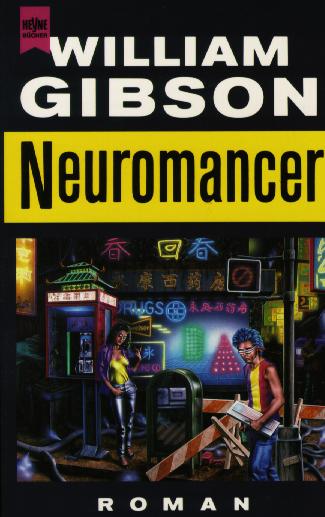
I've never visited Tokyo, of course, this being pretty much the point. I'm almost entirely ignorant (or at least I was before I started researching this piece) about the particulars of the place itself: what appeals is its status as an archetype. For Tokyo is basically the nearest thing on present-day Earth to the Ultimate Sci-Fi City™[1].
For a start, it's big. Admittedly it has relatively few skyscraper-scale buildings because of caution regarding earthquakes (for actual high-rise buildings it seems Shanghai or Taipei are better bets), but it sprawls quite impressively. It contains more people than any other urban conglomeration, with some twelve million individuals (forty times the population of, say, Iceland) living in the city itself. It's been the definitive twenty-first century megalopolis for a good fifty years now, its scale matched only by the destructive power of the nuclear-spawned monsters recruited to demolish it in those (equally nuclear-spawned) post-War Daikaiju movies.
It's not only big, it's alien. Naturally I'm using the word in its old-fashioned sense here (although at least one traditional strand of science fiction has always used its extraterrestrials as metaphors for non-Western cultures -- and there's nothing intrinsically wrong with that, even if it has given us some of media S.F.'s more clichéd alien societies). I'm also speaking, of course, as a white European, and therefore as someone who would have been barred from Japan altogether until 1853. From my point of view, Japan is a country on the other side of the world, which deliberately isolated itself from all outside influences for centuries, and which -- despite the last few generations' superficial Westernisation -- retains many aspects of a mindset and a culture which are completely foreign to my own. This comes across visually in every aspect of the city from the religion to the advertising, and I find it fascinating.
Most of all, though, Tokyo is almost insanely futuristic. This is partly because it actually is a hotbed of cutting-edge technology, partly because the vast majority of it has been built during a period of intense architectural experimentation; but mostly because, during a particular (and recent) era of the genre's development, science fiction so frequently looked to Japan as its exemplar when imagining Earth's future. Everything I wrote about cities as concrete expressions of culture applies, but in Tokyo's case everything is both amplified and fast-forwarded: it expresses equally our hopes and fears about the future of our global civilisation (which I always understand as "citification", from the Latin "civis"). And I want to take a closer look.
(Besides, they have the world's only Japanese Orthodox Cathedral. And pagodas, and artificial islands. And a slightly larger replica of the Eiffel Tower.)
[1] Note that this context -- that of discussing the archetypes and cliches of media science fiction -- is the only one in which you will ever see me using that particular abbreviation unless I'm writing in character.
Why I Want to Go to Tokyo
by Philip Purser-Hallard aged 33 1/4.
I've never visited Tokyo, of course, this being pretty much the point. I'm almost entirely ignorant (or at least I was before I started researching this piece) about the particulars of the place itself: what appeals is its status as an archetype. For Tokyo is basically the nearest thing on present-day Earth to the Ultimate Sci-Fi City™[1].
For a start, it's big. Admittedly it has relatively few skyscraper-scale buildings because of caution regarding earthquakes (for actual high-rise buildings it seems Shanghai or Taipei are better bets), but it sprawls quite impressively. It contains more people than any other urban conglomeration, with some twelve million individuals (forty times the population of, say, Iceland) living in the city itself. It's been the definitive twenty-first century megalopolis for a good fifty years now, its scale matched only by the destructive power of the nuclear-spawned monsters recruited to demolish it in those (equally nuclear-spawned) post-War Daikaiju movies.
It's not only big, it's alien. Naturally I'm using the word in its old-fashioned sense here (although at least one traditional strand of science fiction has always used its extraterrestrials as metaphors for non-Western cultures -- and there's nothing intrinsically wrong with that, even if it has given us some of media S.F.'s more clichéd alien societies). I'm also speaking, of course, as a white European, and therefore as someone who would have been barred from Japan altogether until 1853. From my point of view, Japan is a country on the other side of the world, which deliberately isolated itself from all outside influences for centuries, and which -- despite the last few generations' superficial Westernisation -- retains many aspects of a mindset and a culture which are completely foreign to my own. This comes across visually in every aspect of the city from the religion to the advertising, and I find it fascinating.
Most of all, though, Tokyo is almost insanely futuristic. This is partly because it actually is a hotbed of cutting-edge technology, partly because the vast majority of it has been built during a period of intense architectural experimentation; but mostly because, during a particular (and recent) era of the genre's development, science fiction so frequently looked to Japan as its exemplar when imagining Earth's future. Everything I wrote about cities as concrete expressions of culture applies, but in Tokyo's case everything is both amplified and fast-forwarded: it expresses equally our hopes and fears about the future of our global civilisation (which I always understand as "citification", from the Latin "civis"). And I want to take a closer look.
(Besides, they have the world's only Japanese Orthodox Cathedral. And pagodas, and artificial islands. And a slightly larger replica of the Eiffel Tower.)
[1] Note that this context -- that of discussing the archetypes and cliches of media science fiction -- is the only one in which you will ever see me using that particular abbreviation unless I'm writing in character.
21 January 2005
Stuff
Some exciting stuff this week, relating to my current and to my last-completed writing projects. From least through to most exciting:
3. I've received the written confirmation of the permission to use certain copyright quotations in my novella Peculiar Lives (due out in July and with a deadline of the end of this month). These are the vital context-setting quotes I was really hoping I wouldn't have to get rid of. I've also heard back from the agents of the H.G. Wells estate about the Wells excerpt I also wanted to use: it seems I can do so if I cough up £57.50 first. Hmm. I'll have to think about that one.
2. I've also had, much earlier than I was expecting, the proofs of the short story I finished back in October, "Minions of the Moon". It looks very nice laid out, and is in a lovely font as well. I've been through the proofs thoroughly, and I still think this is the best thing I've written to date. The provisional publication date is May, and given that they're getting this organised about it this far in advance, I wouldn't expect too many delays to that. No news as yet on when the publishers will be making their official announcement, but I'll be updating this blog (and my website) the moment they do.
1. But most exciting of all, I've seen the cover for Peculiar Lives, and it's fantastic. I really wish I could show it to people, but again it has to wait until the publishers (not the same ones as for the short story) make their official announcement (possibly mid-February, possibly March). It really is very effective, and manages to recreate elements from inside my head in a creepily accurate way. This is only the second cover to a book I've written all by myself, and I'm probably overreacting somewhat -- but God I'm impressed.
All in all, then, I'm feeling pretty enthused at present, and keen to finish Peculiar Lives and hand it in. No thrilling new projects on the horizon for the moment, but to be honest I'm rather looking forward to having a bit of a rest.
3. I've received the written confirmation of the permission to use certain copyright quotations in my novella Peculiar Lives (due out in July and with a deadline of the end of this month). These are the vital context-setting quotes I was really hoping I wouldn't have to get rid of. I've also heard back from the agents of the H.G. Wells estate about the Wells excerpt I also wanted to use: it seems I can do so if I cough up £57.50 first. Hmm. I'll have to think about that one.
2. I've also had, much earlier than I was expecting, the proofs of the short story I finished back in October, "Minions of the Moon". It looks very nice laid out, and is in a lovely font as well. I've been through the proofs thoroughly, and I still think this is the best thing I've written to date. The provisional publication date is May, and given that they're getting this organised about it this far in advance, I wouldn't expect too many delays to that. No news as yet on when the publishers will be making their official announcement, but I'll be updating this blog (and my website) the moment they do.
1. But most exciting of all, I've seen the cover for Peculiar Lives, and it's fantastic. I really wish I could show it to people, but again it has to wait until the publishers (not the same ones as for the short story) make their official announcement (possibly mid-February, possibly March). It really is very effective, and manages to recreate elements from inside my head in a creepily accurate way. This is only the second cover to a book I've written all by myself, and I'm probably overreacting somewhat -- but God I'm impressed.
All in all, then, I'm feeling pretty enthused at present, and keen to finish Peculiar Lives and hand it in. No thrilling new projects on the horizon for the moment, but to be honest I'm rather looking forward to having a bit of a rest.
18 January 2005
Further Urban Musings
Starting shortly (and probably with Tokyo), I'm going to try and write a bit about each of my top fifteen cities to visit / revisit. In the majority of cases what I write will be heavily based on ignorance, as two-thirds of them are cities I've never been to in my life, but I hope that I can at least justify why these are places I'm keen to visit.
I've never been able to afford a great deal of international travel. Apart from a month of interrailing (as it actually was then) in 1992 -- passing through France, Italy, Greece, the Czech Republic and (if we'd only happened to be awake at the time) Germany and Austria too -- I've only managed trips to countries beginning with an "I" and ending with "land". I've never been out of Europe, unless you count the portion of Iceland that's on the North American continental plate. The non-British cities I've visited (as opposed to staring at in bleary confusion through a train window) have been precisely ten in number: Paris, Milan, Venice, Florence, Rome, Athens, Prague, Dublin, Cork and Reykjavik. Oh, and I think I went to the lavatory in Limerick once.
The point is, I've loved them. (Although I wasn't particularly taken with Limerick.) I find the permutations of behaviour and expression which manifest themselves in human cultures endlessly fascinating, and I'm hungry -- indeed, after not having been out of the country for over five years I'm positively champing at the bit -- for more direct experience of societies and civilisations against which to compare my own. (Other than that of the U.S.A., that is. I've nothing against it, but it does get pumped into my house on an hourly basis, so I'm more or less used to it by now.)
It's one of the things I respond to so strongly in science fiction, I suspect: the exploration of other ways of thinking, of seeing the world, and of responding to it -- whether these are alien in the biological, or merely the parochial, sense.
More specifically, though, I adore cities. Aesthetically, I respond to them with something like the reverent awe which the Romantic poets (who loathed urban spaces to a man) reserved for the countryside. Politically, I warm to their heterogeneity, their cosmopolitanism and their progressiveness. Spiritually, the City of God has always been a far more compelling image to me than that of a dreary horticultural Paradise.
Most of all, I love cities as concrete (or brick or stone or wood or glass or plastic) expressions of their society's characteristic concerns and aspirations -- and all the more so because, simultaneously, they form the environment in which the physical life of that society takes place, resulting in a glorious feedback loop of humanity and its habitat.
It's like art -- no, it's like culture -- that you can walk around in.
That I feel this way may be kind of obvious to those who've read Of the City of the Saved..., but I felt it needed saying anyway.
I've never been able to afford a great deal of international travel. Apart from a month of interrailing (as it actually was then) in 1992 -- passing through France, Italy, Greece, the Czech Republic and (if we'd only happened to be awake at the time) Germany and Austria too -- I've only managed trips to countries beginning with an "I" and ending with "land". I've never been out of Europe, unless you count the portion of Iceland that's on the North American continental plate. The non-British cities I've visited (as opposed to staring at in bleary confusion through a train window) have been precisely ten in number: Paris, Milan, Venice, Florence, Rome, Athens, Prague, Dublin, Cork and Reykjavik. Oh, and I think I went to the lavatory in Limerick once.
The point is, I've loved them. (Although I wasn't particularly taken with Limerick.) I find the permutations of behaviour and expression which manifest themselves in human cultures endlessly fascinating, and I'm hungry -- indeed, after not having been out of the country for over five years I'm positively champing at the bit -- for more direct experience of societies and civilisations against which to compare my own. (Other than that of the U.S.A., that is. I've nothing against it, but it does get pumped into my house on an hourly basis, so I'm more or less used to it by now.)
It's one of the things I respond to so strongly in science fiction, I suspect: the exploration of other ways of thinking, of seeing the world, and of responding to it -- whether these are alien in the biological, or merely the parochial, sense.
More specifically, though, I adore cities. Aesthetically, I respond to them with something like the reverent awe which the Romantic poets (who loathed urban spaces to a man) reserved for the countryside. Politically, I warm to their heterogeneity, their cosmopolitanism and their progressiveness. Spiritually, the City of God has always been a far more compelling image to me than that of a dreary horticultural Paradise.
Most of all, I love cities as concrete (or brick or stone or wood or glass or plastic) expressions of their society's characteristic concerns and aspirations -- and all the more so because, simultaneously, they form the environment in which the physical life of that society takes place, resulting in a glorious feedback loop of humanity and its habitat.
It's like art -- no, it's like culture -- that you can walk around in.
That I feel this way may be kind of obvious to those who've read Of the City of the Saved..., but I felt it needed saying anyway.
Feline Update
The cats are settling in well in the new neighbourhood. For several months now both of them have been happy and relaxed about the house, and have identified favourite places to sit (the sofa, the empty shelf above the satellite TV unit, the hamper my brother and his girlfriend gave us for Christmas two years ago, etc.), but haven't been going outside much, except to sniff at the grass occasionally and come back in.
During the past week, though, Mulder has taken to spending most of his evenings outside, popping back briefly to check that we're still in and then buggering off again before we shut him in. I don't know where exactly he's managed to find some territory to claim as his, but it's evidently out of earshot, because he doesn't come when called[1] and we don't hear his bell.
Yesterday, the Evil Cat whom we've seen occasionally in the area came and sat outside the catflap, and he and Mulder spent quite some time yowling at one another. (Scully stood by with her tail fluffed up like a duster and provided moral support.) Shortly afterwards, Mulder came trotting upstairs to the study to be stroked, seeming very perky, and we've not seen the Evil Cat since. Apparently Mulder is managing to hold his own among the neighbourhood moggies despite his relative smallness and his lack of testicles, which is a good thing.
Scully, on the other hand, just lounges about the house all day. She likes it that way.
[1] Yes, I know -- coming when called isn't exactly a widely-observed behaviour among cats. Mulder isn't terribly bright, however, and almost always does.
During the past week, though, Mulder has taken to spending most of his evenings outside, popping back briefly to check that we're still in and then buggering off again before we shut him in. I don't know where exactly he's managed to find some territory to claim as his, but it's evidently out of earshot, because he doesn't come when called[1] and we don't hear his bell.
Yesterday, the Evil Cat whom we've seen occasionally in the area came and sat outside the catflap, and he and Mulder spent quite some time yowling at one another. (Scully stood by with her tail fluffed up like a duster and provided moral support.) Shortly afterwards, Mulder came trotting upstairs to the study to be stroked, seeming very perky, and we've not seen the Evil Cat since. Apparently Mulder is managing to hold his own among the neighbourhood moggies despite his relative smallness and his lack of testicles, which is a good thing.
Scully, on the other hand, just lounges about the house all day. She likes it that way.
[1] Yes, I know -- coming when called isn't exactly a widely-observed behaviour among cats. Mulder isn't terribly bright, however, and almost always does.
13 January 2005
General Update
Well, life is busy at the moment, what with the rewrites on the novella, the early weeks of term happening, occasional exploding baths and the like.
I'm not getting a lot of time to read non-research stuff at present, but The Separation and Natural History continue to be good. On the research front I've also been reading a pre-proof copy of the novella which comes before Peculiar Lives in its series, which continues a notable trend in this particular series of being rather excellent. (Soon, I hope, I'll be able to mention explicitly which series this is.)
I've also heard from the representative of the estate of one of the S.F. authors I've been hoping to quote, granting me permission to use some specific excerpts. This is a relief, as the quotes in question are crucial context-setting stuff, and help to establish from the beginning that the (rather unappealing) opinions of my narrator are not necessarily my own. I've not yet had written confirmation of the permission, but there's every reason to suppose it's in the bag.
In other news, the students have been running amok at the Library -- talking in the quiet areas, putting books back in the wrong places, making "beep-beep-beep" noises when they walk through the security barrier, and similar horrors. All of this is perfectly normal, of course, and makes me long for the days when librarians were constitutionally empowered to impose custodial setences (or did I make that up?).
I think that many of our students have grown up without direct experience of libraries, and therefore have little conception of the behaviour that's expected of them within one. (The teachers, on the other hand, are often still of the generation which saw librarians as terrifying authority figures, which can be quite fun.)
Oh, and my scooter blew over in the violent winds the other day, smashing its left-side mirror. Fortunately I wasn't straddling it at the time.
I'm not getting a lot of time to read non-research stuff at present, but The Separation and Natural History continue to be good. On the research front I've also been reading a pre-proof copy of the novella which comes before Peculiar Lives in its series, which continues a notable trend in this particular series of being rather excellent. (Soon, I hope, I'll be able to mention explicitly which series this is.)
I've also heard from the representative of the estate of one of the S.F. authors I've been hoping to quote, granting me permission to use some specific excerpts. This is a relief, as the quotes in question are crucial context-setting stuff, and help to establish from the beginning that the (rather unappealing) opinions of my narrator are not necessarily my own. I've not yet had written confirmation of the permission, but there's every reason to suppose it's in the bag.
In other news, the students have been running amok at the Library -- talking in the quiet areas, putting books back in the wrong places, making "beep-beep-beep" noises when they walk through the security barrier, and similar horrors. All of this is perfectly normal, of course, and makes me long for the days when librarians were constitutionally empowered to impose custodial setences (or did I make that up?).
I think that many of our students have grown up without direct experience of libraries, and therefore have little conception of the behaviour that's expected of them within one. (The teachers, on the other hand, are often still of the generation which saw librarians as terrifying authority figures, which can be quite fun.)
Oh, and my scooter blew over in the violent winds the other day, smashing its left-side mirror. Fortunately I wasn't straddling it at the time.
11 January 2005
It Really Is Appalling
It's gone very quiet here since New Year. Is anyone still reading, or have I managed to vanish silently up my own appendix?
Anyway. Not that I want to sound like Disgusted of Bedminster, but reading this story (linked to from Neil Gaiman's Journal) has made me really cross. OK, so this is only one person's version of events (and there are certainly things to be said about the advisability or otherwise of referring to one's employer directly in a blog, which is why I always use the thinly-veiled alias of "St Brad's" for my place of work) but even so, for God's sake.
If Mr Gordon had been giving away company secrets, or entreating his readers to boycott Waterstones, then that might have been justifiable grounds for disciplinary action. All he seems to have been doing, though, is using his blog to moan about the occasional stresses of working for an employer for whom (according not only to himself but also Neil Gaiman, Richard Morgan and Charlie Stross) he was an assiduous worker, an excellent author liaison and a popular public face.
The whole thing reeks of internal management politics, but the fact that the cultural climate is such that Waterstones felt justified in picking on an employee's out-of-hours writings as its excuse for sacking him is pretty bloody sickening, frankly.
(Still, at least I've discovered Ken Macleod's blog through reading Mr Gordon's page. Surprisingly, it seems to be mostly about left-wing politics.)
[Edit 12/1/5: The story's been picked up in the national newspapers now -- The Times, The Scotsman and The Guardian. The Guardian's article in particular does a magnificent job of making Waterstone's look really really bad.]
Anyway. Not that I want to sound like Disgusted of Bedminster, but reading this story (linked to from Neil Gaiman's Journal) has made me really cross. OK, so this is only one person's version of events (and there are certainly things to be said about the advisability or otherwise of referring to one's employer directly in a blog, which is why I always use the thinly-veiled alias of "St Brad's" for my place of work) but even so, for God's sake.
If Mr Gordon had been giving away company secrets, or entreating his readers to boycott Waterstones, then that might have been justifiable grounds for disciplinary action. All he seems to have been doing, though, is using his blog to moan about the occasional stresses of working for an employer for whom (according not only to himself but also Neil Gaiman, Richard Morgan and Charlie Stross) he was an assiduous worker, an excellent author liaison and a popular public face.
The whole thing reeks of internal management politics, but the fact that the cultural climate is such that Waterstones felt justified in picking on an employee's out-of-hours writings as its excuse for sacking him is pretty bloody sickening, frankly.
(Still, at least I've discovered Ken Macleod's blog through reading Mr Gordon's page. Surprisingly, it seems to be mostly about left-wing politics.)
[Edit 12/1/5: The story's been picked up in the national newspapers now -- The Times, The Scotsman and The Guardian. The Guardian's article in particular does a magnificent job of making Waterstone's look really really bad.]
08 January 2005
Your Guest Is As Good As Mine
The Guestbook at www.infinitarian.com hasn't been getting a lot of use really, and I've decided that it's not serving much of a useful purpose. I'm going to remove it from the website.
I was going to archive the link here for posterity's sake, but it seems that Blogspot won't allow the use of javascript tags in posts, so that won't work. Apologies to Sarah, Stuart and Mags, whose comments will no longer be accessible to the world. (They would of course have begun to disappear soon anyway, unless I got organised about upgrading my HaloScan account.)
I was going to archive the link here for posterity's sake, but it seems that Blogspot won't allow the use of javascript tags in posts, so that won't work. Apologies to Sarah, Stuart and Mags, whose comments will no longer be accessible to the world. (They would of course have begun to disappear soon anyway, unless I got organised about upgrading my HaloScan account.)
Urban Legends
Ten cities I have to visit at least once before I die:
1. San Francisco
2. Samarqand
3. St Petersburg
4. Petra
5. New York
6. Machu Picchu
7. Budapest
8. Rio de Janeiro
9. Istanbul
10. Tokyo
Five cities I have to go back to before I die:
1. Florence
2. Prague
3. Reykjavik (NB site is in Icelandic, but the photos are good...)
4. Athens
5. Edinburgh
Oh, well. At least that last one shouldn't pose too big a problem... less so than Machu Picchu, at any rate.
(LiveJournalists, or indeed anyone else: feel free to adopt this as a meme, if you happen to have the time and energy.)
1. San Francisco
2. Samarqand
3. St Petersburg
4. Petra
5. New York
6. Machu Picchu
7. Budapest
8. Rio de Janeiro
9. Istanbul
10. Tokyo
Five cities I have to go back to before I die:
1. Florence
2. Prague
3. Reykjavik (NB site is in Icelandic, but the photos are good...)
4. Athens
5. Edinburgh
Oh, well. At least that last one shouldn't pose too big a problem... less so than Machu Picchu, at any rate.
(LiveJournalists, or indeed anyone else: feel free to adopt this as a meme, if you happen to have the time and energy.)
[Insert Pythonism Here]
Periodically this blog acquires spam-type "comments", obviously placed there automatically, advising me (or perhaps my readers) to check out some dubious source of prescription drugs. I've been banning the specific I.P. addresses via HaloScan, but as one might expect that doesn't seem to be preventing them from appearing. This is annoying, because HaloScan seem to have decided that the blog deserves a maximum of 120 comments (I really really must get round to upgrading the account), and deletes the oldest permanently whenever a new one is posted.
Does anyone else have this problem, and is there any way of fixing it that they know of?
Does anyone else have this problem, and is there any way of fixing it that they know of?
03 January 2005
Recent Acquisitions
Christmas this year was splendid on many fronts. It was, however, somewhat less productive of presents in the form of books than I was hoping, although I did get a new phone and some of the CDs I asked for. (B. and I also received as joint presents a number of items of kitchen equipment she particularly wanted, which is of course very pleasing and not irritating in the least.)
I did, however, manage to acquire the following, by courtesy of my kind and generous birth and marriage families:
Natural History by Justina Robson. Interesting exploration of biological posthumanism, with characters who are passenger airships, deep-space probes and giant breeding machines for creating all the other types of people mentioned. I'm only 100 pages in, but so far it's providing the kind of exploration of the subjectivity of posthuman existence which I found so lacking in Greg Egan's Diaspora. I've not read any of Robson's previous novels, but she's damn good.
1602 by Neil Gaiman. Gaiman's reimagining of the Marvel superhero universe for the year 1602, with a pleasingly spurious time-travel justification. I'm not an avid reader of Marvel, and indeed have learned most of what I know from the recent films based around their characters, but I found this most entertaining (particularly Dr Carlos Javier and his School for the Sons of Gentlemen). 1602 seems not to have been terribly popular among Gaiman's fans, but this kind of creative exercise, of fitting an existing narrative pattern (or complex of patterns) into a novel setting is something I find enormously intellectually stimulating. The example par excellence is Alan Moore's The League of Extraordinary Gentlemen, with its Victorian superhero team-up. Speaking of which...
The Killing Joke by Alan Moore. Not really Moore's best work, despite being his take on by far the best superhero / supervillain pairing, Batman and The Joker. I still prefer Arkham Asylum, but The Killing Joke has its undeniable moments.
The Writer's Handbook 2005 edited by Barry Turner. Useful for work, obviously, so rather less exciting than the others, but still very necessary (and little-sister-in-law tempered the utility of it by also giving me The Killing Joke, so she's lovely anyway).
In addition, a very nice book token from a generous grandfather-in-law allowed me to purchase:
Raw Spirit by Iain Banks. One of my favourite fiction authors, both SF and mainstream, writes as his first non-fiction book a travelogue of Scottish whisky distilleries. This is the sort of project you can only really get away with suggesting when you're very very famous.
Jonathan Strange and Mr Norrell (white cover) by Susanna Clarke. New author, absolutely vast historical-fantasy novel which has been raved about widely. Currently half price from Blackwell's, if anyone's interested.
Newton's Wake by Ken Macleod. I've been wanting this for a while -- MacLeod is another favourite of mine, although his obsession with left-wing politics (much though I approve of it in theory) has become rather overbearing after seven novels. This is his first non-series novel (although I suppose he may yet write a sequel). Looking forward to it, but slightly cautiously.
It may take me quite a while to get around to reading some of these, given that I'm still working on The Separation, which I bought with birthday money back in November... and given that another birthday present, Banks's The Algebraist (which I must get round to reviewing here) took me a month and a half. Who knows, maybe they'll even last me until next birthday.
I did, however, manage to acquire the following, by courtesy of my kind and generous birth and marriage families:
Natural History by Justina Robson. Interesting exploration of biological posthumanism, with characters who are passenger airships, deep-space probes and giant breeding machines for creating all the other types of people mentioned. I'm only 100 pages in, but so far it's providing the kind of exploration of the subjectivity of posthuman existence which I found so lacking in Greg Egan's Diaspora. I've not read any of Robson's previous novels, but she's damn good.
1602 by Neil Gaiman. Gaiman's reimagining of the Marvel superhero universe for the year 1602, with a pleasingly spurious time-travel justification. I'm not an avid reader of Marvel, and indeed have learned most of what I know from the recent films based around their characters, but I found this most entertaining (particularly Dr Carlos Javier and his School for the Sons of Gentlemen). 1602 seems not to have been terribly popular among Gaiman's fans, but this kind of creative exercise, of fitting an existing narrative pattern (or complex of patterns) into a novel setting is something I find enormously intellectually stimulating. The example par excellence is Alan Moore's The League of Extraordinary Gentlemen, with its Victorian superhero team-up. Speaking of which...
The Killing Joke by Alan Moore. Not really Moore's best work, despite being his take on by far the best superhero / supervillain pairing, Batman and The Joker. I still prefer Arkham Asylum, but The Killing Joke has its undeniable moments.
The Writer's Handbook 2005 edited by Barry Turner. Useful for work, obviously, so rather less exciting than the others, but still very necessary (and little-sister-in-law tempered the utility of it by also giving me The Killing Joke, so she's lovely anyway).
In addition, a very nice book token from a generous grandfather-in-law allowed me to purchase:
Raw Spirit by Iain Banks. One of my favourite fiction authors, both SF and mainstream, writes as his first non-fiction book a travelogue of Scottish whisky distilleries. This is the sort of project you can only really get away with suggesting when you're very very famous.
Jonathan Strange and Mr Norrell (white cover) by Susanna Clarke. New author, absolutely vast historical-fantasy novel which has been raved about widely. Currently half price from Blackwell's, if anyone's interested.
Newton's Wake by Ken Macleod. I've been wanting this for a while -- MacLeod is another favourite of mine, although his obsession with left-wing politics (much though I approve of it in theory) has become rather overbearing after seven novels. This is his first non-series novel (although I suppose he may yet write a sequel). Looking forward to it, but slightly cautiously.
It may take me quite a while to get around to reading some of these, given that I'm still working on The Separation, which I bought with birthday money back in November... and given that another birthday present, Banks's The Algebraist (which I must get round to reviewing here) took me a month and a half. Who knows, maybe they'll even last me until next birthday.
Honestly, I Just Found It Lying in the Street...
Feel free to climb down from the brain racks -- the total bewilderment from all quarters which has greeted my enquiry has convinced me that I was probably imagining the whole thing, and that the idea I've outlined is actually original to me. Either that, or that I've nicked it from an author so obscure that nobody's going to notice the borrowing in the novella either.
Of course, I've now given away the ending of the novella to around 95% of the people who actually care. And knowing my luck the first review to appear will say, "The major flaw in the novella is Purser-Hallard's blatant and unacknowledged borrowing from Myron Parboil's The Dominatrices of Time", and I'll immediately bang my forehead and shout "Of course it was bloody Myron Parboil! How could it possibly have been anyone else?".
Which will be unfortunate, but will at least provide some closure for my current sense of unresolved frustration.
Of course, I've now given away the ending of the novella to around 95% of the people who actually care. And knowing my luck the first review to appear will say, "The major flaw in the novella is Purser-Hallard's blatant and unacknowledged borrowing from Myron Parboil's The Dominatrices of Time", and I'll immediately bang my forehead and shout "Of course it was bloody Myron Parboil! How could it possibly have been anyone else?".
Which will be unfortunate, but will at least provide some closure for my current sense of unresolved frustration.
On the Ninth Day of Christmas...
Astonishingly, the answer to the question I asked back here:
Of course, this does no less violence to the ecclesiastical year than putting the damn things up on 6 November did. But it's a great deal more welcome.
Happy New Year, everybody. Hope 2005 has been pleasant and shiny for all of you so far.
Presumably, in our new next-door neighbour's perceptions, the festive season begins just after Bonfire Night, and finishes -- when? Septuagesima? St Valentine's Day? August Bank Holiday?...turns out to be "New Year's Day, if you count from when the Christmas lights are switched off, or 3 January if you consider when they actually come down".
Of course, this does no less violence to the ecclesiastical year than putting the damn things up on 6 November did. But it's a great deal more welcome.
Happy New Year, everybody. Hope 2005 has been pleasant and shiny for all of you so far.
31 December 2004
Brain-Racking Time
There's a literary device which I'm considering using in Peculiar Lives, which I'm certain isn't original. However, I cannot for the life of me recall where I've read it. On the basis that one should always be aware of who one's stealing from, I'm straining my brain to remember where, exactly, I've encountered this particular narrative pattern:
The book, narrated in the first person (and in an archaic style, although whether authentically or in imitation I don't recall), has a false ending which appears to bring the story to a close. Someone close to the narrator (very likely the book's central character) has left him (I believe it's a him), presumably forever. They may well have died, in fact. However, there is a final chapter / passage where the narrator returns in great excitement to writing the supposedly finished story, having just received a visit from the person in question, who has reassured him that all is well. There's some doubt in the reader's mind as to whether this is all a delusion or a dream on the narrator's part. It begins something like "It is with great astonishment / exhilaration / arousal / whatever that I resume my tale, which I had thought forever finished. For [insert name here] has returned to me, this very night!"
It doesn't seem to be from any of the books I thought it might be in. So, I'm opening up the question to the floor. Does this sound familiar, at all whatsoever, to anybody reading this? Or did I dream it?
The book, narrated in the first person (and in an archaic style, although whether authentically or in imitation I don't recall), has a false ending which appears to bring the story to a close. Someone close to the narrator (very likely the book's central character) has left him (I believe it's a him), presumably forever. They may well have died, in fact. However, there is a final chapter / passage where the narrator returns in great excitement to writing the supposedly finished story, having just received a visit from the person in question, who has reassured him that all is well. There's some doubt in the reader's mind as to whether this is all a delusion or a dream on the narrator's part. It begins something like "It is with great astonishment / exhilaration / arousal / whatever that I resume my tale, which I had thought forever finished. For [insert name here] has returned to me, this very night!"
It doesn't seem to be from any of the books I thought it might be in. So, I'm opening up the question to the floor. Does this sound familiar, at all whatsoever, to anybody reading this? Or did I dream it?
24 December 2004
A Very Merry Christmas to All of You at Home
It's been (briefly) a surprisingly sunny Christmas Eve. Earlier I took the scooter up the road to buy earplugs (a vital commodity when visiting one's in-laws), and I felt hot. Now of course it's gone overcast and miserable again, but I appreciate the effort.
I have now finished the first complete draft of my novella (cue angelic trumpets, hallelujahs etc). There's still a lot of work to do before the book's finished, of course -- it needs a thorough rewrite and extensive polish, just in the nature of things; and there are some tricky copyright issues to be worked out, relating to some rather vital chapter epigraphs I want to lift from dead-white-male-but-still-in-copyright S.F. authors. But all of that can wait until 2005.
All of which means I'm allowed to spend the next week Not Working, but instead doing things like reading, eating, drinking and very likely helping with the washing-up. Today, for instance, I have mostly spent in the mind-numbingly tedious tasks of wrapping presents and packing, which has been nice.
Our plan is to spend three days with in-laws, three with parents and New Year's Eve probably in our own living-room watching The Wicker Man on ITV. I may be online at some point (using my parents' broadband, if not my in-laws' dial-up), but I doubt I'll be updating the blog before the 31st or so.
And so, it only remains for me to wish everyone reading this a splendid festive season, however you wish to celebrate it.
[Deity, spirit or impersonal force of choice] bless us, every one.
I have now finished the first complete draft of my novella (cue angelic trumpets, hallelujahs etc). There's still a lot of work to do before the book's finished, of course -- it needs a thorough rewrite and extensive polish, just in the nature of things; and there are some tricky copyright issues to be worked out, relating to some rather vital chapter epigraphs I want to lift from dead-white-male-but-still-in-copyright S.F. authors. But all of that can wait until 2005.
All of which means I'm allowed to spend the next week Not Working, but instead doing things like reading, eating, drinking and very likely helping with the washing-up. Today, for instance, I have mostly spent in the mind-numbingly tedious tasks of wrapping presents and packing, which has been nice.
Our plan is to spend three days with in-laws, three with parents and New Year's Eve probably in our own living-room watching The Wicker Man on ITV. I may be online at some point (using my parents' broadband, if not my in-laws' dial-up), but I doubt I'll be updating the blog before the 31st or so.
And so, it only remains for me to wish everyone reading this a splendid festive season, however you wish to celebrate it.
[Deity, spirit or impersonal force of choice] bless us, every one.
19 December 2004
Slightly Momentous
Well, the novella now has a title. And the title which I've chosen, in consultation with the editor, as being the most appropriate to the volume's content, is... Peculiar Lives.
Trust me, it works. It really does fit the novella remarkably well. It does however, mean that to avoid ambiguity, the title of this blog is going to have to change, slightly, to Peculiar Times. The URL will stay the same -- http://infinitarian.blogspot.com/ -- and there shouldn't be any particular practical implications, except that anyone who links here (er, does anyone?) will have to change the wording.
The title itself has been rattling around inside my brain for ages -- before I kept this blog, I'd used it as the title of an (unpublished) short story about a bookshop owner, and as the name of the bookshop within the story. Using it for a published book should stop me from recycling it again, at least.
Trust me, it works. It really does fit the novella remarkably well. It does however, mean that to avoid ambiguity, the title of this blog is going to have to change, slightly, to Peculiar Times. The URL will stay the same -- http://infinitarian.blogspot.com/ -- and there shouldn't be any particular practical implications, except that anyone who links here (er, does anyone?) will have to change the wording.
The title itself has been rattling around inside my brain for ages -- before I kept this blog, I'd used it as the title of an (unpublished) short story about a bookshop owner, and as the name of the bookshop within the story. Using it for a published book should stop me from recycling it again, at least.
18 December 2004
Goatscape
I've put up my short story 'Scapegoat' (originally published in Emerge), at www.infinitarian.com. I hope some of you like it, at least.
Emerge is an anthology of work by Christians, so the story has a religious theme -- but it's not exactly a conventional one, so I hope it can be of interest to secular readers too.
It's remarkable, looking back at this, to see how my style and approach have changed (for, I hope, the better) in the last couple of years. The concentrated and protracted process of writing Of the City of the Saved..., and since then the short stories and novella, has forced me to focus on the actual mechanics of writing as never before, and my inclination when reading older material like this is to be hyper-critical. The story reads as if I was out to shock the volume's more conservative readers -- which I was -- and this seems a slightly adolescent ambition now. The influence of Sandman on the work is also rather embarrassingly obvious.
If you do find 'Scapegoat' an interesting read, do consider buying Emerge. It's packed with good stuff -- poetry, prose and drama from unpublished and professional authors alike. And Subway is a small press, with some interesting publications under its belt, so it's worth supporting.
Emerge is an anthology of work by Christians, so the story has a religious theme -- but it's not exactly a conventional one, so I hope it can be of interest to secular readers too.
It's remarkable, looking back at this, to see how my style and approach have changed (for, I hope, the better) in the last couple of years. The concentrated and protracted process of writing Of the City of the Saved..., and since then the short stories and novella, has forced me to focus on the actual mechanics of writing as never before, and my inclination when reading older material like this is to be hyper-critical. The story reads as if I was out to shock the volume's more conservative readers -- which I was -- and this seems a slightly adolescent ambition now. The influence of Sandman on the work is also rather embarrassingly obvious.
If you do find 'Scapegoat' an interesting read, do consider buying Emerge. It's packed with good stuff -- poetry, prose and drama from unpublished and professional authors alike. And Subway is a small press, with some interesting publications under its belt, so it's worth supporting.
17 December 2004
Blehh...
...Last day of term, and I really can't be bothered with anything. Tomorrow I begin a week's writing, during which I theoretically finish the first draft of the novella; after that, if I'm really lucky, a week off visiting family, eating far too much and being given presents. So naturally I'm uninclined to deal with the petty problems of students, even if they do all seem suddenly to have developed a remarkable eagerness for study. Perhaps it's just that only the keen ones are in college today.
I've heard back from my editor, to whom I sent the first three-quarters of the novella a couple of weeks ago: he says there's nothing much wrong with it, which is a big relief. My visions of spending February frantically rewriting the whole thing from scratch have now receded rather.
We're discussing covers and blurbs as well, which is always rather exciting. We also need to finalise a title rather urgently, as the novella has to be given a "Coming Soon" slot in the next novella of the series, which is going to the printers in the next week or so. Having decided that A Man Apart was rather crap, I'm now leaning towards Men of the Times, or possibly Man of the Times. The only problem is that that sounds rather like a group of journalists. Hey ho.
I've heard back from my editor, to whom I sent the first three-quarters of the novella a couple of weeks ago: he says there's nothing much wrong with it, which is a big relief. My visions of spending February frantically rewriting the whole thing from scratch have now receded rather.
We're discussing covers and blurbs as well, which is always rather exciting. We also need to finalise a title rather urgently, as the novella has to be given a "Coming Soon" slot in the next novella of the series, which is going to the printers in the next week or so. Having decided that A Man Apart was rather crap, I'm now leaning towards Men of the Times, or possibly Man of the Times. The only problem is that that sounds rather like a group of journalists. Hey ho.
Van Me to the Fens to Wrestle Pigs
Yesterday, as I was scootering to work, cursing the earliness of the morning and wondering when I should next take the bike in for a service (answer: some time next week, really, as if if it doesn't get seen to every few months the spark plugs tend to start to fall apart), I realised with a jolt of horror that I was stuck behind the poo-lorry.
It's a mystery to me why anybody would want to freight excrement (or dung, or manure, or whatever the agrotically correct term for the stuff is) around the city in a large lorry, but obviously somebody in the vicinity of Bristol considers it worth their while. Perhaps it's the rural equivalent of performance art.
Whatever the reasons, there is a driver who regularly transports a lorry-load of poo around Bristol on a Thursday morning, and I occasionally encounter them, and it's horrendous. While the vehicle is actually in motion the stench isn't too bad, but the moment it's stationary, its hideous miasma rises up around it like a halo, and makes its immediate vicinity unbearable for any road user not hermetically sealed into a metal box. It really is very, very noxious and unpleasant, and whether you're stuck behind it (such that you have to drive into its mephitic odour whenever you stop at traffic lights) or vice versa (so that it pulls up behind you, and its foetor continues forward to envelop you) it's deeply unpleasant.
It's difficult to overtake a lorry on a scooter that only does 30 miles an hour, so instead I held back, hoping that a few cars would come between my bike and the dung-transport. Instead, a huge crane on a truck came thundering past me and tucked itself in ahead of me, with great big whirly flashing yellow lights on the top.
The smell of excrement is unpleasant, but constant disco effects going on in front of one's helmet visor make concentrating on driving pretty much impossible. Fortunately we were approaching traffic lights, and they were red, so I was able to flit like a hefty petrol-driven fairy betwen the streams of stationary traffic and enter the bicycle box beneath the lights. This had the effect of infuriating any number of car drivers, who roared indignantly past me once the lights had changed, cursing the persumption of the lesser creature who had challenged their territorial mastery.
Nevertheless, I had successfully removed myself from the proximity of both the poo-lorry and the great big light-flashing crane. "Hurrah," I said to myself, and -- as anyone who's made an elementary study of comic timing would expect -- my bloody spark plugs failed. The bike ground to a halt and I pulled over, then watched, listened and smelt as several more car-drivers, the poo-lorry and the great big light-flashing crane all drove angrily past me.
I had to walk the last half-mile, pushing the bike, and arrived at work sweaty and knackered.
There's probably a moral to all of this -- something about hubris, and how people who have the temerity to drive scooters really deserve to have bright lights flashed in their eyes whilst smelling of poo -- but honestly, I'm not sure I can be bothered to tease it out.
It's a mystery to me why anybody would want to freight excrement (or dung, or manure, or whatever the agrotically correct term for the stuff is) around the city in a large lorry, but obviously somebody in the vicinity of Bristol considers it worth their while. Perhaps it's the rural equivalent of performance art.
Whatever the reasons, there is a driver who regularly transports a lorry-load of poo around Bristol on a Thursday morning, and I occasionally encounter them, and it's horrendous. While the vehicle is actually in motion the stench isn't too bad, but the moment it's stationary, its hideous miasma rises up around it like a halo, and makes its immediate vicinity unbearable for any road user not hermetically sealed into a metal box. It really is very, very noxious and unpleasant, and whether you're stuck behind it (such that you have to drive into its mephitic odour whenever you stop at traffic lights) or vice versa (so that it pulls up behind you, and its foetor continues forward to envelop you) it's deeply unpleasant.
It's difficult to overtake a lorry on a scooter that only does 30 miles an hour, so instead I held back, hoping that a few cars would come between my bike and the dung-transport. Instead, a huge crane on a truck came thundering past me and tucked itself in ahead of me, with great big whirly flashing yellow lights on the top.
The smell of excrement is unpleasant, but constant disco effects going on in front of one's helmet visor make concentrating on driving pretty much impossible. Fortunately we were approaching traffic lights, and they were red, so I was able to flit like a hefty petrol-driven fairy betwen the streams of stationary traffic and enter the bicycle box beneath the lights. This had the effect of infuriating any number of car drivers, who roared indignantly past me once the lights had changed, cursing the persumption of the lesser creature who had challenged their territorial mastery.
Nevertheless, I had successfully removed myself from the proximity of both the poo-lorry and the great big light-flashing crane. "Hurrah," I said to myself, and -- as anyone who's made an elementary study of comic timing would expect -- my bloody spark plugs failed. The bike ground to a halt and I pulled over, then watched, listened and smelt as several more car-drivers, the poo-lorry and the great big light-flashing crane all drove angrily past me.
I had to walk the last half-mile, pushing the bike, and arrived at work sweaty and knackered.
There's probably a moral to all of this -- something about hubris, and how people who have the temerity to drive scooters really deserve to have bright lights flashed in their eyes whilst smelling of poo -- but honestly, I'm not sure I can be bothered to tease it out.
14 December 2004
Odious Comparisons
My promise of more and more interesting bloggage is beginning to look rash (although today's crop of comments has been rather interesting, I've thought).
I've been meaning, though, to praise the other short stories in A Life Worth Living, on the grounds that I was being altogether too smug about my own (that would be "Sex Secrets of the Robot Replicants", which you can find praised here and here). In fact, ALWL is not my absolute favourite Benny anthology -- I think that would still be Life During Wartime -- but it has some damn good stuff in it.
I'm not even going to begin to attempt to review ALWL, as that could only end up being an ignominious mess, but I do want to mention a handful of the stories. [I tried to use an HTML list below, but it shagged my formatting for some reason, so here's the inelegant version.]
Kate Orman is on excellent form with "Buried Alive", a tale of alien dynasties and their nasty secrets.
Ian Mond's "Denial" is a thought-provoking story with a compelling twist -- and not the one I expected, either.
"The Blame of the Nose" by Ben Woodhams is another comedy story, and one which threatens to be funnier than "Sex Secrets" on numerous occasions.
Benny's original writer, Paul Cornell, has a lovely piece in "Misplaced Spring" -- a quiet story where virtually nothing happens, unless you happen to be interested in characters, emotions and relationships.
Probably my favourite story, though, is Eddie Robson's "Against Gardens" -- a fabulous, lyrical and annoyingly well-written exploration of death and gardening. With a Martian in it.
So -- plenty of reasons to buy A Life Worth Living from Amazon.co.uk or direct from Big Finish Productions, then.
In other news, having recently (ooh, say around 5,000 words ago, at the 30,000-of-40,000-word mark) moaned extensively to B. that I was getting nowhere, that I was a terrible writer and that my novella was a heap of absolute arse from start to finish, I was amused to read Neil Gaiman's recent blog entry, where he reveals that not only does he get hopelessly miserable three-quarters of the way through every single thing he writes, but so do all the other authors his agent deals with. So that's all right, then.
In fact (judging by his last entry) both Neil and I seem now to have passed this seventy-five-per-cent hurdle, so all's well, and the world should have both Anansi Boys and A Man Apart (as it probably won't be called) to look forward to next year.
(Hmm. I wonder which it will enjoy more?)
I've been meaning, though, to praise the other short stories in A Life Worth Living, on the grounds that I was being altogether too smug about my own (that would be "Sex Secrets of the Robot Replicants", which you can find praised here and here). In fact, ALWL is not my absolute favourite Benny anthology -- I think that would still be Life During Wartime -- but it has some damn good stuff in it.
I'm not even going to begin to attempt to review ALWL, as that could only end up being an ignominious mess, but I do want to mention a handful of the stories. [I tried to use an HTML list below, but it shagged my formatting for some reason, so here's the inelegant version.]
Kate Orman is on excellent form with "Buried Alive", a tale of alien dynasties and their nasty secrets.
Ian Mond's "Denial" is a thought-provoking story with a compelling twist -- and not the one I expected, either.
"The Blame of the Nose" by Ben Woodhams is another comedy story, and one which threatens to be funnier than "Sex Secrets" on numerous occasions.
Benny's original writer, Paul Cornell, has a lovely piece in "Misplaced Spring" -- a quiet story where virtually nothing happens, unless you happen to be interested in characters, emotions and relationships.
Probably my favourite story, though, is Eddie Robson's "Against Gardens" -- a fabulous, lyrical and annoyingly well-written exploration of death and gardening. With a Martian in it.
So -- plenty of reasons to buy A Life Worth Living from Amazon.co.uk or direct from Big Finish Productions, then.
In other news, having recently (ooh, say around 5,000 words ago, at the 30,000-of-40,000-word mark) moaned extensively to B. that I was getting nowhere, that I was a terrible writer and that my novella was a heap of absolute arse from start to finish, I was amused to read Neil Gaiman's recent blog entry, where he reveals that not only does he get hopelessly miserable three-quarters of the way through every single thing he writes, but so do all the other authors his agent deals with. So that's all right, then.
In fact (judging by his last entry) both Neil and I seem now to have passed this seventy-five-per-cent hurdle, so all's well, and the world should have both Anansi Boys and A Man Apart (as it probably won't be called) to look forward to next year.
(Hmm. I wonder which it will enjoy more?)
13 December 2004
Achievement
2,500 words written, and something like 4,000 extensively rewritten, this weekend; including the philosophical kernel of the novella, with which I am pleased. Only the last chapter, some 5,000 words, left to go. I am, as I believe the young people describe it these days, teh r0xx0r.
More, and I hope more interesting, bloggery to follow tomorrow.
More, and I hope more interesting, bloggery to follow tomorrow.
21 Gram Salute
So, Saturday night B. and I rented the D.V.D. (such being the hectic glamorous lifestyle of an author and his paramour) of 21 Grams.
It was actually very fine -- one of those all-too-rare film-scripts that makes significant demands of the audience's intelligence, and what's more it was acted and directly profoundly well. My one complaint was that, given the title, I was expecting rather more of a speculative thriller predicated on the notorious "weight of the human soul" experiments, rather than a mainstream drama which merely mentions the concept in the final monologue. Excellent film, just rather misleadingly titled and marketed.
Anyway. I couldn't remember where I'd seen the female lead, Naomi Watts, before, so I looked her up on the Internet Movie Database. It seems that she was also the female lead in both Ring and Mulholland Drive, which makes sense. To my astonishment, it also turns out that she was born in Shoreham of all places, and therefore very likely in the same maternity hospital as I was, albeit three years earlier.
(Apparently she's Nicole Kidman's best friend. I wonder whether... erm, no, almost certainly not.)
It was actually very fine -- one of those all-too-rare film-scripts that makes significant demands of the audience's intelligence, and what's more it was acted and directly profoundly well. My one complaint was that, given the title, I was expecting rather more of a speculative thriller predicated on the notorious "weight of the human soul" experiments, rather than a mainstream drama which merely mentions the concept in the final monologue. Excellent film, just rather misleadingly titled and marketed.
Anyway. I couldn't remember where I'd seen the female lead, Naomi Watts, before, so I looked her up on the Internet Movie Database. It seems that she was also the female lead in both Ring and Mulholland Drive, which makes sense. To my astonishment, it also turns out that she was born in Shoreham of all places, and therefore very likely in the same maternity hospital as I was, albeit three years earlier.
(Apparently she's Nicole Kidman's best friend. I wonder whether... erm, no, almost certainly not.)
10 December 2004
Stealth SF
The Dragon Waiting has got me wondering whether any fringe alternative-universe novels have ever been written which appear at first to be historical novels, but where, in a relatively late development, a historical event suddenly happens quite differently from how the reader expects?
One approach would be to make the story primarily about the event itself rather than its consequences -- an account of the victory of the Spanish Armada, for example. Another would be to examine the more personal effects of alternative experiences (as Sliding Doors did for example), but in terms of a well-known historical figure -- a novel about Abraham Lincoln where he ducks, for instance.
Can anyone think of any candidates?
Edit to add: I should specify that I'm not talking about novels of time-travel where visitors from the future change history -- I'm aware that there are lorryloads of those. I'm thinking of stories with no "SF element" except that a historical event happens differently.
One approach would be to make the story primarily about the event itself rather than its consequences -- an account of the victory of the Spanish Armada, for example. Another would be to examine the more personal effects of alternative experiences (as Sliding Doors did for example), but in terms of a well-known historical figure -- a novel about Abraham Lincoln where he ducks, for instance.
Can anyone think of any candidates?
Edit to add: I should specify that I'm not talking about novels of time-travel where visitors from the future change history -- I'm aware that there are lorryloads of those. I'm thinking of stories with no "SF element" except that a historical event happens differently.
The Dragon Sundered
I've been meaning to say a few more words about John M. Ford's The Dragon Waiting, which I finally finished a week or so ago. It's a fabulous novel, full of politics and intrigue against the backdrop of one of the most interesting alternative histories (and certainly the most interesting alternative-history-with-magic) that I've ever seen. Unfortunately, the story comes apart down the middle, and the two halves don't really match.
The first half of the novel, which introduces the new history allusively by examining the current state of play in Wales, France, Florence and Milan, is a tour de force: it's this fantastic exercise in worldbuilding which is the novel's real strength.
The Byzantine Empire dominates a Europe which never knew Christianity, or at least never as a mainstream faith, and which is characterised by a bewilderingly diverse pagan pluralism. Perhaps because of this (although in fact neither group seems very religiously-minded), both wizards and vampires are present, and play prominent roles in European power-politics. (Oddly, the Duke of Milan is one of the latter, not of the former.) In non-Byzantine Britain, King Arthur once ruled and rumours of Robin Hood haunt the forests -- but oddly, the Wars of the Roses happened according to schedule, and now (in the late fifteenth century in our history) Richard Duke of Gloucester requires help to consolidate his brother's reign over a radically unstable England.
The second half of the book, which narrows in on Britain, the family of the soon-to-be King Richard III and the literally byzantine machinations of his enemies, is less impressive. The plot is well thought through, and so convoluted as to make one's eyes water, but in presenting England, Scotland and Wales in such detail -- and with a history so similar to our own despite the differences -- we lose the grander picture. While vampirism and wizardry continue to provide important plot functions, the paganism is reduced to occasional glancing references (indeed, the only character whose faith is examined in this half of the novel is a stray Christian) and Byzantium might be any nebulous overseas threat.
Richard himself is as witty, charming and intelligent as Shakespeare's, while being also loyal, altruistic and handsome (although there is a reference to his having been a sickly child). This Richard is simply too idealised: when he does show a flaw (in being too readily taken in by one facet of the labyrinthine conspiracy), you can't believe it of the character Ford's painted. This is in no sense (as I earlier suggested) a retelling of Shakespeare's Richard III: instead it's an entirely new interpretation of the historical story of Richard himself (one with what's probably a unique solution to the problem of the Princes in the Tower).
The four other central characters -- including a vampire and a wizard -- who connect the two halves of the novel are convincing enough, but somehow seem to be acting according to formula. One feels as if Ford is committed to characterisation as his novelistic duty, but finds it less interesting than (in the first half) his setting and (in the second) his plot.
It was the setting which really interested me. The story left me hungry to see more of its world: the Zoroastrian Saracens of the Middle East; the New World and its deities being brought under Byzantine or British rule; whatever mutations of our nineteenth and twentieth centuries this fascinating history might cast up. Most of all, I wanted to see the City of Byzantium itself, but this never happens -- instead London takes centre-stage, and is rather dull.
It's the world which Ford creates which is his real star here. What a shame that it's almost invisible for most of the second half.
The first half of the novel, which introduces the new history allusively by examining the current state of play in Wales, France, Florence and Milan, is a tour de force: it's this fantastic exercise in worldbuilding which is the novel's real strength.
The Byzantine Empire dominates a Europe which never knew Christianity, or at least never as a mainstream faith, and which is characterised by a bewilderingly diverse pagan pluralism. Perhaps because of this (although in fact neither group seems very religiously-minded), both wizards and vampires are present, and play prominent roles in European power-politics. (Oddly, the Duke of Milan is one of the latter, not of the former.) In non-Byzantine Britain, King Arthur once ruled and rumours of Robin Hood haunt the forests -- but oddly, the Wars of the Roses happened according to schedule, and now (in the late fifteenth century in our history) Richard Duke of Gloucester requires help to consolidate his brother's reign over a radically unstable England.
The second half of the book, which narrows in on Britain, the family of the soon-to-be King Richard III and the literally byzantine machinations of his enemies, is less impressive. The plot is well thought through, and so convoluted as to make one's eyes water, but in presenting England, Scotland and Wales in such detail -- and with a history so similar to our own despite the differences -- we lose the grander picture. While vampirism and wizardry continue to provide important plot functions, the paganism is reduced to occasional glancing references (indeed, the only character whose faith is examined in this half of the novel is a stray Christian) and Byzantium might be any nebulous overseas threat.
Richard himself is as witty, charming and intelligent as Shakespeare's, while being also loyal, altruistic and handsome (although there is a reference to his having been a sickly child). This Richard is simply too idealised: when he does show a flaw (in being too readily taken in by one facet of the labyrinthine conspiracy), you can't believe it of the character Ford's painted. This is in no sense (as I earlier suggested) a retelling of Shakespeare's Richard III: instead it's an entirely new interpretation of the historical story of Richard himself (one with what's probably a unique solution to the problem of the Princes in the Tower).
The four other central characters -- including a vampire and a wizard -- who connect the two halves of the novel are convincing enough, but somehow seem to be acting according to formula. One feels as if Ford is committed to characterisation as his novelistic duty, but finds it less interesting than (in the first half) his setting and (in the second) his plot.
It was the setting which really interested me. The story left me hungry to see more of its world: the Zoroastrian Saracens of the Middle East; the New World and its deities being brought under Byzantine or British rule; whatever mutations of our nineteenth and twentieth centuries this fascinating history might cast up. Most of all, I wanted to see the City of Byzantium itself, but this never happens -- instead London takes centre-stage, and is rather dull.
It's the world which Ford creates which is his real star here. What a shame that it's almost invisible for most of the second half.
06 December 2004
Grinding Away
Apologies for the slight lapse in updating this blog. I'm knackered, frankly.
This weekend I've written over 3,000 words and rewritten 2,000 more which, if you've been paying attention, you'll recall is pretty good going for me, at this point in my life and with this novella. This means that I have somewhere around four-fifths of a complete draft, which is moderately pleasing. What's more, I've been given a likely publication date of July 2005, with the title being announced in March or so -- assuming it's finished on time, and is any good, and all that kind of thing. So, Go Me.
The plan is still to complete a draft by New Year (or preferably Christmas, so that I can take a week off), and to rewrite ruthlessly throughout January, handing in a crisp and well-tooled product for the 31 January deadline. At which point I plan to fall over in a heap and whimper for a little bit, before addressing the lengthy but hopefullly less arduous editing process which will likely ensue.
(Yes, I did just use "hopefully" to mean "I hope [that]". Does anyone want to make something of it?)
I've also been asked for some notes towards the cover, which is always fun... if slightly awkward in this particular instance for a couple of reasons, the most glaring of which is that my most visually striking character doesn't bother with clothes, and is therefore almost certainly undepictable within the context of a book cover.
I'm also trying to come up with an alternative title, having spent the last few months progressively going off the one I settled on back in April, until now I feel it pretty much stinks. I have a number of ideas -- indeed, Peculiar Lives turns out to be strangely apposite, were it not already taken -- but none of them leaps out as being obviously right. More work needed there, obviously.
This weekend I've written over 3,000 words and rewritten 2,000 more which, if you've been paying attention, you'll recall is pretty good going for me, at this point in my life and with this novella. This means that I have somewhere around four-fifths of a complete draft, which is moderately pleasing. What's more, I've been given a likely publication date of July 2005, with the title being announced in March or so -- assuming it's finished on time, and is any good, and all that kind of thing. So, Go Me.
The plan is still to complete a draft by New Year (or preferably Christmas, so that I can take a week off), and to rewrite ruthlessly throughout January, handing in a crisp and well-tooled product for the 31 January deadline. At which point I plan to fall over in a heap and whimper for a little bit, before addressing the lengthy but hopefullly less arduous editing process which will likely ensue.
(Yes, I did just use "hopefully" to mean "I hope [that]". Does anyone want to make something of it?)
I've also been asked for some notes towards the cover, which is always fun... if slightly awkward in this particular instance for a couple of reasons, the most glaring of which is that my most visually striking character doesn't bother with clothes, and is therefore almost certainly undepictable within the context of a book cover.
I'm also trying to come up with an alternative title, having spent the last few months progressively going off the one I settled on back in April, until now I feel it pretty much stinks. I have a number of ideas -- indeed, Peculiar Lives turns out to be strangely apposite, were it not already taken -- but none of them leaps out as being obviously right. More work needed there, obviously.
27 November 2004
Break Out The Party Hats
Wow. 1600 words today -- written (for good reasons) in a completely different narrative voice from the rest of the novella. This comes as a welcome break in the flow, for me and probably the readers too. Now all I need to do is write... er, about twice that tomorrow, and I should reach my target for the weekend.
Anyway. What I wanted to say was "Good grief, it seems that Peculiar Lives is a year old today." The first entry I posted -- in which I referred to the blog as "Currently in its infancy, if not its embryohood" -- was on 27 November 2004. This is my 113th post since then.
I see that I've managed to achieve most of the goals I listed on that occasion: my website's up and advertising my novel, it has material relating to my thesis on it, and I have indeed used this blog as a venue for "wittering [...] about Reading, Writing, Art, Politics, Religion and my Life".
Would it be appropriate to name some goals for the coming year? I think it would. So...
1. Get this bloody novella finished. Publication to be followed by gushing reviews and general critical adulation.
2. Finish the talk transcripts and add them to the website. Hypertextualise the reading list that's already there. (These are probably going to need a rewrite before they're presentable, in fact -- my speaking style is just too rambling and vague for readability. It should only take a single pass of my Coherentron™ to firm them up.)
3. Put some more original fiction on the site, preferably including at least one piece which uses hypertext to its advantage rather than sitting there like a shopping list.
4. Watch new Doctor Who and enjoy it.
5. Get commissioned for a second round of talks at Greenbelt, and deliver them to rapturous applause and offers of lucrative book contracts.
6. Get at least one more full-length fiction commission, and some short ones. Oh, and possibly an agent.
7. BUY EVERYONE CHRISTMAS PRESENTS.
8. Spend more time with B. / the cats / our goddaughter / our friends / my parents / my books / the television. (This one requires said time to be created ex nihilo, and may therefore necessitate a deal with the arcane powers lurking within the very architecture of space-time itself, or possibly quitting my job.)
9. Win the lottery and buy a large mansion on the edge of the city. Acquire a butler, plenty of electronic gadgets and a cool car. Dress up as a gigantic bat and fight crime. Start dating Kim Basinger and/or Michelle Pfeiffer.
10. Lose some weight. (OK, we're probably drifting into the realms of fantasy with that one.)
Check back in a year's time for a progress report on these.
Anyway. What I wanted to say was "Good grief, it seems that Peculiar Lives is a year old today." The first entry I posted -- in which I referred to the blog as "Currently in its infancy, if not its embryohood" -- was on 27 November 2004. This is my 113th post since then.
I see that I've managed to achieve most of the goals I listed on that occasion: my website's up and advertising my novel, it has material relating to my thesis on it, and I have indeed used this blog as a venue for "wittering [...] about Reading, Writing, Art, Politics, Religion and my Life".
Would it be appropriate to name some goals for the coming year? I think it would. So...
1. Get this bloody novella finished. Publication to be followed by gushing reviews and general critical adulation.
2. Finish the talk transcripts and add them to the website. Hypertextualise the reading list that's already there. (These are probably going to need a rewrite before they're presentable, in fact -- my speaking style is just too rambling and vague for readability. It should only take a single pass of my Coherentron™ to firm them up.)
3. Put some more original fiction on the site, preferably including at least one piece which uses hypertext to its advantage rather than sitting there like a shopping list.
4. Watch new Doctor Who and enjoy it.
5. Get commissioned for a second round of talks at Greenbelt, and deliver them to rapturous applause and offers of lucrative book contracts.
6. Get at least one more full-length fiction commission, and some short ones. Oh, and possibly an agent.
7. BUY EVERYONE CHRISTMAS PRESENTS.
8. Spend more time with B. / the cats / our goddaughter / our friends / my parents / my books / the television. (This one requires said time to be created ex nihilo, and may therefore necessitate a deal with the arcane powers lurking within the very architecture of space-time itself, or possibly quitting my job.)
9. Win the lottery and buy a large mansion on the edge of the city. Acquire a butler, plenty of electronic gadgets and a cool car. Dress up as a gigantic bat and fight crime. Start dating Kim Basinger and/or Michelle Pfeiffer.
10. Lose some weight. (OK, we're probably drifting into the realms of fantasy with that one.)
Check back in a year's time for a progress report on these.
26 November 2004
Another Review...
Good Heavens above. The second review I've seen of A Life Worth Living also cites my story as the reviewer's favourite. Well, almost:
Arguably my favourite story in this anthology is Philip Purser-Halland's [sic] 'Sex Secrets of the Robot Replicants', which concentrates on the oft-forgotten writing career of one Jason Kane. [...] This is an hilarious and very entertaining story written by someone who obviously has an excellent grasp of the central characters.I'm so delighted with this that I'm going to forgive Noel Warham for getting my name wrong.
23 November 2004
Pizza and Swedes
Grr. Frustratingly unproductive weekend, caused partly by the momentary glimmerings of a social life and partly by my own hopelessness and indolence.
Friday night through to Saturday afternoon were taken up with sister-in-law, friends, goddaughter, pizza and beer... thanks to the last of which, the remainder of Saturday was also thoroughly unproductive. Sister-in-law's visit was very pleasant altogether, though, and I'm not complaining. Friday night we explored an as-yet-unvisited pub near to the new house, which had a parrot. Lunch on Saturday, with all the items on the above list, was also very enjoyable. It turns out that, as I rather suspected, Zerodegrees do damn good food as well as damn good beer. The bastards.
Since then, I've written around 1000 words, realised that some of my chapters would work better a different way round, clarified some plot points and made a few notes towards the epilogue; all of which is rather less achievement than it might sound, and certainly doesn't match my chapter-a-weekend target. Never mind, I'm sure I can catch up.
Meanwhile, a couple of worthwhile snippets relating to stuff that's already safely written and published. Mags L. Halliday, the author of the forthcoming Faction Paradox novel Warring States, has written a pendant to her novel, set in the City of the Saved after her characters' deaths. (That's not a spoiler, incidentally, as the City happens after everybody's deaths.) The piece, which is called "The Night Is Long and Dreams are Legion" (and which is great), is being published in issue 15 of the Mythmakers fanzine. [Edit: Actually issue 14.]
In unrelated news, one of my fellow-contributors to A Life Worth Living -- Mark "Sin" Deniz, who contributed the story "Welcome to the Machine", has been interviewed in Norrkopings Tidningar. (At least, I think it's an interview.) I mention this solely because it's rather exciting to see a big photo of the book in a major national newspaper, even if it does happen to be a Swedish one I'd never previously heard of.
The book's heroine is referred to as "kultmässiga science fiction-hjältinnan professor Bernice Summerfield". Remember, you heard it here first.
Friday night through to Saturday afternoon were taken up with sister-in-law, friends, goddaughter, pizza and beer... thanks to the last of which, the remainder of Saturday was also thoroughly unproductive. Sister-in-law's visit was very pleasant altogether, though, and I'm not complaining. Friday night we explored an as-yet-unvisited pub near to the new house, which had a parrot. Lunch on Saturday, with all the items on the above list, was also very enjoyable. It turns out that, as I rather suspected, Zerodegrees do damn good food as well as damn good beer. The bastards.
Since then, I've written around 1000 words, realised that some of my chapters would work better a different way round, clarified some plot points and made a few notes towards the epilogue; all of which is rather less achievement than it might sound, and certainly doesn't match my chapter-a-weekend target. Never mind, I'm sure I can catch up.
Meanwhile, a couple of worthwhile snippets relating to stuff that's already safely written and published. Mags L. Halliday, the author of the forthcoming Faction Paradox novel Warring States, has written a pendant to her novel, set in the City of the Saved after her characters' deaths. (That's not a spoiler, incidentally, as the City happens after everybody's deaths.) The piece, which is called "The Night Is Long and Dreams are Legion" (and which is great), is being published in issue 15 of the Mythmakers fanzine. [Edit: Actually issue 14.]
In unrelated news, one of my fellow-contributors to A Life Worth Living -- Mark "Sin" Deniz, who contributed the story "Welcome to the Machine", has been interviewed in Norrkopings Tidningar. (At least, I think it's an interview.) I mention this solely because it's rather exciting to see a big photo of the book in a major national newspaper, even if it does happen to be a Swedish one I'd never previously heard of.
The book's heroine is referred to as "kultmässiga science fiction-hjältinnan professor Bernice Summerfield". Remember, you heard it here first.
Autostenography
I've also begun transcribing my Greenbelt talks on Science Fiction and the Bible for my website. This is an odd experience, to say the least. I'm working from minidisk recordings of myself talking from notes (and copious rehearsal). There are bits missing: the first recording begins with me saying "-- shambling around going 'ughhhh'" [*].
I want the transcripts to be a reasonably accurate record insofar as that's possible: however, I'm amazed by how incoherent and rambling I appear to have been. I'm obviously not transcribing the occasions when I say "er", "ah" or "um", repeat words, hesitate and the like, but my speaking style is startlingly different from my prose style. I run sentences into one another with "and"s and "but"s, I change direction halfway through a thought and end up with something that actually isn't a sentence at all, and I assert -- embarrassingly often -- that what I'm talking about is "interesting because...", as if I'm desperately hoping to persuade the audience.
Hey ho. It's also a surprisingly long-winded process, given that the two talks together come to a little over an hour and a half, so don't expect to be seeing the web transcriptions any time soon.
One of the reasons why I'm doing this -- and why I had B. record the talks in the first place -- is because I'm very much hoping I can talk again at Greenbelt 2005, perhaps in a larger venue as well as at "Between the Lines". Watch this space for further news as to that.
[*] I go on to say "...is a marvellous cinematic image and I love it, but it isn't the character Mary Shelley wrote."
I want the transcripts to be a reasonably accurate record insofar as that's possible: however, I'm amazed by how incoherent and rambling I appear to have been. I'm obviously not transcribing the occasions when I say "er", "ah" or "um", repeat words, hesitate and the like, but my speaking style is startlingly different from my prose style. I run sentences into one another with "and"s and "but"s, I change direction halfway through a thought and end up with something that actually isn't a sentence at all, and I assert -- embarrassingly often -- that what I'm talking about is "interesting because...", as if I'm desperately hoping to persuade the audience.
Hey ho. It's also a surprisingly long-winded process, given that the two talks together come to a little over an hour and a half, so don't expect to be seeing the web transcriptions any time soon.
One of the reasons why I'm doing this -- and why I had B. record the talks in the first place -- is because I'm very much hoping I can talk again at Greenbelt 2005, perhaps in a larger venue as well as at "Between the Lines". Watch this space for further news as to that.
[*] I go on to say "...is a marvellous cinematic image and I love it, but it isn't the character Mary Shelley wrote."
19 November 2004
'Pedia Studies
I imagine most regular Web users are well familiar with Wikipedia, the online encyclopedia run along anarchist lines, with full editing privileges granted to all. If not, The Guardian ran a worthwhile article on the concept a while ago. It's a truly vast and comprehensive resource, and usually a good 90% reliable -- although in the nature of things, at any given time any given article may be utter drivel. It draws on the specialist expertise of a vast population of users -- all of whom know a great deal about something, even if it's only how to type so that nobody knows what the hell you're on about.
Anyway. I've been using Wikipedia for a while -- not least for reference links from this blog -- but I hadn't come across its inventory of "Unusual Articles" until it was brought to my attention by Hatmandu. Since then I've been obsessively livening the drudgery of work by going through the list.
I already knew about a number of the entities referred to -- the Reptilians, for instance, vagina dentata and the recently-discovered Mexican Perforation. Somehow, however, the entire existence of the Voynich Manuscript has previously managed to pass me by. And I was delighted to discover the existence of Mr Optimus Prime, of Exploding Head Syndrome and of the Wilhelm Scream.
The Timeline of Unfulfilled Christian Prophecy is well worth a look, too. But my favourite discovery has to be Heribert Illig, the German historian whose "phantom time hypothesis" insists that most of the Dark Ages were just made up, with 300 spurious years having been inserted into history shortly before the Medieval period.
According to Herr Illig (who believes that this was done at the insistence of one of the Holy Roman Emperors so that he could pretend he was reigning at the turn of the Millennium), the current year should rightfully be 1707. It's one of those fantastically barking-mad ideas which becomes more and more entertaining the more you think about it.
Like Wikipedia itself, it's a splendid example of "thinking outside the box". Admittedly, though, I wouldn't expect it ever to catch on in quite such a big way.
Anyway. I've been using Wikipedia for a while -- not least for reference links from this blog -- but I hadn't come across its inventory of "Unusual Articles" until it was brought to my attention by Hatmandu. Since then I've been obsessively livening the drudgery of work by going through the list.
I already knew about a number of the entities referred to -- the Reptilians, for instance, vagina dentata and the recently-discovered Mexican Perforation. Somehow, however, the entire existence of the Voynich Manuscript has previously managed to pass me by. And I was delighted to discover the existence of Mr Optimus Prime, of Exploding Head Syndrome and of the Wilhelm Scream.
The Timeline of Unfulfilled Christian Prophecy is well worth a look, too. But my favourite discovery has to be Heribert Illig, the German historian whose "phantom time hypothesis" insists that most of the Dark Ages were just made up, with 300 spurious years having been inserted into history shortly before the Medieval period.
According to Herr Illig (who believes that this was done at the insistence of one of the Holy Roman Emperors so that he could pretend he was reigning at the turn of the Millennium), the current year should rightfully be 1707. It's one of those fantastically barking-mad ideas which becomes more and more entertaining the more you think about it.
Like Wikipedia itself, it's a splendid example of "thinking outside the box". Admittedly, though, I wouldn't expect it ever to catch on in quite such a big way.
That's Very Pleasing...
In the first review that I've seen for A Life Worth Living , Richard McGinlay has this to say:
OK, so that gives slightly more away about the plot than I'd have ideally preferred -- but blimey, you can't buy good press like that.
(Well, all right, you probably can, but on this occasion I didn't.)
My personal favourite, however, is Philip Purser-Hallard’s "Sex Secrets of the Robot Replicants", which deals with Jason’s latest scheme to boost sales of his xenoporn (inter-species sex) novels through the use of fake literary criticism and android literary critics - with hilarious results!
OK, so that gives slightly more away about the plot than I'd have ideally preferred -- but blimey, you can't buy good press like that.
(Well, all right, you probably can, but on this occasion I didn't.)
17 November 2004
Two Novels, with Vampires
As a diversion from banging on about my own books, here are some thoughts about some other people's.
Firstly, To the Devil - a Diva! by Paul Magrs, which I've mentioned previously, and which I finished over the weekend. This is quite lovely, although the acerbic treatment of SF fans may give some of Paul's readers pause. (Possibly Magrs, as a successful mainstream writer who's also produced Doctor Who novels, had some things he wanted to get off his chest.)
Given that the whole novel reeks of intellectual nerddom, though, I don't think it can have been too heartfelt. Magrs has described Doctor Who as a vehicle for trans-genre migration, opening up doors between all kinds of normally isolated fictive spaces and allowing them to meet. Since his ultimate deconstruction of Who itself in Mad Dogs and Englishmen, his own work (which started off in a rather restrained and gritty magic realism) has turned this meeting-space into a cross-genre particle accelerator, throwing together radically different elements and combining them, in order to see what exotic kinds of matter are created.
The present-day story of TtD-AD! (and don't you love titles with that much punctuation?) incorporates elements from Hammer horror films, Buffy the Vampire Slayer and Queer as Folk, as well as what I suspect are gay soap operas I don't even know about. Throughout the novel there's a devoted (and, yes, fannish) love for all that's camp and schlocky in British horror: there are even flashback sequences which take the pulp-horror motif back to its mid-twentieth century roots in the work of Dennis Wheatley; with a guest appearance by the C.S. Lewis character Magrs created for Mad Dogs, Professor Cleavis, who of course is not at all in favour of all the satanic goings-on.
On top of all this -- and perhaps most importantly, as it would be very easy to get lost in all these pomo-porno-pyrotechnics -- TtD-aD! is a novel that deals with human feelings, with love and family and with the very real phenomenon of the emotional vampire: a "friend" whose parasitic love does nothing but drain their victim dry. On this point incidentally (if few others), Magrs and the original Lewis would have been entirely in agreement.
Since finishing the Magrs novel, I've embarked on The Dragon Waiting by John M. Ford, a retelling of Shakespeare's Richard III in a fantasy setting. This also has vampires in it, and wizards, but that's not so much the aspect that interests me.
The Dragon Waiting is also an alternative history, one where (by the convention of these things) things such as the Wars of the Roses and the geneaology of the English royal family are much the same as in our familiar history, but where Christianity never became the official faith of the Roman Empire, and as a consequence Byzantium still rules the majority of an entirely pagan Europe. There are even brief hints (if I'm not misreading certain references to a god of carpentry named "Esus") that Christianity was simply assimilated into the Religio Romana.
The novel's well-written and involving, but it's the setting that I'm really enjoying. (It makes up for the wizardry, which to be honest I often find a bit tedious in fiction.) I love alternative histories, especially ones which have been thoroughly thought through, and it's the little details that make this novel such a joy: the pagan Pantheons taking the place of the cathedrals in Byzantium and Florence, Dante's poem of descent into the Underworld, the Commedia dell'Uomo, throwaway references to the early discoveries of the New World and Copernican cosmology, and the revelation that Richard the Lionheart fought side-by-side with a Zoroastrian Saladin as brothers in arms.
I'm not far into this novel yet, so there's a great deal still to discover about the world it's set in. But it's a fantastically detailed and layered construction, set with glittering jewels, and it's quite beautful.
Firstly, To the Devil - a Diva! by Paul Magrs, which I've mentioned previously, and which I finished over the weekend. This is quite lovely, although the acerbic treatment of SF fans may give some of Paul's readers pause. (Possibly Magrs, as a successful mainstream writer who's also produced Doctor Who novels, had some things he wanted to get off his chest.)
Given that the whole novel reeks of intellectual nerddom, though, I don't think it can have been too heartfelt. Magrs has described Doctor Who as a vehicle for trans-genre migration, opening up doors between all kinds of normally isolated fictive spaces and allowing them to meet. Since his ultimate deconstruction of Who itself in Mad Dogs and Englishmen, his own work (which started off in a rather restrained and gritty magic realism) has turned this meeting-space into a cross-genre particle accelerator, throwing together radically different elements and combining them, in order to see what exotic kinds of matter are created.
The present-day story of TtD-AD! (and don't you love titles with that much punctuation?) incorporates elements from Hammer horror films, Buffy the Vampire Slayer and Queer as Folk, as well as what I suspect are gay soap operas I don't even know about. Throughout the novel there's a devoted (and, yes, fannish) love for all that's camp and schlocky in British horror: there are even flashback sequences which take the pulp-horror motif back to its mid-twentieth century roots in the work of Dennis Wheatley; with a guest appearance by the C.S. Lewis character Magrs created for Mad Dogs, Professor Cleavis, who of course is not at all in favour of all the satanic goings-on.
On top of all this -- and perhaps most importantly, as it would be very easy to get lost in all these pomo-porno-pyrotechnics -- TtD-aD! is a novel that deals with human feelings, with love and family and with the very real phenomenon of the emotional vampire: a "friend" whose parasitic love does nothing but drain their victim dry. On this point incidentally (if few others), Magrs and the original Lewis would have been entirely in agreement.
Since finishing the Magrs novel, I've embarked on The Dragon Waiting by John M. Ford, a retelling of Shakespeare's Richard III in a fantasy setting. This also has vampires in it, and wizards, but that's not so much the aspect that interests me.
The Dragon Waiting is also an alternative history, one where (by the convention of these things) things such as the Wars of the Roses and the geneaology of the English royal family are much the same as in our familiar history, but where Christianity never became the official faith of the Roman Empire, and as a consequence Byzantium still rules the majority of an entirely pagan Europe. There are even brief hints (if I'm not misreading certain references to a god of carpentry named "Esus") that Christianity was simply assimilated into the Religio Romana.
The novel's well-written and involving, but it's the setting that I'm really enjoying. (It makes up for the wizardry, which to be honest I often find a bit tedious in fiction.) I love alternative histories, especially ones which have been thoroughly thought through, and it's the little details that make this novel such a joy: the pagan Pantheons taking the place of the cathedrals in Byzantium and Florence, Dante's poem of descent into the Underworld, the Commedia dell'Uomo, throwaway references to the early discoveries of the New World and Copernican cosmology, and the revelation that Richard the Lionheart fought side-by-side with a Zoroastrian Saladin as brothers in arms.
I'm not far into this novel yet, so there's a great deal still to discover about the world it's set in. But it's a fantastically detailed and layered construction, set with glittering jewels, and it's quite beautful.
16 November 2004
Sharing My Solipsism
Work on The Novella continues to progress reasonably well. I managed to write around 4,000 words this weekend, which hits the chapter-a-week target rather well... except that one of the other things I did over the weekend was to overhaul the book's structure entirely, such that what used to be a whole chapter is now, in most cases, half of one.
Still, I'm on course, all my protagonists are where they need to be, know the things they need to know and so on. More pleasingly, I'm past the halfway stage: some 21,000 words are now written, with only circa 17,000 (five weekends' work, with luck) remaining. This makes a big difference, psychologically: it's all downhill from here.
I've also written an Afterword, putting The Novella in the context of the work of the Great British SF Novelist whom I'mripping off critiquing metatextually. Today I've used my work's subscription to the online OED to confirm the 1950s period authenticity of half-a-dozen words, including "poltergeist", "ecological niche" and "Cro-Magnon".
One comment which has sometimes been made about my novel Of the City of the Saved... (sorry, sudden change of subject here, but it becomes relevant) is that the protagonists don't seem to do all that much -- they mostly just move around from place to place, experiencing things and having revelations made to them.
Which is pretty much true, although it doesn't apply to all the characters -- Godfather Avatar's pretty proactive, for example, as is Gnas Gortine.
However, I'm not convinced that this is actually a problem, unless you enter the novel expecting a conventional S.F. thriller. OtCotS is essentially an S.F. picaresque, a "planetary romance" without the planet[*]; and the experiences of and revelations to the characters, rather than their actions, are what these strands of the storyline are about. This is quite deliberate: all the "action" occurs on the level of the City's various gods and godlike figures, and the humans are pretty much their puppets.
(The one character for whom this does seem anomalous -- at least in terms of how I wanted the novel to work -- is Laura Tobin. As a private eye, she brings certain genre expectations with her to the novel; and the fact that she does little to shape her own plot strand beyond solving the murder mystery -- in what some readers have rightly considered a rather sudden and poorly-grounded flash of inspiration -- is, in her case, rather jarring. This is admittedly unfortunate, as she's OtCotS's chief protagonist.)
The reason I mention all this is because, if this is a flaw, The Novella's going to suffer from it too. It deals with character -- you could even call it a character study -- but the sympathetic viewpoint characters don't drive the action, which instead happens at the whim of the powerful, remote and alien ones.
I say this now purely so as to avoid disappointment.
[*] Well all right, just the one planet.
Still, I'm on course, all my protagonists are where they need to be, know the things they need to know and so on. More pleasingly, I'm past the halfway stage: some 21,000 words are now written, with only circa 17,000 (five weekends' work, with luck) remaining. This makes a big difference, psychologically: it's all downhill from here.
I've also written an Afterword, putting The Novella in the context of the work of the Great British SF Novelist whom I'm
One comment which has sometimes been made about my novel Of the City of the Saved... (sorry, sudden change of subject here, but it becomes relevant) is that the protagonists don't seem to do all that much -- they mostly just move around from place to place, experiencing things and having revelations made to them.
Which is pretty much true, although it doesn't apply to all the characters -- Godfather Avatar's pretty proactive, for example, as is Gnas Gortine.
However, I'm not convinced that this is actually a problem, unless you enter the novel expecting a conventional S.F. thriller. OtCotS is essentially an S.F. picaresque, a "planetary romance" without the planet[*]; and the experiences of and revelations to the characters, rather than their actions, are what these strands of the storyline are about. This is quite deliberate: all the "action" occurs on the level of the City's various gods and godlike figures, and the humans are pretty much their puppets.
(The one character for whom this does seem anomalous -- at least in terms of how I wanted the novel to work -- is Laura Tobin. As a private eye, she brings certain genre expectations with her to the novel; and the fact that she does little to shape her own plot strand beyond solving the murder mystery -- in what some readers have rightly considered a rather sudden and poorly-grounded flash of inspiration -- is, in her case, rather jarring. This is admittedly unfortunate, as she's OtCotS's chief protagonist.)
The reason I mention all this is because, if this is a flaw, The Novella's going to suffer from it too. It deals with character -- you could even call it a character study -- but the sympathetic viewpoint characters don't drive the action, which instead happens at the whim of the powerful, remote and alien ones.
I say this now purely so as to avoid disappointment.
[*] Well all right, just the one planet.
11 November 2004
Lean Mean Prose Machine
Phew. Having worried enormously last Monday that I hadn't reached my chapter-a weekend target for the novella and was therefore going to crash very slowly but with great inevitability into my end-of-January deadline, I came home from work today and -- with the aid of food and coffee redoubtably provided by the wonderful B. -- wrote nearly 1,100 words straight off. (Admittedly 100 of those words are an H.G. Wells quote, but hey, it all fills up the page.)
Now my head has fallen off, but I'm very happy -- the way I've been performing recently, a thousand words is about what I expect from a full day's work. Maybe I'm finally getting the hang of my narrator's abstruse style. Certainly I should have no trouble in hitting my next chapter-in-a-weekend target, which means I'm hopefully on course to finish a fair draft by New Year and to spend January revising and polishing. Hurrah.
My main concern now is to try and get a decent night's sleep with all that coffee inside me. Whisky may be in order.
(Quick straw poll: When I go on about writing in this much depth, is it irritatingly whingey and solipsistic? Or does it form an invaluable insight into the creative process? Maybe it's just an invaluable insight into how whingey and solipsistic writers are. Do let me know.)
Now my head has fallen off, but I'm very happy -- the way I've been performing recently, a thousand words is about what I expect from a full day's work. Maybe I'm finally getting the hang of my narrator's abstruse style. Certainly I should have no trouble in hitting my next chapter-in-a-weekend target, which means I'm hopefully on course to finish a fair draft by New Year and to spend January revising and polishing. Hurrah.
My main concern now is to try and get a decent night's sleep with all that coffee inside me. Whisky may be in order.
(Quick straw poll: When I go on about writing in this much depth, is it irritatingly whingey and solipsistic? Or does it form an invaluable insight into the creative process? Maybe it's just an invaluable insight into how whingey and solipsistic writers are. Do let me know.)
07 November 2004
Media Update
I think The Algebraist is going to take me quite a while to read. Not only is it very long (more than 500 pages, each of them large and closely-typeset) and typically dense (setting up, at present, the premise of a complex "post-civilisation" based within the atmosphere of a gas-giant, which is itself the tiniest mote in a vastly more complicated galactic culture -- although not, as it happens, the Culture), it's also physically a huge object. It doesn't fit inside my motorcycle bag, so I can't take it to work and read it during my breaks there; what's more it's too heavy to hold above my head to read in bed, which leaves me pretty much no opportunity for reading it. I've had to revert to using an older pair of glasses with a less restricted field of vision at bedtime, just so I can rest it on my recumbent chest.
Ahem. The book itself is great fun so far, though -- exuberant, witty and, as ever, astonishingly clever. Justina Robson (whose Natural History is also on my wishlist) suggested in The Guardian that it was under-edited, and sadly I'd have to concur with that so far: there are a number of places where I might have expected an editor to say, "This is all very interesting Iain, but do we actually need it here?" Still, Banks firing on all cylinders is worth watching just for the pyrotechnics, and I'm hoping the book will settle down a little once all the introductory stuff is out of the way. Spotting Banks' obsessions is always part of the fun, and I have a creeping suspicion that the so-far unexplained categories of "aHuman" and "rHuman" are going to turn out to mean "atheist Human" and "religious Human" respectively, the latter having been corrupted from the human "norm" at some point in the distant past.
By contrast, I'm racing through To the Devil - a Diva!, which is also enormous fun. Hammer-style satanists and vampires are colliding with modern-day soft-porn soap-operas and gay Mancunians in a spectacularly camp romp. Paul Magrs can do serious when he wants to, but when it comes to camp romps he's difficult to beat. Marvellous stuff.
Finally, the two episodes I've seen so far of Firefly are every bit as good as people say they are. Which, given how good people say they are, is pretty damn astonishing. I love the whole spaceships-and-horses Western styling, particularly the banjo music, and the characters are fantastic. More about this when I've seen more of it.
Ahem. The book itself is great fun so far, though -- exuberant, witty and, as ever, astonishingly clever. Justina Robson (whose Natural History is also on my wishlist) suggested in The Guardian that it was under-edited, and sadly I'd have to concur with that so far: there are a number of places where I might have expected an editor to say, "This is all very interesting Iain, but do we actually need it here?" Still, Banks firing on all cylinders is worth watching just for the pyrotechnics, and I'm hoping the book will settle down a little once all the introductory stuff is out of the way. Spotting Banks' obsessions is always part of the fun, and I have a creeping suspicion that the so-far unexplained categories of "aHuman" and "rHuman" are going to turn out to mean "atheist Human" and "religious Human" respectively, the latter having been corrupted from the human "norm" at some point in the distant past.
By contrast, I'm racing through To the Devil - a Diva!, which is also enormous fun. Hammer-style satanists and vampires are colliding with modern-day soft-porn soap-operas and gay Mancunians in a spectacularly camp romp. Paul Magrs can do serious when he wants to, but when it comes to camp romps he's difficult to beat. Marvellous stuff.
Finally, the two episodes I've seen so far of Firefly are every bit as good as people say they are. Which, given how good people say they are, is pretty damn astonishing. I love the whole spaceships-and-horses Western styling, particularly the banjo music, and the characters are fantastic. More about this when I've seen more of it.
You'd Better Watch Out...
Our new next-door neighbour put up his Christmas lights yesterday.
A bald statement one the face of it, and one which fails to take into account the full ramifications of the event. For a start, it glides quietly over the fact that yesterday -- as those of you with access to a calendar will be able to confirm -- was the 6th of frigging November for Christ's sake, three clear weeks before the beginning of Advent and a whole seven weeks prior to Christmas itself. Presumably, in our new next-door neighbour's perceptions, the festive season begins just after Bonfire Night, and finishes -- when? Septuagesima? St Valentine's Day? August Bank Holiday?
Again, the sentence above doesn't commit itself concerning the scale of the operation. Our neighbour (a man whom we have incidentally never yet seen outside an Elvis T-shirt, but that's by the by) is apparently well-respected, in those circles which respect people for this kind of thing, for the lavishness of his seasonal light displays. His house has appeared on the local television news two years running. For all I know he's won awards.
The entire front of the house is smothered with flashing lights. A plastic Father Christmas and a snowman jostle on top of the porch. A sled with full reindeer team rushes from right to left above the ground-floor windows, and a whole row of hanged Santas depends from the gutter. A glance through the front window from the street reveals that the entire front room is decked out in the indoor equivalent of these displays.
I realise that I'm speaking as a man with a TARDIS-shaped bookshelf, but this does strike me as just the tiniest bit obsessive.
Our neighbour has even tried -- rather persistently, actually -- to involve us in his great work. Apparently our predecessors in the house were only too pleased to play host to his Jackson-Pollock-meets-Vong-Phaophanit installations. We, by contrast, expressed our gratitude at his willingness to consider our house a worthy canvas for his art, explained that we don't tend to consider reindeers and snowmen the aptest symbols of the Incarnation of Our Lord, and respectfully declined. Three fucking times.
It's going to be very difficult living with this for the next however-many months. Every evening when I come home from work, that string of butchered Santas will greet me like a hideous warning of the summary justice awaiting fat men who offer children sweets.
B. and I have a plan, though. Come Easter, we intend to erect in lights a twenty-foot crucifix, complete with an attractive crown of thorns and flashing droplets of blood; perhaps with an animated spear thrusting in and out of the occupant's side. It will be expensive to commission, but surely worth it.
It might even get us on the local news.
A bald statement one the face of it, and one which fails to take into account the full ramifications of the event. For a start, it glides quietly over the fact that yesterday -- as those of you with access to a calendar will be able to confirm -- was the 6th of frigging November for Christ's sake, three clear weeks before the beginning of Advent and a whole seven weeks prior to Christmas itself. Presumably, in our new next-door neighbour's perceptions, the festive season begins just after Bonfire Night, and finishes -- when? Septuagesima? St Valentine's Day? August Bank Holiday?
Again, the sentence above doesn't commit itself concerning the scale of the operation. Our neighbour (a man whom we have incidentally never yet seen outside an Elvis T-shirt, but that's by the by) is apparently well-respected, in those circles which respect people for this kind of thing, for the lavishness of his seasonal light displays. His house has appeared on the local television news two years running. For all I know he's won awards.
The entire front of the house is smothered with flashing lights. A plastic Father Christmas and a snowman jostle on top of the porch. A sled with full reindeer team rushes from right to left above the ground-floor windows, and a whole row of hanged Santas depends from the gutter. A glance through the front window from the street reveals that the entire front room is decked out in the indoor equivalent of these displays.
I realise that I'm speaking as a man with a TARDIS-shaped bookshelf, but this does strike me as just the tiniest bit obsessive.
Our neighbour has even tried -- rather persistently, actually -- to involve us in his great work. Apparently our predecessors in the house were only too pleased to play host to his Jackson-Pollock-meets-Vong-Phaophanit installations. We, by contrast, expressed our gratitude at his willingness to consider our house a worthy canvas for his art, explained that we don't tend to consider reindeers and snowmen the aptest symbols of the Incarnation of Our Lord, and respectfully declined. Three fucking times.
It's going to be very difficult living with this for the next however-many months. Every evening when I come home from work, that string of butchered Santas will greet me like a hideous warning of the summary justice awaiting fat men who offer children sweets.
B. and I have a plan, though. Come Easter, we intend to erect in lights a twenty-foot crucifix, complete with an attractive crown of thorns and flashing droplets of blood; perhaps with an animated spear thrusting in and out of the occupant's side. It will be expensive to commission, but surely worth it.
It might even get us on the local news.
03 November 2004
A Historian Writes...
With hindsight, it is easy to overestimate the importance of the U.S. presidential election of 2004. The closeness of the vote on this occasion frequently leads historians to speak of the result as a “turning-point”, ignoring the equally close contests in 2000 and 2008, not to mention such pivotal events as the assassination of Vice-President Schwarzenegger in December 2013.
If the re-election of George W. Bush for his second term as President has a significance in terms of global history, it is that this, far more than his original accession to power, was the point when certain facts became clear to the traditional allies of the U.S.A. Namely, that not only was the behemothic American hegemony finally at the beginning of its long and agonising decline, but that it was determined to take as much of the rest of the world with it as possible.
Without the draconian restrictions on individuals' rights to freedom of movement, association and speech imposed during Bush II's first and second terms, it is difficult to imagine the American public tolerating the atrocities which would later be inflicted on the Constitution, particularly the abolition of the two-term limit which enabled incumbent Cal Douglas to have the Senate declare him President and Commander-in-Chief for life on 16 March 2041. Certainly the Bush administration's legacy included the makings of a totalitarian infrastructure which Douglas was readily able to devote to his “Bible First” agenda. Douglas's early Bible Education legislation, the Salvation Camps and ultimately the mercifully thwarted Armageddon Program, would all have been impossible without the legacy of the Bush administrations.
This legacy also included the network of large-scale overseas protectorates which the United States had been accumulating since the earliest years of the twenty-first century. Most of these puppet states were inspired at some time or other to follow the lead of Britain and Israel and to petition for full status as members of the Union, but America's overseas dominance had been increasingly matched by a virulent xenophobia which led many of its inhabitants to consider the loyalty of San Fransicans or New Yorkers as suspect, let alone Filipinos or Iraqis.
The U.S. empire had spread itself too widely: and with the steadily swelling cultural influence of China over the rest of the globe, and the emergent superstate of Dar-El-Islam, which had after all largely defined itself by its opposition to American ideology, it was inevitable that these foreign territories would fall. What seems more surprising is the subsequent fragmentation of the United States itself, into the balkanised and often competing territories we see today.
The two coasts, always more internationally-minded than the central states, fell under the relatively benign influence of pan-Pacific China and Islamised Europe respectively, and now form moderate buffer zones between the isolationist Southern and Northern United States and the rest of the world. Texas, which had always had hankerings towards independence, and California, which at the beginning of the War in 2053 had been 62% Hispanic, became sovereign nations, a status to which both Britain and Palestine reverted.
Historically speaking, the continental United States had been one of the largest unified territories ever to have existed: its breakup was, in retrospect, inevitable. To trace the current world order back to such a minor event as the re-election of a President who was, at worst, the enthusiastic tool of those more devious and ruthless than himself, is evidently simplistic. Nonetheless, a case can be made...
[From The Road to Disunion by Dorothea Siddiq, Professor of Infidel History at Oxford University (O.U.P., 2104)]
If the re-election of George W. Bush for his second term as President has a significance in terms of global history, it is that this, far more than his original accession to power, was the point when certain facts became clear to the traditional allies of the U.S.A. Namely, that not only was the behemothic American hegemony finally at the beginning of its long and agonising decline, but that it was determined to take as much of the rest of the world with it as possible.
Without the draconian restrictions on individuals' rights to freedom of movement, association and speech imposed during Bush II's first and second terms, it is difficult to imagine the American public tolerating the atrocities which would later be inflicted on the Constitution, particularly the abolition of the two-term limit which enabled incumbent Cal Douglas to have the Senate declare him President and Commander-in-Chief for life on 16 March 2041. Certainly the Bush administration's legacy included the makings of a totalitarian infrastructure which Douglas was readily able to devote to his “Bible First” agenda. Douglas's early Bible Education legislation, the Salvation Camps and ultimately the mercifully thwarted Armageddon Program, would all have been impossible without the legacy of the Bush administrations.
This legacy also included the network of large-scale overseas protectorates which the United States had been accumulating since the earliest years of the twenty-first century. Most of these puppet states were inspired at some time or other to follow the lead of Britain and Israel and to petition for full status as members of the Union, but America's overseas dominance had been increasingly matched by a virulent xenophobia which led many of its inhabitants to consider the loyalty of San Fransicans or New Yorkers as suspect, let alone Filipinos or Iraqis.
The U.S. empire had spread itself too widely: and with the steadily swelling cultural influence of China over the rest of the globe, and the emergent superstate of Dar-El-Islam, which had after all largely defined itself by its opposition to American ideology, it was inevitable that these foreign territories would fall. What seems more surprising is the subsequent fragmentation of the United States itself, into the balkanised and often competing territories we see today.
The two coasts, always more internationally-minded than the central states, fell under the relatively benign influence of pan-Pacific China and Islamised Europe respectively, and now form moderate buffer zones between the isolationist Southern and Northern United States and the rest of the world. Texas, which had always had hankerings towards independence, and California, which at the beginning of the War in 2053 had been 62% Hispanic, became sovereign nations, a status to which both Britain and Palestine reverted.
Historically speaking, the continental United States had been one of the largest unified territories ever to have existed: its breakup was, in retrospect, inevitable. To trace the current world order back to such a minor event as the re-election of a President who was, at worst, the enthusiastic tool of those more devious and ruthless than himself, is evidently simplistic. Nonetheless, a case can be made...
[From The Road to Disunion by Dorothea Siddiq, Professor of Infidel History at Oxford University (O.U.P., 2104)]
02 November 2004
Post-Birthday Musings
Back at work today, which is a bit of a comedown. Half-term was mind-numbingly unproductive in terms of writing, perhaps because I'm still shagged out after the house move. (Or perhaps because I've been eating too much recently, and have become fat and sluggish -- my metabolism is usually pretty finely balanced between stallion and walrus.) With luck next weekend will be better, since if it's not I'm in severe trouble with my editors.
Oh, but my other editor likes my short story, which is always pleasing. And I had a very pleasant birthday yesterday, and managed not to panic too much about being suddenly 33 years older than I was when I was born. I think some presents are still on their way, but B. gave me To the Devil - a Diva!, the new novel (evidently a 70s Hammer horror spoof) by the ever-wonderful Paul Magrs, and Neil Gaiman's marvellous children's book The Day I Swapped My Dad for Two Goldfish.
Various friends, relatives and cats chipped in with other stuff, of which I'm most excited about Iain M Banks's The Algebraist. Not only is Banks one of my favourite authors, but the last time he tackled a posthuman society was the quite wonderful Feersum Endjinn -- not the most highly-regarded of his S.F. novels, I know, but one which I've always admired.
I also have new slippers, which is very nice indeed as the old ones started falling apart quite some time ago, and had very nearly finished the process.
B. and I spent yesterday evening watching Ang Lee's Hulk on DVD -- cinematographically by far the best of the recent crop of Marvel superhero films, and a present from my brother -- and eating the far-too-much elaborate Italian food which B. had bought in specially for the occasion. Mmm.
[3/11/4 -- Edit to Add: My parents' present turned up yesterday -- the entirety of Firefly on DVD. I'm so looking forward to seeing this -- I've heard great things about it from people whose opinion I respect, and I can't see how an S.F. series from Joss Whedon can plausibly fail. (Artistically, that is. Apparently it somehow managed to fail commercially, which is how all the episodes ended up fitting onto one DVD boxed set.)
It's a real treat having an S.F. series to look forward to which is pretty much guaranteed to be excellent, but which I know next to nothing about in advance -- I've deliberately avoided spoilers to the extent that I know considerably more about Doctor Who 2005 than I do about Firefly. So, hurrah, and thanks Mum and Dad.]
Oh, but my other editor likes my short story, which is always pleasing. And I had a very pleasant birthday yesterday, and managed not to panic too much about being suddenly 33 years older than I was when I was born. I think some presents are still on their way, but B. gave me To the Devil - a Diva!, the new novel (evidently a 70s Hammer horror spoof) by the ever-wonderful Paul Magrs, and Neil Gaiman's marvellous children's book The Day I Swapped My Dad for Two Goldfish.
Various friends, relatives and cats chipped in with other stuff, of which I'm most excited about Iain M Banks's The Algebraist. Not only is Banks one of my favourite authors, but the last time he tackled a posthuman society was the quite wonderful Feersum Endjinn -- not the most highly-regarded of his S.F. novels, I know, but one which I've always admired.
I also have new slippers, which is very nice indeed as the old ones started falling apart quite some time ago, and had very nearly finished the process.
B. and I spent yesterday evening watching Ang Lee's Hulk on DVD -- cinematographically by far the best of the recent crop of Marvel superhero films, and a present from my brother -- and eating the far-too-much elaborate Italian food which B. had bought in specially for the occasion. Mmm.
[3/11/4 -- Edit to Add: My parents' present turned up yesterday -- the entirety of Firefly on DVD. I'm so looking forward to seeing this -- I've heard great things about it from people whose opinion I respect, and I can't see how an S.F. series from Joss Whedon can plausibly fail. (Artistically, that is. Apparently it somehow managed to fail commercially, which is how all the episodes ended up fitting onto one DVD boxed set.)
It's a real treat having an S.F. series to look forward to which is pretty much guaranteed to be excellent, but which I know next to nothing about in advance -- I've deliberately avoided spoilers to the extent that I know considerably more about Doctor Who 2005 than I do about Firefly. So, hurrah, and thanks Mum and Dad.]
Subscribe to:
Posts (Atom)