Showing posts with label bernice summerfield. Show all posts

19 February 2010

Books Update: Woods, Banks, Burns, and Secret Horrors

My living-room's full of women and babies at the moment. And stray toys which squeak underfoot. And discarded food. If I hide up here long enough, they might go away.

I may also be able to bring you up to date on the books I've managed to finish since 10 January, because I know how much that sort of thing always interests you.

I asked for The Corner: a year in the life of an inner-city neighbourhood by David Simon and Edward Burns last birthday, as I suspect many readers have, expecting to get some insight into The Wire, the greatest and most close to platonic perfection of the 21st century's TV drama series to date. There is some of that -- mostly a good view of the scaffolding underlying the writers' creative processes, and in particular the raw materials used for creating some of their most memorable characters. But mostly this is a painstaking anatomical study of addiction, of despair, of grinding poverty and alienation, and of the occasional, heartbreakingly hard-earned, redemptive breakthrough.

It's a powerful piece of writing, and a tribute to the compassionate values which underlie liberal journalism at its best. But if you were depressed by the bleak view of human nature, and of inner-city Baltimore in particular, seen in The Wire -- where characters at least struggle against the inevitable, some of them from positions of remote nodding acquaintance with power -- well, you probably want to read something a bit cheerier and more pinkly fluffy than this. Dostoyevsky, say.
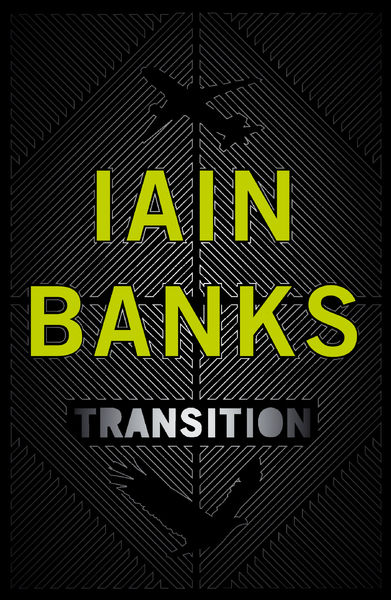
Transition is a science-fiction book by Iain Banks, and as such has been hailed as breaking down the barriers between Banks's "M" and "non-M" writing personas. This is a cosmetic readjustment at best. The "M." tag has attempted to label one specific, narrow portion of the spectrum through which Banks's work runs: from, on the one hand, realistic novels where multi-generational dysfunctional families interact in ways which illuminate broader global issues, to, on the other, sci-fi stories about robots and aliens and spaceships crashing and SHIT BLOWING UP. The former type could be written by a slightly geekier Ian McEwan, the latter by a literate E.E. 'Doc' Smith.

The books tagged with an "M." tend to be the most unambiguously space-operatic, with the occasional oddity such as the post-cyberpunk jargonplay of Feersum Endjinn or the allusive pseudo-Mediaevalism of Inversions. The "M.-less" books, on the other hand, are a ragbag of realism (Espedair Street, Whit, Dead Air, The Steep Approach to Garbadale), detective novel (The Crow Road, Complicity) and gothic conspiracy theory (The Wasp Factory, The Business), including a couple of post-apocalyptic futures (the frankly tedious Canal Dreams and A Song of Stone) and reality-warping fantasies (Walking on Glass, The Bridge) which would have looked quite at home with an "M." on them.

So it is with Transition. The premise may be that a shadowy conspiracy known as "the Concern" has been manipulating the diverse histories of many worlds across the multiverse to unknown, but presumed benevolent, ends... but underneath it all the story's about capitalism, religious fanaticism and cultural imperialism: in short, The Way We Live Now. SF at its best does illuminate the real world, of course, and much the same agenda is at work in Banks's Culture novels. As I say, this is a spectrum of shades, not an author turning his literary credentials (or indeed his imaginative faculties) on and off with a keystroke.

The book itself is awkwardly-shaped, its actual story amounting to little more than one extended capture-escape-capture-escape cycle, with most of the interesting material told in flashback. Unfortunately, two strands of this -- illustrating respectively capitalism and fanaticism -- are imperfectly integrated with the rest of the novel, being the first-person backstories of minor characters whose contributions to the plot are tangential at most. The sheer bulk of this material means that the central storyline relating to the Concern proper, the rebellion against it and the speculation as to its true agenda, feels perfunctory. There are some authentically Banksian edifices here (literally so sometimes, as with the palace hollowed out of one universe's Mount Everest by a long-dead Emperor of the World), but they don't appear to have been subjected to much city planning. If I were feeling uncharitable I'd say Transitions was a much shorter novel and two fundamentally plotless novellas, in search of a competent editor.

This is a shame, because the story of the Concern is a fascinating one, which could have been developed at far greater length and over a wider range of excitingly architected worlds. It even feels as if the author's keeping secrets from us. Why, for instance, is the chief rebel against the Concern occasionally referred to as "the younger Mrs Mulverhill" when an older woman of that name is never mentioned? Is there an unspoken connection between Mulverhill and Madame D'Ortolan, the Wicked Queen running the Concern? Why do their surnames suggest "mother" and "daughter", and if the reason is the obvious one why are their ages the wrong way round? It feels as if Banks knows the answers to these questions, and is teasing us -- perhaps with a sequel in mind, although he's not been one for the direct follow-up in the past. Unfortunately there's not enough of substance in the book to justify it spilling over in this way.

Transition is fun, nonetheless, and works on the basic level of a fix for the many of us long since addicted to Banks's work. But it continues a recent trend towards less coherent recycling of past themes and ideas, and the cosmetic novelty of its presentation fails in the end to disguise that.

The Panda Book of Horror ed Stuart Douglas and Paul Magrs is Obverse Books's follow-up to Iris Wildthyme and the Celestial Omnibus. There's no doubt that Obverse hit the ground running with The Celestial Omnibus, which although it sold modestly was near-universally acclaimed by those who read it (and coincidentally also contains my latest published fiction to date). The Panda Book of Horror, a sly parody of the old Pan Books of Horror Stories of the '70s, consolidates and improves on that success. Having a unifying theme tightens the volume up no end, and although I've never been a big reader of the horror genre I enjoyed those stories which attempt to follow it just as much as those which parody it with a rib-nudge and a cackle.

None of the stories are less than splendid, but the opening and closing numbers are particularly good: Ian Z. Potter's "The Unholy Ghost" features clever, very funny prose and an eye-watering last-minute plot twist, while Mark Clapham's "Channel 666" turns nostalgia TV into an all-too-convincing manifestation of Hell and follows up with an equally brilliant conclusion. My favourite story, though, was Matt Kimpton's "Shadows of the Time Before", which depicts an eldritch Lovecraftian universe of creeping horror and squamous decay, whose rugose inhabitants are appalled at the cheerful irruption of a boozy, shabby party-vixen like Iris Wildthyme into their lives.

That same Mark Clapham edited Secret Histories, the other book of short stories I've read this year. The unifying conceit of this one is that all the stories are told by the heroine -- Bernice Summerfield, of whom you'll certainly have heard me speak (and very likely seen me write). This collection's more of a piecemeal affair, although there's a rather notional through-plot and a few of the stories have closer links. Nonetheless, there's some fine writing here from Lance Parkin, Jim Smith (a sterling story featuring Bernice's old friend Mycroft Holmes), Jon Dennis and the increasingly inimitable Cody Schell. I think my favourite here was Mark Michalowski's elegantly evocative "The Illuminated Man", an everyday story of Edwardian circus folk.

(And yes... for the sake of full disclosure all the authors and editors I've mentioned with respect to these anthologies are friends of mine. Except Matt Kimpton, who I don't believe I know from Y-chromosomal Adam.)

Most recently, I've reread Mythago Wood by Robert Holdstock, who reminded me of its existence by dying last November. I remember reading it as a teenager and being wholly enthralled by the central conceit -- a stand of ancient woodland whose near-impenetrable interior opens tardistically into the vast forested landscape of the human collective unconscious, replete with unreconstructed archetypes. The central story is itself deliberately mythic, with two brothers in the 1940s falling out over a woman (albeit the archetypal form of a Brythonic folk-heroine) after the death of their father (who lives on in Freudian form in the forest as an ancient, murderous beast-god). I enjoyed revisiting it, and was reminded of one possible source of my fascination with stories where different periods of history and prehistory rub shoulders. The "mythago" characters we meet in this book range from World War I back to the last Ice Age.

I seem to remember I tried the sequel, Lavondyss, and didn't get on with it. Well, I'd only have been 16 or so. I might well try it again, although I'm slightly daunted by the fact that Holdstock seems to have squeezed out five more books in the series, the most recent being published last July. Still, in the "interminable series by authors I actually quite like" stakes, it can't possibly rival the Mars trilogy.

21 August 2009

Index and Contents

Things about fatherhood which are easier than I expected: Changing nappies[1]. Barely disgusting at all after the first half-dozen or so, and for reasons I won't trouble you with it gets less unpleasant still after the child's first week or so of digestion.


Things about fatherhood which are harder than I expected: The sleep deprivation. God, it's difficult. Still, if you haven't heard that before, you obviously haven't been hanging around enough new parents.


In other news... After a fortnight off, and four hours of sleep last night, I've managed to get back into writing in a small way today, so I'm no longer feeling as if that part of my life has been severed from me forever. Which is nice. It's just 500 words, but it's a start.

Another reason why I'm feeling like a writer again as well as a father is this substantial coffee-table book by my ex-editor Simon Guerrier, in which I'm one of many authors interviewed.

It's a history of the fiction featuring Bernice Summerfield -- a series character for whom you may recall I've written on four separate occasions, most recently in The Vampire Curse. Simon has assembled quotes from a truly huge number of authors who've contributed to Bernice's life story under three different publishers[2], and my name crops up -- according to the index, at least -- on 16 of the book's 310 pages. (Oh, hang on, there's the index page itself. 17 of 318, then.)

A lot of this material echoes stuff you can read on the Extras pages on my website, but you do get the (very out of date) inside scoop on why a couple of people apparently considered it mildly controversial for Big Finish to be commissioning me in the first place. Nine-and-a-half short stories and two novellas for them further on, this seems a touch academic... but if you're interested it's neatly summarised in a box-quote on p194. Enjoy.

[1] Diapers, if you will. And if you will, please be my guest.
[2] Yes, three -- Virgin, Big Finish and Marvel UK. (And in fact the Mad Norwegian press reprint of Dead Romance is mentioned briefly on p88, but of course Bernice isn't actually in that one.)

03 December 2008

As Promised...

...the not-particularly-long-awaited DVD-style extras pertaining to my novella in The Vampire Curse are now online at www.infinitarian.com, along with a handful of other things I've had hanging around.

First of all, we have notes on my novella, "Predating the Predators". DO PLEASE READ The Vampire Curse first, though, as these notes contain SPOILERS for the novella. You don't in any sense need to read these in order to understand the novella -- they're just intended as background, including some explanations of authorial choices and a few deleted passages to tantalise yourselves with. ("Predating the Predators" is actually one of the more self-explanatory things I've written, so these are pretty limited compared with, say, my annotations to the considerably shorter "Minions of the Moon".)

Also containing SPOILERS -- for both "Predating the Predators" and Of the City of the Saved... -- is "Unification Theory", a supplementary short story, featuring characters from "Predating the Predators" in the City. It's the first of these website extras that's been a crossover between different series I've written for, and I now need to resist the temptation to do the same with the rest of them. If I stick at this one (which, as the notes reveal, there was a moderately good reason for), I think it just about stops short of being self-indulgent.

And speaking of self-indulgent... a week or so ago, as well as updating my About the Author and FAQ pages to reflect The Vampire Curse's existence, I also added all the "About the Author" or "About the Contributors" biogs I've had published in various books to date. This comes with the facility to jump forward from one to the next (starting, as luck would have it, with Of the City of the Saved... and finishing with The Vampire Curse), so you can see how my self-image and verbosity have varied down the years since, er, 2004.

Since I was revamping the Short Stories page anyway, I've added another story, "Dave @1I8Σπ: A Romance of the Year 2006", which was originally published here on this very blog. Come Christmas I'll be putting up another short story, "Polarity", which went out with my Christmas cards last year, just as "Sol Invictus" did the year before. (Mind you, I'll be posting that here as well, just as I did with "Sol Invictus" last year.)

Finally, my latest Surefish column is up, and I've remembered to update the Surefish index on the website to reflect the fact. This one gives my usual woolly-minded christian perspective on the aspect of the SF writing process which I call worldbuilding, and JRR Tolkien referred to as "sub-creation".

[ETA: Damn -- it's just been pointed out to me that there's a linking error in the column. The reference to unreadable utopian fiction is meant to link to Wikipedia's article on utopian fiction, and not to CS Lewis's Cosmic Trilogy...]

Right, then. Hope some of that that's vaguely interesting to some of you...

24 November 2008

Curses!

One day soon -- potentially as soon as 2036, unless the retirement age has been bumped up by then -- I'm going to get round to posting some actual content here, rather than continually pimping my own writing.

In the meantime, though... I have in my hand a physical copy of The Vampire Curse -- the three-decker novella collection about Professor Bernice Summerfield and a number of vampires, featuring the novellas "The Badblood Diaries" by Mags L. Halliday, "Possum Kingdom" by Kelly Hale and "Predating the Predators" by me.

It was posted to me at the weekend by the publishers, and I'm impressed by their speed of turnaround since I mentioned having first sight of the cover in, erm, my last entry here. Which admittedly was a few weeks ago now, but I mean, it's bound and everything.

I'm currently putting the finishing touches to my website extras -- a bunch of annotations to the text, as per my usual custom, together with an exclusive short story featuring characters from The Vampire Curse in the City of the Saved. (Well, I had to do it sooner or later.) I'll update here once those are up at the website -- I probably ought to hold off until people have had a chance to read the thing, at least.

05 November 2008

Cursing Graphically

And in slightly less momentous news... Big Finish have released Adrian Salmon's very fine cover for The Vampire Curse. Which means I've been able to update my pages too, with a larger version of the cover and the actual back cover blurb. I've updated Peculiar Tomes, as well, and put in links to pre-order through Amazon.co.uk and Amazon.com.

Now I'd better get round to writing those extras I promised.

16 October 2008

Vamping it Up

I've just been proofreading the pre-print PDF of The Vampire Curse, which promises to be a very pleasing book visually, with some lovely typesetting and formatting. (There's no news on the cover as yet, but I'll update you when there's anything to show there.) The actual content is also fab, of course, with Mags and Kelly contributing clever, sexy, funny stories with the full complement of heart, brain and fangs, which my Predating the Predators is going to have some serious trouble following.

In theory, I think this ends my involvement with the book until I get my free copies through the post. In practice, I still need to write up some extra material to go on the website. Meanwhile, here's my one of the three bios which should be appearing in the back of the book:
Philip Purser-Hallard has written stories about alien shapeshifters, draconian diplomats, robot replicants, hermaphrodites, angels, men in the moon, the risen dead, an elderly science fiction author and a wide range of posthuman beings, but not previously about catholic priests battling evil space vampires. Most of his other stories also have academics in them.

Philip lives in Bristol, where he divides his time between writing and a job you don't care about. He writes a regular online column on science fiction and religion, and occasionally gives talks. He believes that one day in the future, humans will rise up and overthrow their feline masters.
And speaking of Wildthyme on Top (which, er, I was briefly, just then), I'm delighted to see that February 2009 is going to bring us four more Iris Wildthyme audio dramas. (Well, those of us who buy the "Season 2" box set, anyway. The rest of you get them spread out between February and April.) Written by various talented gentlemen (to whit, the resplendent Mark Michalowski, Iris' creator Paul Magrs, my old adversary editor Simon Guerrier, and Paul's brother Mark Magrs), the four CDs pastiche, parody or affectionately homage (according to taste) the four decades of Doctor Who which aren't this one -- ie, the 1960s, 70s, 80s and 90s. Which is what Iris was created for, after all.

Despite the work I've done for Big Finish, I don't generally plug their stuff here unless it's directly relevant to the subject of this blog (viz, Me). But for Iris I'll make an exception.

In other news, it turns out that standing for President of the U.S.A. means that people photograph and film you even when you're looking remarkably silly. And make satirical websites about your emergency stand-in, to boot.

28 August 2008

Re: Vamps

Now I've finally finished "Predating the Predators", my contribution to the Bernice Summerfield novella collection The Vampire Curse, I thought it was about time I put up a page for it at my increasingly antiquated website.

And lo, it came to pass. It's a bit minimal as yet, but I'll be fleshing it out later with stuff like the cover, the ISBN, the titles of Mags' and Kelly's stories, and the now traditional array of DVD-style extras. For the moment, the only real content is this off-the-cuff blurb, which relates to "Predating the Predators" alone:

Predating the Predators

Historians have long known that the eventful life of Professor Bernice Summerfield included more than one encounter with the paranormal predators known as vampires.

One such event which has so far received little attention from Summerfieldologists is the Murigen Infraction. This vampire infestation at Murigen’s First Colonial University coincided – if indeed it was a coincidence – with the First Interdisciplinary Conference on Vampirology, at which the distinguished Professor was a guest speaker.

Contemporary records, including the letters of a physicist and the journal of a Catholic priest, appear to place Summerfield and her granddaughter at the event. But what was their involvement in the affair? How could vampires thrive in a location with plentiful running water and near-constant daylight emitted by three suns? And what was the connection, if any, with Summerfield’s earlier expedition to excavate the ancient structure known (rather histrionically) as the Blood Citadel of Alukah?

This new sourcebook, assembled from contemporary documents by Prof. I.G. Ikigikato of Zebadee University, will finally allow students to decide for themselves.

I've also revamped all my pages which link to the Big Finish website, so that they now take you to the relevant product page rather than to a less than optimally cooperative redirect screen. At least, they do until Big Finish rearrange everything again.

For easy reference, those links are: (Eight Big Finish books I've been published in? Blimey. Still, that's with four different editors, so it's not like it's a sinecure or anything. Probably.)

21 August 2008

Lifting the Curse

I finally sent off my vampire story today, and I'm bloody exhausted. Now I just have to wait to find out whether Eddie the Editor likes it, and how much he minds that it's a third as long again as it should be.

This has been one of many things which I haven't, what with one thing and another, had the time to mention recently... but tomorrow I'm off to the Greenbelt Festival in Cheltenham. B.'s been there for several days already, building a sculpture to which I contributed a chunk of text (the thing with the puns on Egyptian gods' names which I was mentioning earlier).

I'm not speaking this year, having once again failed to get organised. I'm also camping for the whole weekend, for the first time since... erm, I think it might be 1992. With good reason, because I loathe tents and everything that goes with, in on and around them. Especially the mud.

I will, however, be blogging for Surefish, as has by now become traditional. As in previous years, I'll post links to my Surefish entries here. (All of those links are broken now, such being the transitory nature of internet journalism. I don't know whether the entries themselves are still floating around the web somewhere.)

If you're very lucky, there may also be some photos of the sculpture.

19 July 2008

Dr Acula, Ph.D.

The reason it's been three weeks since I last updated this blog thing is that I've been up to my throat in writing this vampire novella, the day job's been really busy and B. and I have been away every weekend and faffing about with stuff most evenings. Some of these are perfectly pleasant things in themselves, but taken together they've tended to engender a large amount of stress and busytude.

Life's been so hectic recently I've barely had time to update my Facebook status, let alone write a blog post. Sadly, B. and I have had to turn down a party in London tonight as being just that one thing too many for the maintenance of sanity.

The novella's coming along nicely, though, you'll be pleased to hear -- I now have around two-thirds of it written, at a little over 20,000 words.

I realise that I've not said much about Professor Bernice Summerfield and the Vampire's Curse here, except to praise my co-authors and to drone on about writing the thing. At this stage I know little of Mags' and Kelly's stories, and they're not mine to talk about anyway. My third of the book (originally entitled The Predator Principle, which proved to be rubbish, and now called, still rather tentatively, Predating the Predators) is about the First Interdisciplinary Conference on Vampirology, which is first infiltrated and then gatecrashed by a coven of vampires.

It's a blending of genres -- as a vampire novella, it's obviously a horror story, and as the umbrella title suggests it has a certain schlocky Hammer vibe. I also decided to go for the authentic Gothic flavour of Dracula and its ilk, by building the narrative out of letters, journal entries and excerpts from secondary documents. It's also inevitably a campus novel[la], and equally inevitably (given that it's part of the Bernice Summerfield range) it's S.F., taking place in Benny's space-operatic galactic milieu.

Being me, I felt that those weren't really enough genre referents, so I've also introduced a Jesuit priest wrestling with an apparently intractable theological problem on a remote planet, thus tying nicely in with the rarefied but venerable S.F. subgenre of "Jesuit priest wrestling with an apparently intractable theological problem on a remote planet" stories[1]. In a revolutionary twist, mine's called Imogen.

In short, it's an allegorical-epistolary-gothic-horror-pastiche-campus-space-opera -- not quite on the scale of a a detective-ghost-horror-whodunnit-time-travel-romantic-musical-comedy-epic, but not bad at only a little over 30,000 words.

I've also written my monthly column for Surefish, gone on a training course which may entitle me to do some Thought for the Day slots on BBC Radio Bristol, and am now working on a short piece for a kind of collaboration which is altogether new for me, though sadly neither earth-shakingly high-profile or notably paid (come back in late August for more on this).

Coincidentally, it's about something vampires are afraid of, although admittedly there seem to be quite a lot of objects that applies to.

[1] S.F. novices who feel disinclined to believe in this as a bona fide subgenre may wish to investigate Anthony Boucher's "Balaam", Arthur C. Clarke's "The Star", James Blish's A Case of Conscience, Philip José Farmer's Father John Carmody stories, the 80-page segment "The Priest's Tale" in Dan Simmons' Hyperion and Mary Doria Russell's The Sparrow and Children of God. S.F. initiates who can spot any I've missed should feel free to chip in.

22 May 2008

Stakeholder Society

The new regime at Big Finish's Bernice Summerfield product range (his name's Eddie) obviously believes in getting announcements out quickly. The new writing project I was being secretive about just the other day is out in the open now. It may now become slightly more obvious why I've been thinking about vampires this week.

It's another three-decker novella collection, much the same as Nobody's Children was -- and while I wasn't looking it's been given the appropriately Gothic title of Professor Bernice Summerfield and the Vampire Curse.

As it happens, this Benny anthology is an all Faction Paradox authors affair. As well as being fellow-contributors to The Book of the War, my co-conspirators Mags L. Halliday and Kelly Hale wrote Warring States and Erasing Sherlock respectively. (What with Lawrence Miles' Benny CD out in July, it's looking rather as if we're taking over.) Unlike me, Mags and Kelly also have Doctor Who novels under their belts -- the rather excellent History 101 and Grimm Reality -- and between them they run an exceptional Who fanfiction site, lostluggage.org.uk.

They're both very talented people and it's both pleasing and gratifying to be sharing a book with them. Now I just need to write my third of it...