Showing posts with label writers i know. Show all posts

19 September 2014

Iris and Sherlock (at last, but not together)

Tales of the Great DetectivesIris Wildthyme of MarsIt's rather later than expected, I know, but it's now possible to pre-order the two anthologies I've edited this year, Iris Wildthyme of Mars and Tales of the Great Detectives, from Obverse Books. If you're not of a mind to wait for another couple of weeks, or would rather not pay for the print versions (hardback and paperback respectively), it's also possible to buy and download the ebooks for consumption this very instant.

I'm very proud of both anthologies: a total of seventeen thoroughly talented people have contributed to them, they deal with two of my favourite genre characters (albeit in unfamiliar contexts in both cases), the covers are excellent, and I think they've turned out as really lovely books through and through.
Here are the links to do that ordering you'll be so keen on:
Enjoy.

* * *

I've no particular reason to suppose that these will be the last anthologies I'll be editing for Obverse Books, but I thought it might be interesting at this point to look at who I've published so far (since with the publication of these two books the number nearly doubles). Excluding myself, the list goes like this:
    cover imagecover image
  • Helen Angove (Tales of the City)
  • Aditya Bidikar  (Iris Wildthyme of Mars)
  • Blair Bidmead (Tales of the City and Iris Wildthyme of Mars -- also the cover artist for Tales of the Great Detectives)
  • Simon Bucher-Jones (More Tales of the City and Iris Wildthyme of Mars)
  • Rachel Churcher (Iris Wildthyme of Mars)
  • Mark Clapham (Iris Wildthyme of Mars)
  • Jay Eales (More Tales of the City)
  • Elizabeth Evershed (Tales of the City and Tales of the Great Detectives)
  • Jess Faraday (Tales of the Great Detectives)
  • Kelly Hale (More Tales of the City and Tales of the Great Detectives)
  • Dave Hoskin (Tales of the City)
  • Juliet Kemp (Tales of the City and Iris Wildthyme of Mars)
  • Selina Lock (Iris Wildthyme of Mars)
  • Stephen Marley (Tales of the Great Detectives)
  • Chantelle Messier (Tales of the Great Detectives)
  • Lance Parkin (Iris Wildthyme of Mars)
  • Ian Potter (More Tales of the City and Iris Wildthyme of Mars)
  • Dale Smith (Tales of the City and Iris Wildthyme of Mars)
  • Daniel Tessier (Iris Wildthyme of Mars)
  • Susannah Tiller (More Tales of the City)
  • Richard Wright (More Tales of the City and Iris Wildthyme of Mars)
  • Andrew Hickey (Tales of the Great Detectives)
So...
  1. That's 22 authors, eight of whom I've commissioned twice, two of whom co-wrote a single story, thus contributing a total of 29 stories (mine excluded). 
  2. Of these authors, if I'm remembering correctly, nine hadn't previously been published by Obverse Books or their online wing Manleigh Books; six were making their debuts as professionally published writers. 
  3. Of those 22 authors, 16 are British (and I believe in fact English), three American, two Australian and one Indian. However, two of the Brits are based in the USA, and one returned to the UK from India between their first and second commission. The book with the highest concentration of non-UK authors is Tales of the Great Detectives, half of whose contributors are American. 
  4. Nine of the authors are women, 13 men; of the stories, 12 are by women and 17 by men. (Those aren't great statistics, admittedly, but they're better than many genre anthologies manage.)  Of the individual anthologies, Tales of the Great Detectives has a majority of female authors, and Tales of the City at least achieves parity (although only if you exclude my contributions).
  5. To the best of my knowledge without having actually met them all (see 6), all but one of these people are white. 
  6. Eight of the authors are people I've met in real life: five of them I'd never interacted with prior to commissioning them. The rest, predictably, I knew online. (Only three of them are people I went out with, went to university with or invited to my wedding.) 
  7. Between us to date (counting co-author credits, and including my own titles this time), the contributors to these anthologies are responsible for 15 Doctor Who novels, four Bernice Summerfield novels, four Faction Paradox novels (with more in the works), four Señor 105 novellas, three Time Hunter novellas and something like 65 short stories for Obverse Books.
Those, then, are the facts. Suggestions as to what any of this might mean, or other ways in which I could (feasibly, and within the bounds of decency and good taste) break that list down, will be received with interest.

02 October 2013

Storyteller

You may remember me a year or so ago mentioning Matt Kimpton, a fine writer of short-stories who died from complications arising from his cystic fibrosis at the tragically young age of 35.

Obverse Books published more of Matt's fiction than anyone else. In memory of him, and in aid of the Cystic Fibrosis Trust, Obverse have put out a collection called Storyteller: A found book, which I'd urge you all to buy. (That's Matt on the cover, dressed as an Anglo-Saxon skald.) The authors of its thirteen stories include some of my favourites among the writers I know -- such as Simon Bucher-Jones, Liz Evershed, Ian Potter and Rick Wright, who've all contributed (as I once hoped Matt might) to the City of the Saved collections.

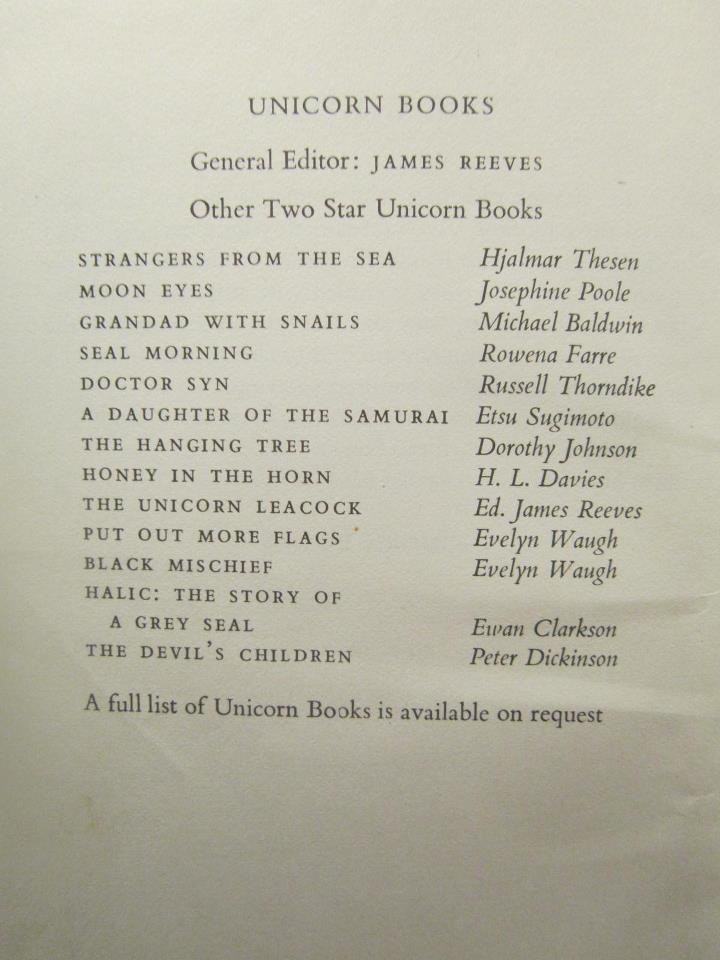
There's no particular genre or series connection, but the book's based round an exceptionally cool concept: the authors have each taken a title from an endpaper listing books published by the long-defunct Unicorn Books, and created a new short story to fit it. Contributor Cav Scott goes into more detail here.

So -- it's a book written with love, based on an intriguing concept, by excellent authors, in an impeccable cause. What more would you need?

Oh, yes -- at £1.99, it's also astonishingly cheap. Do buy it.

25 May 2013

More Tales of the City: Trailer #6

Meet Isabelle Gebhart:
     The woman introduces herself as Isabelle. Setting her sunshiny countenance next to Arianrhod’s icy visage makes them look like drawings of the seasons on a medieval map.
     She launches into her tale: ‘I walk into a bar carrying all of creation enthroned in a hollow. A tomb already raided and looted of treasure. I’m taking it out for sleazy one-night stand.
     ‘“So, what’s your passion? What do you totally love to do?” asks Gemini.
     ‘I call him Gemini because of the hair. Part of it is gathered onto the top of his head in fat-rat tubes of a dirty straw colour. The underneath and sides are shaved and dark brown. He’s got Gemini written plain as day in the dreads on his head and the clean-cut nape of his neck. He’s dabbled in veganism, but (judging from the Nachos Grande platter in front of him) feels no moral obligation to avoid strange meat. A deep thinker too. Mostly about pot I imagine.’
Isabelle is the primary narrator of Kelly Hale's "The Isis Method", the final story in More Tales of the City.  Here's Kelly:
Kelly Hale’s contribution to twenty-first-century Earth’s human social welfare was a practical fairy-godmothering network serving children in foster care. She lived in quiet, vaguely contented poverty during which she raised children and authored several works of fiction for small-press publishers. Her first novel, Erasing Sherlock – a fantasy about a time-travelling maid-of-all-work whose case study of the real Sherlock Holmes goes terribly awry, resulting in all sorts of madcap adventures, exciting chases, kidnappings, various acts of reckless passion and an actual volcanic eruption – was awarded a prize for literary awesomeness. Imagine her surprise and delight when, some several years after Resurrection Day, her very own version of Sherlock Holmes walks into her little espresso bar in New London having found her through CreatorMatchCreation. They’ve been creating together ever since. Their critically acclaimed series The One and Only pits Sherlock against Sherlock in a race to beat the clock as these great detectives and chosen contestants chase after clues and each other to solve mysteries spanning every District and to the farthest reaches of the City of the Saved.
I was enormously pleased to get Kelly to write a City of the Saved story -- though selfishly so, as she's an outstanding writer who deserves far wider recognition than she'll get from the small-press circles I move in. Erasing Sherlock is the standout novel of the Mad Norwegian Faction Paradox range, published both before and since as a non-series novel. Her other works (including Grimm Reality, co-written with fellow Tales of the City contributor Simon Bucher-Jones) demonstrate her to be a quite brilliant author. For my money Kelly's one of the two best prose stylists to have written for either Faction Paradox or Doctor Who, and her characters are vivid, conflicted and always utterly convincing. Seriously, I can't praise her work enough, and if I tried this post would get quite boring very quickly.

"The Isis Method" is about how the patterns of the past can dog the present; about the developing relationship between two damaged people; about healing, renewal and rebirth; about the investigation of a macabre crime. It's gorgeous, and I love it to pieces.

Oh, and just in case that doesn't make it sound cool enough-- it's got Nikola Tesla in it.

The City of the Saved logo

07 May 2013

More Tales of the City: Trailer #5

Here's the preamble and beginning of Richard Wright's "The Mystery of the Rose", the fifth story in More Tales of the City:
     ‘Enough of idling! Let the show go on!’ a voice cries, smooth yet commanding. It is the trenchcoated man, fedora in his hand now, revealing slicked-back hair. ‘My lady –’ he smiles ingratiatingly at Arianrhod ‘– I beg leave to tell my tale.’
     Arianrhod nods. ‘It would be... apposite to recommence.’
     The other patrons settle, as the mikedrone rises from its charge-port on the bar, and the man begins his soliloquy:
     ‘Now immortality makes malcontents of men once neutered by the threat of death, and schemes erst fettered by a mortal dread now flower through the City of the Saved. Released from Time’s restrictive, crushing grip, with all infinity to realise its dreams, mankind’s potential is exposed as nothing grander than it ever seemed. Eternity must rue the trick of fate that locked it to our tawdry monument.
     ‘So my eye perceives, yet may I trust it? I am no more than I was writ to be, remaining a most dutiful cynic.’
Richard is one of the most prolific of the (admittedly only twelve) authors I've acted as editor for to date: his CV looks like this, and spans an impressive range of publishing models. Here's what his contributor biog has to say:
Richard Wright's pre-Resurrection life was spent fielding questions about why he wasn't the African-American author of novels such as Black Boy and Native Son, the keyboardist in Pink Floyd, or the goalkeeper who played for Manchester City. When not denying that he was any of these people he managed to scribble some short stories and novels of his own. Residing for much of his life in the United Kingdom, Richard met an early end shortly after moving to India, where he discovered that snakes found him even less charming than humans did. Since Resurrection Day he has shared a house with Richard Wright, Richard Wright, and Richard Wright. He has waited centuries for one of the other Richard Wrights to be asked by a stranger whether they are that one who wrote those Iris Wildthyme short stories for the Obverse MegaText Conglomerate. To date, only Ms Wildthyme herself has done so, and as she seemed rather annoyed about the whole thing he kept his head down and pretended to be Dave Gilmour.

I first encountered Richard's work in the Doctor Who anthology Short Trips: Transmissions, and subsequently in the Obverse Books anthologies Iris: Abroad and Wildthyme in Purple. All of these stories are disturbing and profound: the last, "The Many Lives of Zorro", shows the titular masked swordsman succumbing to mental breakdown as he tries to reconcile the multiple conflicting narratives which have built up around him.

"The Mystery of the Rose" is also about fictional identities and the struggle against them: like several of the stories in the volume, it deals with themes of duality, of predestination and free will, and of the search for a meaning in paradise. Specifically, it's about the kind of life a villain can expect in the City of the Saved, and the accommodations he might need to make in order to live there.

A careful reading of the excerpt above may tell you who his protagonist is. Alternatively, you could read Richard's own blog post on the subject.

The City of the Saved logo

29 April 2013

More Tales of the City: Trailer #4

Jay Eales' story isn't quite like the others in More Tales of the City:
     As the clapping subsides, a harsh voice says, ‘That sounds like my cue.’ The old man with the disfigured face is standing by the fire-pit, ready to speak his piece.
     ‘This one’s from a very old friend of mine...’ he begins. ‘Jim Sheldrake.’ The storyteller pauses to let his name-drop take effect. ‘You might have heard of him.’ He smiles, as he pushes back an unruly dreadlock and casts a hooded glance at his audience, looking for recognition, but finding none. He presses on, the gravel in his voice grown organically over years and lifetimes beside one fire or another.
     The name he has chosen for himself is Story. It is not his birth name, or any of sundry identities he has worn, but it is the one he has borne the longest, both before and after his rebirth. In truth he has always been Story. Every wrinkle and blemish upon his skin tells its own tale, so no wonder he was rebirthed exactly as he went out.
His author biog isn't either:
Jay Eales, ya say? I knew the fella, once upon’a. On the road to St Ives or somesuch. Northampton? Sounds about right. Land a’ the Blessed Alan. Back in them days, people had holes in they shoes, they gots Elves ta do the fixin’. Well, somebody gots ta pay ’em, right? Fer his sins, that’s what he done. Paid off them Elves ta keep ’em tap-tap-tapping soles ’n’ heels all night long. Elves being Elves, it din’t last, so he sold elbow grease ’n’ long weights ta simple folks, and a spell lockin’ up wrong-uns. But all through, he’s scritch-scratchin’ away at his stories. Some got bought and some didn’t. Did he ever make it here to the City? There’s the thing. I ain’t rightly sure he atcherly died... Plain forgot to pick up the knack of it from ol’ Sister Death, he tole me. Laid hisself down, but it just never took. He be out there somewhere, pissin’ an’ moanin’ ’bout editors, I ’spect.
I mentioned the "fanthologies" which I -- and Susannah Tiller, and Simon Bucher-Jones and Kelly Hale and Dale Smith, and any number of writers who've been professionally published since -- contributed to, around the turn of the century. The two specific ones I wrote for were edited or co-edited by Julian "Jay" Eales, an author, editor and publisher with an impressive track record in small-press prose and comics. His most recent editing work was, in fact, the Faction Paradox anthology Burning with Optimism's Flames, for which I wrote "De Umbris Idearum".

Jay's fiction is weird and spiky, with a habit of defying clear categories, and indeed description. His More Tales of the City story, "Born among Briars", draws heavily on the folklore of Br'er Rabbit, hence the style of that biog. It's a sequel of sorts to "Mightier than the Sword" in A Romance in Twelve Parts, the story of a convict over whom a pulp author named Sheldrake exercises an inexplicable influence, and it's fantastic.

The City of the Saved logo

15 April 2013

More Tales of the City: Trailer #3

Introducing More Tales of the City's third narrator:
     Arianrhod calls for silence, and as Harry scurries back with his tray of drinks, Akroates is surprised to see that the next storyteller, a young human-standard woman – he suspects genuinely young, rather than a resurrectee – is another whom he had pegged as strictly audience material. He saw her earlier, a petite brunette in sober clothes with an immodest price-tag, sitting quietly attentive as Lewis spoke his piece, alone but for a small personal drone.
     That machine buzzes unhappily now, but stays in place guarding the young woman’s wine, as she abandons it for the mikedrone at the fire-pit.
     ‘When I was little, I used to spend a lot of time in the kitchen. I say “kitchen”, but it wasn’t just one room, it was a whole labyrinth of them. The actual room where all the cooking was done, the pantry, the rooms where the servants lived, cool rooms, and more. It was its own little world down there. And Mrs Gladstone, the housekeeper, was like its own Resident. Whenever I went downstairs, she’d always be in the middle of everything. Even if she was off in a corner somewhere adding up accounts, the staff would still come to her, and ask her advice, and make sure that she knew what was going on.’
Considerably before I had anything resembling a writing career, I contributed stories to two Doctor Who 'fanthologies' -- unofficial, unlicensed short-story collections, written, edited and pubished by fans, and tolerated by the BBC solely because they had minuscule print runs and were produced on an entirely not-for-profit basis in aid of charity. 

Back then -- as now, of course -- there was a thriving community of Doctor Who fanfic authors, and Susannah Tiller was one of the best. My favourite story of hers was "Caveat Emptor", in which the Doctor saves the last survivor of humanity from being sold at auction. Many contributors to those collections had gone on to professional writing careers, within or even outside the broad and varied universe of Doctor Who and its spinoffs. Susannah was not one of them, which seemed to me an injustice, and one I wanted to rectify.

I'm very glad I did, because 'Eternity Is Just for Starters', Susannah's first professional writing commission, is very good indeed: a tale of a City-born student with an isolated, privileged upbringing, and the political awakening she experiences through the unexpected medium of gastronomy.

With a doctorate in psychology, Susannah Tiller’s writing, both fiction and non-fiction, reflected her interests of people interacting with technologies, human relationships, and ethical issues. She was a noted fan-fiction writer in the Doctor Who universe, and contributed to numerous anthologies. ‘Eternity Is Just for Starters’ was her first professional fiction work, unless you count her second place in a Choose Your Own Adventure synopsis competition when she was twelve. Susannah’s plans for world domination led to her untimely death, in an accident involving industrial quantities of chocolate. Since Resurrection Day, Susannah has lived in the City’s arts and crafts district. Learning from the world’s best chefs, embroiderers, and psychologists, she creates edible delicacies that double as wall hangings and personality tests. Her plans for world domination continue. She dedicates her story to Tom, her partner in life, and in dining. Together, they created and shared many memorable meals.
The City of the Saved logo

01 April 2013

More Tales of the City: Trailer #2

Here's Hal Benson, the narrator of Simon Bucher-Jones' story in More Tales of the City, seen through the eye of Akroates the cyclops barman:
     To his surprise, though, after the obligatory foot-shuffling and eye-contact-avoidance, it is one of the stag party – a lean young man in a natty houndstooth suit, with a slightly puzzled look in his blue eyes – who is inveigled into telling the evening’s third story. His protestations that he ‘was just about to get a round in’ are met with scant sympathy from his peers, who are braying, ‘Tell ’em the one about the bodysnatchers, Hal!’
     Arianrhod nods graciously, and the mikedrone swoops across to hover next to the young partygoer.
     ‘My turn to tell a tale then? That’s fine, if you can get the drinks in. I think I’ve got them pegged, but I can barely afford the ink to jot them down for you.
     ‘A rum and splash, a finnegan’s slake for the corpusclevore, two whampagne fizzles, a G.&T. and a Castrol GTX. And for me?
    ‘Well that’s kind, a glass of Worpelston’s finest ale. It’s good of you to stand the round. I would get these if a recent investment on the racecourse hadn’t let me down in the handicap. I mean, I should have known Shergar wouldn’t turn up to a face-off against Red Rum...’
Simon's one of the most outrageously creative talents to emerge from the Doctor Who novels of the 1990s and early 2000s, a writer of enormous invention, verve and erudition. His novels are full of brain-stretching concepts like a 'haunted' dolls' house whose unique properties are the result of a colony of quark-sized lifeforms taking up residence, or a community of poets who progressively lose the faculty of language as a 'memeovore' eats their alphabet, or the revelation that fairytale giants are of no fixed size.

Here's his biog:
Born in 1964, Simon Bucher-Jones worked for the Old United Kingdom Civil Service in the years 1988-2030, before his retirement at age 66. He also augmented his eWorth on the then primitive YouExchange by writing, and originating the Oceanic Ocelot Meme. A conscientious objector to the Proactive DeAging of 2037, which applied a post-SNPD Solution to the ‘pensions time-bomb’, he remained a Natural Ager until his death in prison at 78. A woolly-thinker, then a Christian, then an atheist, then a surprised atheist, since Resurrection Day Simon has been a writer-librarian and is presently dedicated to reading every book ever written. His most notable work (with Jonathan Dennis) remains the unfinished and cursed The Brakespeare Voyage, which he is promising to complete soon. At the last count it has now had the highest number of prospective publishers of any long-awaited twenty-first-century novel.
Simon's also an astonishingly literate man, one of the most voracious readers I know, and his story for More Tales, 'Double Trouble at the Parasites on the Proletariat Club', reflects his reading of the works of P.G. Wodehouse in particular (though it by no means stops there). Faced with the challenge of writing a story set in a world where the threat of physical violence is absent, Simon has turned to a literary world where (although sometimes present) it's never actually put into practice, and where loss of status, social ostracism and sheer overpowering embarrassment are the chief motivating factors.

Like Ian Potter's 'The Long-Distance Somnambulist', 'Double Trouble at the Parasites on the Proletariat Club' was originally submitted for Tales of the City last year, but I kept it back confident that it would sit very happily in a second volume. And so it does.

The City of the Saved logo

(Incidentally, that's a first glimpse of the wonderful Cody Quijano-Schell's fantastic cover for More Tales above. I'll be posting a fuller version on my website in the fullness of time.)  

18 March 2013

More Tales of the City: Trailer #1

Hullo. You may remember the trailers I blogged last year for Tales of the City? Yeah well, I'm doing it again for More Tales of the City, whether you like it or not.

Here, look:
     A second volunteer stands – another of the World’s regulars, a florid, grossly fat man in a tailored suit that could clothe a double bed. He is immediately joined by the floating mikedrone. Finding no other calls on his attention, Akroates leans forward on his bar, eager to hear what story this new teller has to tell.
     ‘People used to say there were just seven stories, didn’t they? Well, they did in my day. When you tried to pin down what the seven actually were they’d usually get a bit vaguer.
     ‘As a matter of fact there’s just the one story. You just have to choose how you slice it.’
Ian Potter is an author I've had my eye on for some time.

(That's not him in the description above, by the way. That's the narrator of his story, Lewis Greaves. And it's not Ian's description, either, it's mine -- though Lewis's words are Ian's own. This may make more sense later.)

Ian's an accomplished writer of radio comedy, drama and documentaries, as well as a historian of television, but I know him from his splendid short fiction: five short stories in Doctor Who anthologies and two in previous Obverse Books collections, including the excellent Faction Paradox story "The Story of the Peace" in A Romance in Twelve Parts. All his stories are well worth reading, but my favourite is probably "Erato: Confabula" in Short Trips: The Muses, an extended misdirection which just happens also to be a sustained piece of deft and convincing worldbuilding. As it turns out, the story's true interests lie altogether elsewhere.

Ian was one of the first authors I asked to write a City of the Saved story (after he'd contributed one of the guest drabbles to my own "A Hundred Words from a Civil War"), and although for various reasons his submission then didn't quite fit with the others in Tales of the City, I intended all along to resurrect it for More Tales.

It has the marvellous title 'The Long-Distance Somnambulist', and it's midway between bildungsroman and detective story. It's about how people -- in this instance, a historian, a murder victim and one other -- adapt to eternal life.

(Ian himself disagrees with me about his merits, or so it seems. Here's his author biog:
Ian Potter is a loathsome human being whose Wikipedia entry contains Qliphothic snares for the unwary. You have vowed to destroy him should the chance arise. I will be believed to have had no part in it. When he was alive he was mainly older than he seems now and wrote jokes, plays, short stories and factual things no one much cared about. He’s most famous for that really bad thing that kicked off after he died that he’d no idea he set in motion. It was definitely his fault though. He hides in darkness underwater now. When you find him, understanding these words means you’ll know what to do.
No, I don't know what "Qliphothic" means either.)

The City of the Saved logo

21 September 2012

Matt Kimpton

Just a note to record my sadness at the recent passing of Matt Kimpton, a short-story writer who moved in some of the same circles as me and whose writing I very much admired. His death at the age of 35 is tragically premature.

I didn't know Matt well -- we'd never met in person -- but we had enough of the same friends that I felt the benefit of his witty, self-deprecating humour on Facebook and elsewhere. Much of his work was in oral storytelling -- he held the position of Chief Skald of Suffolk from 2010 to 2011 -- but he also wrote with humour and humanity about his life-threatening illness, notably here in the Independent. His stories, should you choose to seek them out, were 'Life After Queth' in Short Trips: Farewells, 'Shadow of Times Before' in The Panda Book of Horror and 'Storyteller' in A Romance in Twelve Parts. His final published fiction (as far as I know) is due to be released in The Casebook of the Manleigh Halt Irregulars, one of the titles in Year 2 of the Obverse Quarterly, due out later in the year.

'Storyteller' is a wonderful piece, set in Anglo-Saxon England and drawing heavily on the skaldic storytelling tradition. Like all the authors in A Romance in Twelve Parts, Matt kindly used his contribution as a springboard to provide a guest drabble for my own story, 'A Hundred Words from a Civil War' (it's number LXIV, and one of my favourites). I very much hoped that I'd be able to get a longer City of the Saved story out of him one of these days.

I'm very sorry to have seen the last of Matt. He was a funny, generous, popular man who will be very much missed. I'll be thinking of his family and friends as they say farewell to him today.

17 May 2009

Yeah, well,

right. The unexpected resurgence of a previously moribund writing commission FROM BEYOND THE GRAVE means I probably won't have very much time to blog for the next couple of months. Erm, again.

I know I've been saying that sort of thing rather a lot recently. I wish I were able to keep this blog updated as frequently as I used to a couple of years ago, but what with imminent procreation and a paying job, I hardly ever find myself with the time. (It's not just you either, dear reader -- I've also turned down a couple of offers of paid writing work this year. Hey ho.)

I'm still just about managing to keep up with the microfiction on Twitter, although I think my previous daily posting rate is overly ambitious. If you're not able to follow on Twitter or Facebook, the latest (decent) stuff is available, as usual, here. I quite like this six-word one:
Decimate: one tenth of a friend.
Meanwhile... Iris Wildthyme and the Celestial Omnibus is due out this very Wednesday, and you can still pre-order copies from Obverse Books. My polymathic fellow author Cody Schell is producing promotional artwork for various stories in the book, and he's already released a poster for my short story, "Battleship Anathema", which you can see on my website. Cody's poster for Paul Magrs's "The Dreadful Flap" is up on the Obverse Books site, and I've also seen the one he's done for his own story, "Iris Wildthyme y Señor Cientocinco contra Los Monstruos del Fiesta", which is equally fab.

So far my story is the only one I've seen, and I'm very much looking forward to reading the others. I'll be banging on about this more once it's released, I shouldn't wonder.

Argh, I have to go right now. I'll try to update again soon.

18 December 2008

Dante's in Queneau

For years I was convinced that the translator into English of Raymond Queneau's Exercises de Style -- which I've owned a copy of since (so my inscription in the flyleaf tells me) 1998 -- was the same person as Dorothy L. Sayers's god-daughter and biographer, who finished Sayers's mammoth and magisterial translation of Dante Alighieri's Divine Comedy after her death.

I appear to have thought this because a) I knew Sayers's translator friend was called Barbara, and b) I had a vague feeling I knew the name Barbara Wright from somewhere.

Oops.

I've discovered my error since my friend J-P Stacey -- whose self-published collections A Pocketful of Lies and Stones and Bones I've noted approvingly in past years -- embarked on an eccentric project of adapting Queneau's eccentric book in the medium of song.

Quenau's original Exercises in Style (to use the English title) tells the same inconsequential story of two men on a bus 99 times in different styles. The basic concept's already been adapted to a different medium in the graphic anthology 99 Ways to Tell a Story: Exercises in Style by comic book writer / artist Matt Madden.

In turn, J-P's elected to give the traditional drinking song "Show Me the Way to Go Home" a similar treatment by rewriting it in each of the 99 styles employed by Quenau, ensuring -- this being the killer -- that each version is singable to the same tune as the original. Admittedly it's a reasonably flexible meter, but it's still an admirably deranged ambition.

J-P's been web-publishing some of these versions as an online Advent Calendar, enabling you to read (so far) some 17 variant versions, plus a stray adaptation of The Rime of the Ancient Mariner written to the same meter. He's helpfully provided sound files to demonstrate how they should be sung. You can also order a print copy, my particular one of which arrived with me this morning.

I have to admit that I rather prefer J-P's short stories that are actually about stuff, but Exercises in Song is still a highly entertaining project. I'm particularly fond of "Telegraphic", "Official Letter" and one from the book which hasn't appeared online yet, "Cross-examination". [Edit: It has now, so I've added the link...] The Anglo-Saxon version's rather good too.

In honour of the three extra "Literary Classics" exercises incorporated in the print version -- and of my own aforementioned confusion -- I decided to attempt a one-off exercise of my own. I make no claims as to its artistic merits (especially relative to J-P's fractal efforts), but thought I might as well reproduce it here:

Divine Comedy

Great poet, lead me out
of this dark allegorical copse.
I tried to medicate my mid-life crisis with beer --
now I'll abandon all my hops.

Now no matter where we pass,
from Malebolgia to Mars,
you will always hear me praising the love
that moves the sun and all the stars.

I thank yew.

[Edit to add: I'm not sure whether this alternative second stanza is better or not:
Now no matter where we are,
in Inf. or Purg. or Par.,
you will always hear me singing of love
that moves the sun and every star.]

22 May 2008

Stakeholder Society

The new regime at Big Finish's Bernice Summerfield product range (his name's Eddie) obviously believes in getting announcements out quickly. The new writing project I was being secretive about just the other day is out in the open now. It may now become slightly more obvious why I've been thinking about vampires this week.

It's another three-decker novella collection, much the same as Nobody's Children was -- and while I wasn't looking it's been given the appropriately Gothic title of Professor Bernice Summerfield and the Vampire Curse.

As it happens, this Benny anthology is an all Faction Paradox authors affair. As well as being fellow-contributors to The Book of the War, my co-conspirators Mags L. Halliday and Kelly Hale wrote Warring States and Erasing Sherlock respectively. (What with Lawrence Miles' Benny CD out in July, it's looking rather as if we're taking over.) Unlike me, Mags and Kelly also have Doctor Who novels under their belts -- the rather excellent History 101 and Grimm Reality -- and between them they run an exceptional Who fanfiction site, lostluggage.org.uk.

They're both very talented people and it's both pleasing and gratifying to be sharing a book with them. Now I just need to write my third of it...

27 July 2007

Self Parody

Just a quickie to congratulate friend and occasional business contact Andrew Chapman on having an extract from his "Will Self writes Harry Potter" parody, "Harry Potter and the Viscera of Kittens", broadcast on this morning's Today programme.

(Today -- for those of you living over-, or possibly under-, seas -- is BBC Radio 4's flagship news programme, and still arguably the most influential news outlet in the U.K. Obviously today was a bit of a quiet day for actual news.)

The relevant couple of minutes of programme is available online for the next week or so here (scroll down to 08:52). Alternatively, you can listen to Andrew reading the whole thing here.

24 January 2007

Books Update: Demolishing Our Holmes

(Hmm. I think I may have used that one before. Never mind, it was a while ago now and I doubt anyone will notice.)

In accordance with this mini-resolution, here's a brief writeup of the latest book I've finished reading:

Erasing Sherlock by the remarkable Kelly Hale, is the fifth Faction Paradox novel: the story of a modern woman set loose, thanks to some dodgy pirated time-travel technology, in the Sherlock Holmes canon. The narrator -- an academic posing as a maid -- is a delight to read, a brilliant, utterly alive creation, while Holmes and Watson are more vibrant and textured than I can remember them being in any Conan Doyle story, whilst still being perfectly true to his conception. I rather prefer the first half of the book, which is essentially an intellectual-game-turned-romance between the narrator and Holmes on the latter's home turf, to the later chapters where both are having to improvise in unfamiliar territory.

The prose is gorgeous, rich and creamy, and the period detail is excellent, erudite but executed with a light touch. On the whole, a fantastic novel with some marvellous character work, an addictive story and a surprising amount of shagging. I've no hesitation in calling it the best -- just as, sadly, it's the last -- of Mad Norwegian's Faction Paradox range.

01 December 2006

Lies, All Lies

The first half-week of work at the new job went well. For obvious reasons, I won't be going into detail about exactly what I'm doing, where or for whom, but so far my colleagues are friendly, my work reasonably interesting and my journey not too irksome. It does involve a twenty-minute walk at the far end of my twenty-minute train journey, but at least that's potentially good for my waistline.

I am, however, knackered, as much from the pre-job stress as from the job itself, so the Torchwood rant and the film reviews are going to have to wait for a little while.

In the meantime, allow me to plug my friend J-P's fiction at Quiet Little Lies, and in particular his self-published and -distributed collection A Pocketful of Lies. As the blurb says:
An ideal Christmas gift, this handcrafted pamphlet has been lovingly assembled from a dozen complex, thoughtful tales that will vex and puzzle relatives or friends of any stripe! Following your Christmas meal, contemplate what lies beneath the surface of each sinister, questioning story, and thank the stars that your family is indeed relatively well-adjusted after all.
It's free including postage, so you've nothing to lose -- and if you can't be arsed to order it, he'll be putting it online in the New Year anyway. You can sample plenty of J-P's fiction at the site, along with his book reviews, and his blog about frankly incomprehensible computer-related stuff.

Now if you'll excuse me, I need to go and cook pasta.

26 October 2006

Got Up. Faffed. Updated My Blog.

Thanks to hatmandu for pointing me towards these six-word stories by various authors. I particularly like Charles Stross's Bin Laden story, but Bruce Sterling, Stephen Baxter and Alan Moore also manage some impressive work in the space available.

A morning of prevaricating, as usual, has led to me posting various six-fics of my own as comments to Hat's blog entry above. I might as well archive them here for general interest:

"Her dying wish," sighed King Albert.

98TH LEGION UNDER QUINTUS TAKES TENOCHTITLAN

"Hi. Meet my wife and husbands."

My other head plots against me.

Nanoterrorism is so passé these days.

IN THE beginning, Satan created God.

And, moving uncharacteristically away from SF and religion:

Jane Errs: "Reader, I shagged him."

Oulipo, fixing wilful limits, cramps author.

Accurate haiku
need heptasyllables and
pentasyllables.

(NB: Those last two I've altered slightly to stand independent of their original context. Which makes the whole "archiving" pretext rather flimsy, really.)

Returning to more traditionally constructed fiction... my copies of Collected Works and Time Signature arrived this morning, for which many thanks to the nice people at Big Finish. They look, as I've mentioned, really rather neat with their minimalist white covers. (Not that that's the nicest thing I can think of to say about them, it's just the first thing that occurs to me as I look at them now.)

I'm pleased with my work in both, but also with the company I'm keeping between -- as it were -- the covers. Time Signature includes work from Ben Aaronovitch, Andrew Cartmel and Marc Platt -- three of the best of the Doctor Who novelists of the 1990s, and indeed of the original T.V. programme's scriptwriters during its last years -- as well as from some of the most interesting short-story writers to emerge from Big Finish's Short Trips anthologies. Collected Works similarly includes work from an impressive number of the most impressive Doctor Who novelists to emerge during the 2000s, all of whom I admire greatly.

I'd read most of Collected Works before publication, and it's a really strong collection, with a coherent through-story and some outstanding individual pieces. Nick Wallace (one of those emerging novelists, and indeed the last to slip under the bar before the new T.V. series made the Doctor Who novels a closed shop) has done an excellent job, his first as a editor. I'm also very pleased with my own contributions -- five short pieces (though these are more like six pages each than six words), and one longer one co-written with Nick, all based around a group of visitors from the far future.

Time Signature I've yet to read all of, but I know that Simon Guerrier had an equally strong ongoing story in mind and made some excellent editorial choices, so I anticipate being impressed by that one as well. Certainly I'm just as happy with my story, a "condensed novel" about William Hartnell's original Doctor exploring a world where time is rather literally in short supply.

Ah, well. I'm going to stop plugging these here now, doubtless to the relief of most of you (although I reserve the right to link to reviews, if there are any). You know where you can get your own copies if you want to.

16 July 2006

Who is Trevor K Grant?

Intrigue and a degree of hilarity have been ensuing in certain online circles at the emergence into the blogosphere of science-horror writer Trevor K. Grant -- author of pulp classics Hell Lords of the Ninth Oval and The Day the Earth Frazzled. Grant's name has become proverbial in the British horror genre as a master of the ill-chosen cliché; of the awkward, shambling and lurid phrase chosen when a straightforward descriptive adjective would have sufficed, or preferably no words at all.

Despite this folkloric status, however, very few people have ever actually read (or even seen) a Grant book, due to what appears to be a complicated print history encompassing self- (or possibly vanity) publishing, bickering over copyright and (if some of Grant's more febrile outpourings are to be believed) out-and-out industrial espionage. Certainly Amazon refuses to stock them, presumably due to these and associated legal considerations.

This has led certain irresponsible commentators to speculate that Grant's blog -- some zealots have even suggested his entire existence -- may in fact be a hoax, a cynically irresponsible attempt to dupe the readers, and pillory the authors, of a genre whose mainstream respectability should surely now be considered beyond reproach. This despite the existence of a well-developed fansite for Grant's work, and the fact that at least one established S.F. author attests to having known Trevor personally for years.

For my own part, while I have never had any direct personal contact with the Grant juggernaut, I have fond memories (recently recovered under therapy) of breathlessly reading In Which We Scream under the bedclothes with a torch, at the rather strict ecumenical community in Oxford at which I boarded during my postgraduate years.

I, for one, would like to welcome Trevor into our online confederacy of web-journalising auteurs, and look forward to absorbing more of his purple emissions during the weeks and months to come.

11 June 2006

A Noun: "Cement"

Goodness. It's been an unexpectedly hectic week, both at work and in polishing those submitted stories I mentioned recently. With luck I should be able to write up my very pleasant, highly calorific trip to Manchester today or tomorrow, in between other stuff. In the meantime...

Big Finish have announced one of the anthologies in which said stories are appearing -- and this time they've very kindly made me one of the named authors on the blurb, meaning I don't have to keep quiet about it until the list of stories is released. The book in question is Collected Works edited by Nick Wallace, in the same series as A Life Worth Living.

This is the book to which I've contributed a handful of interludes, and a final story co-written with the very gifted Nick. If that doesn't sound sufficiently exciting for you, the other named authors are Mags Halliday, Simon Bucher-Jones, Kate Orman, Jon Blum (whose joint website with Kate seems to have vanished for some reason), Lance Parkin, Dale Smith, Mark Michalowski and Simon Forward. From what I've seen of everybody's contributions, it's going to be fantastic.

I'll be updating the website at some point, but possibly not till after the story list has been announced.

31 May 2006

Surfacing

Yesterday I sent off the final(ish) drafts of the short stories for Big Finish anthologies which have been keeeping me occupied me of late (and keeeping me so scandalously from you, dear reader).

Between them they come to well over 20,000 words, which explains why they've seemed such a marathon effort. That's over half the length of Peculiar Lives, which took me six months to write, and more than a sixth that of Of the City of the Saved..., which took me well over a year.

Of course there's still a certain amount of faffing to be done with both of them, as the editors get back to me with comments and suggestions as to how they might be improved, or made to fit better into their respective anthologies. In addition, one piece is actually a co-write with that volume's editor, so in that case there'll almost certainly be more toing-and-froing between us before we're satisfied with the result.

Still, at present I'm very happy with how both pieces have turned out. One's a straightforward short story -- albeit rather longer than usual at 8,600 words -- written to some fairly stringent (if largely self-imposed) restrictions which I'll talk about some more once it's been published. It shouldn't be too long before this one's announced, so I'll update you on that once the information's been released. I don't think it's giving too much away, though, to say that this one's the reason I've been watching quite so much early Doctor Who recently.

The other piece is actually five interludes to be scattered throughout a (different) anthology, together with the aforementioned co-written short story which forms its finale. This one's been particularly interesting to work on, as I've been developing an ongoing plotline which has repercussions in the other contributors' stories, and hopefully takes some cues from them as well. The plan is that this will result in a well-integrated and coherent collection which will read as a whole rather than a series of unrelated pieces. We'll see how well that comes off, but from everything I've seen so far the Ed in question is managing it most impressively.

It's also the first time I've co-written a piece of prose, which adds to the novelty value (at least for me -- probably not so much for you). Again, more information on this once the book's been announced (though I'm not sure at present quite when that will be), and once it's published I'll also update the website with some details of the unusual writing process.

Meanwhile, The Albino's Dancer, the Time Hunter novella which follows next-but-one in the series after Peculiar Lives, is due out imminently (the Telos website suggests 15 June). To celebrate the fact, its author Paul Dale Smith has updated his website with various bits and pieces, including a rather lovely imaginary Foreword to the novella. This makes excellent use of the various metafictional references in the Time Hunter sequence, and pleasingly references my own book and its narrator, Erik Clevedon. (There are also at least two pieces of fiction hidden as "easter eggs" on PDS's Albino's Dancer pages, which I'll leave you to find by yourselves.)

I read The Albino's Dancer a little while ago, and it's highly recommended -- certainly the best Time Hunter novella since Kitsune, (leaving aside Peculiar Lives, which I'm not really qualified to comment on). It's a witty, complex book that treats both the characters and the reader with respect, and has a plot like intricate origami. It comes highly recommended from me, and you can preorder it here.

23 April 2006

Club Sabbath

It's probably time I plugged this:


[Click on little images for big images.]

It's a standup comedy club night in a London pub, organised and compèred by my one-time editor and occasional collaborator Lawrence Miles.

[Edit to add:]
The pub is The London Stone 105 Cannon Street EC4N, which is located just opposite Cannon Street station -- although the nearest stations actually open on a Sunday are Monument and Mansion House, apparently.

(The pub seems to be named after an actual London Stone, which I'd never heard of before. It shows signs of being a goth pub -- or, even more worryingly, a wannabe-goth pub -- but that shouldn't affect the quality of the comedy one way or the other. Decent beer doesn't look noticeably likely.)

It's happening next Sunday evening, 30 April. Doors open at 7:30 (although quite how that works in the context of a pub I'm not too sure), and the comedy begins at 8. Price on the doors is £5, although it's been widely rumoured that anyone bringing a remote-control Dalek will get in at half price.

Lawrence's sense of humour is weird, eclectic and borderline psychotic, and the guest comedians -- Natalie Haynes, Hils Barker, Danielle Ward, Steve Mould, Caroline Clifford and Helen Keen -- seem to be well thought of. I've heard Ward on the radio, anyway, and she's certainly very funny. So it should be good for a laugh.

I'll be there, at least.